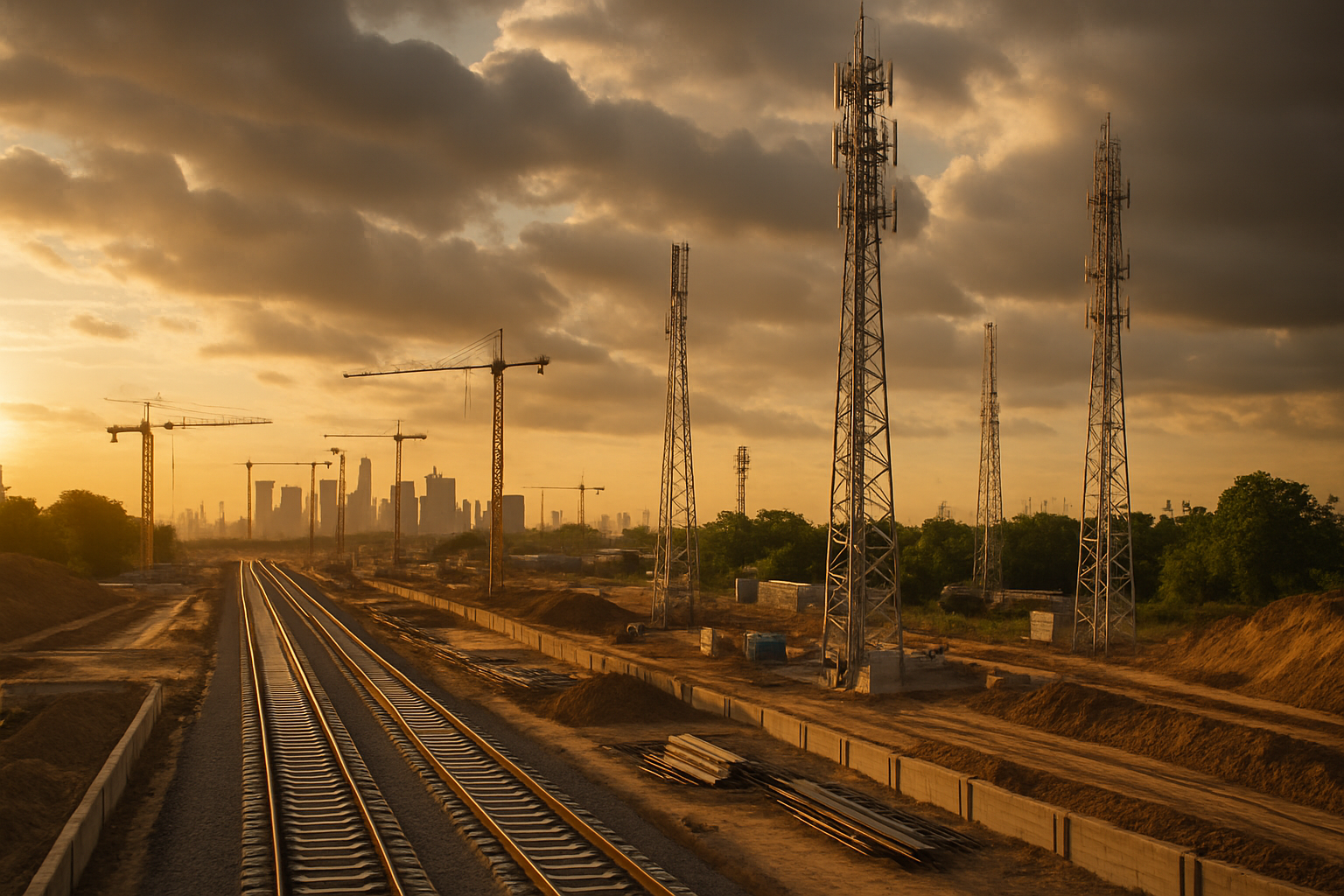
A wave of transformative infrastructure projects across Kenya, Paraguay, and Mozambique is reshaping regional connectivity and economic development, representing part of a broader global infrastructure renaissance that has characterized early 2026.
From the reconstruction of flood-damaged highways in southern Africa to the revival of historic railway systems in South America, and the modernization of key trade corridors in East Africa, these initiatives demonstrate the strategic importance governments are placing on physical connectivity as a foundation for economic growth.
Kenya's Northern Corridor: Strategic Trade Route Upgrade
Kenya has launched a landmark partnership with the Asian Infrastructure Investment Bank (AIIB) for the multi-billion shilling Mau Summit-Eldoret-Malaba corridor project. The route forms a critical component of the Northern Corridor, serving as a vital trade and logistics artery connecting Kenya to Uganda and the broader East and Central African region.
This initiative builds upon Kenya's broader infrastructure modernization program, which has seen significant investments in transportation networks over recent years. The Mau Summit-Malaba corridor upgrade represents not just a national priority but a regional integration project that could enhance trade flows across multiple East African countries.
"The Northern Corridor serves as the economic backbone connecting landlocked countries to international markets through Kenya's ports."
— Infrastructure Development Expert
The project aligns with Kenya's Vision 2030 development agenda and demonstrates the country's commitment to serving as a regional hub for trade and logistics. The AIIB partnership also reflects the growing role of multilateral development banks in financing large-scale infrastructure projects across Africa.
Paraguay's Railway Renaissance: Historic Return of Passenger Rail
In a development rich with historical significance, Paraguay is moving forward with plans to restore passenger rail service through a strategic agreement with the United Arab Emirates. President Santiago Peña announced the breakthrough during his official visit to the Middle Eastern nation, marking a potential turning point for Paraguay's transportation infrastructure.
The initiative carries profound historical resonance, as Peña noted in his announcement referencing Don Carlos Antonio López's vision when trains first operated in Paraguay in 1861. "Como lo visionaba Don Carlos Antonio López en 1861, cuando el tren corría por primera vez en nuestra tierra, hoy volvemos a demostrar que el Paraguay está para grandes cosas" (As envisioned by Don Carlos Antonio López in 1861, when the train ran for the first time on our land, today we again demonstrate that Paraguay is destined for great things).
This railway revival project represents more than mere transportation infrastructure—it symbolizes Paraguay's reconnection with its historical identity while embracing modern development partnerships. The UAE's involvement also highlights the increasing interest of Gulf states in Latin American infrastructure investments, particularly in transportation and connectivity projects.
The timing of this announcement coincides with Paraguay's broader infrastructure development push, including the near-completion of the Bioceanic Bridge connecting Carmelo Peralta to Porto Murtinho in Brazil—a project that has been steadily progressing throughout 2026.
Mozambique's Resilient Recovery: Highway Restoration in Xai-Xai
Mozambique has successfully completed repairs to the final damage point on National Highway Number One (N1) in Xai-Xai, Gaza Province, following devastating flood damage to the bridge over the Nguluzane River. The completion of repairs to three major gaps represents a critical restoration of connectivity between the Lower and Upper zones of the city.
Ussemane Adamo, President of the Xai-Xai Municipal Council, confirmed that while the physical repairs are complete, the reopening to full vehicular traffic awaits final contractor approval and safety certifications. "Felizmente conseguimos vencer, na cidade de Xai-Xai já existe a ligação entre a zona Alta e a zona Baixa" (Fortunately we succeeded, in the city of Xai-Xai there is now a connection between the High and Low zones), he stated to Radio Mozambique.
This restoration project exemplifies the broader challenges facing infrastructure development in climate-vulnerable regions. The N1 highway serves as a crucial transportation artery for Mozambique, and its restoration demonstrates both the country's resilience in disaster recovery and the critical importance of maintaining transportation networks in the face of increasingly frequent extreme weather events.
Global Context: Infrastructure Investment Surge
These three projects represent part of a remarkable global infrastructure investment wave that has characterized early 2026. From Mexico's recently completed "El Insurgente" interurban train connecting Toluca to Mexico City, to major airport transitions in Angola, and cycling superhighway developments in Belgium, governments worldwide are prioritizing physical connectivity as a foundation for economic growth.
The pattern extends across multiple continents, with significant projects also advancing in Brazil (Galeão Airport concessions), Canada (Toronto's Eglinton LRT opening), and various African nations pursuing ambitious railway and port development initiatives. This coordinated global emphasis on infrastructure reflects lessons learned from supply chain disruptions and the recognition that robust physical connectivity serves as both an economic driver and a resilience factor.
Financing Models and International Partnerships
The financing structures of these projects reveal evolving patterns in infrastructure development. Kenya's partnership with the AIIB represents the growing role of multilateral development banks, while Paraguay's collaboration with the UAE demonstrates how Gulf state sovereign wealth funds are increasingly targeting Latin American infrastructure opportunities.
Mozambique's N1 restoration, meanwhile, likely involves a combination of national budget allocations and international development assistance, reflecting the ongoing support required for post-disaster infrastructure recovery in developing nations.
These diverse financing approaches highlight how countries are accessing multiple funding sources to advance critical infrastructure projects, reducing dependence on any single financing mechanism while building stronger international development partnerships.
Economic and Strategic Implications
The economic implications of these infrastructure investments extend far beyond their immediate construction impacts. Kenya's Northern Corridor upgrade positions the country as an increasingly important regional trade hub, potentially capturing greater shares of East African logistics and transit revenues.
Paraguay's railway revival could transform the country's transportation landscape, potentially reducing logistics costs and carbon emissions while improving connectivity between urban centers. The historical symbolism of the project also carries political and cultural significance, connecting contemporary development with national heritage.
Mozambique's highway restoration ensures continued economic activity and regional connectivity, preventing the economic isolation that could result from compromised transportation networks. The project also demonstrates the country's capacity for disaster recovery and infrastructure resilience.
Climate Adaptation and Future Resilience
A common thread across these projects is the increasing attention to climate resilience and extreme weather adaptation. Mozambique's flood recovery demonstrates the ongoing need for infrastructure that can withstand increasingly frequent climate-related disasters, while Kenya's corridor upgrade likely incorporates modern engineering standards designed for greater environmental resilience.
Paraguay's railway development, occurring in a region that has experienced significant weather variability, represents an opportunity to build transportation infrastructure designed for long-term climate adaptation. Railway systems generally offer greater weather resilience compared to road networks and contribute to reduced carbon emissions from transportation.
These considerations reflect a broader evolution in infrastructure planning, where climate resilience and environmental sustainability are increasingly integrated into project design from the outset, rather than addressed as afterthoughts.
Regional Integration and Connectivity
All three projects contribute to broader regional integration objectives. Kenya's Northern Corridor upgrade strengthens East African Community transportation networks, supporting the regional common market and facilitating increased intra-African trade under the African Continental Free Trade Area (AfCFTA).
Paraguay's railway project, combined with the ongoing Bioceanic Bridge construction, positions the country as an increasingly important link in South American regional integration, particularly in facilitating trade between the Atlantic and Pacific coasts.
Mozambique's highway restoration maintains critical north-south connectivity within the country while preserving links to regional transportation networks that serve the broader Southern African Development Community region.
These regional connectivity improvements reflect the growing recognition that economic development increasingly depends on efficient cross-border logistics and transportation networks, making infrastructure investment a key component of regional integration strategies.
Looking Forward: Infrastructure as Economic Foundation
The simultaneous advancement of these diverse infrastructure projects across three continents demonstrates a global recognition of infrastructure investment as fundamental to economic development and resilience. Whether addressing historic deficits, recovering from natural disasters, or modernizing existing networks, governments are prioritizing connectivity investments as drivers of long-term growth.
The success of these initiatives will likely be measured not just in terms of construction completion, but in their contributions to economic development, regional integration, and climate resilience. As global supply chains continue evolving and climate challenges intensify, the quality and resilience of infrastructure networks will increasingly determine competitive advantages for nations and regions.
These projects represent more than construction activities—they embody strategic investments in economic foundations that will shape regional development patterns for decades to come. Their success will demonstrate the effectiveness of diverse financing models, international partnerships, and integrated approaches to infrastructure development in an increasingly interconnected but climate-challenged world.