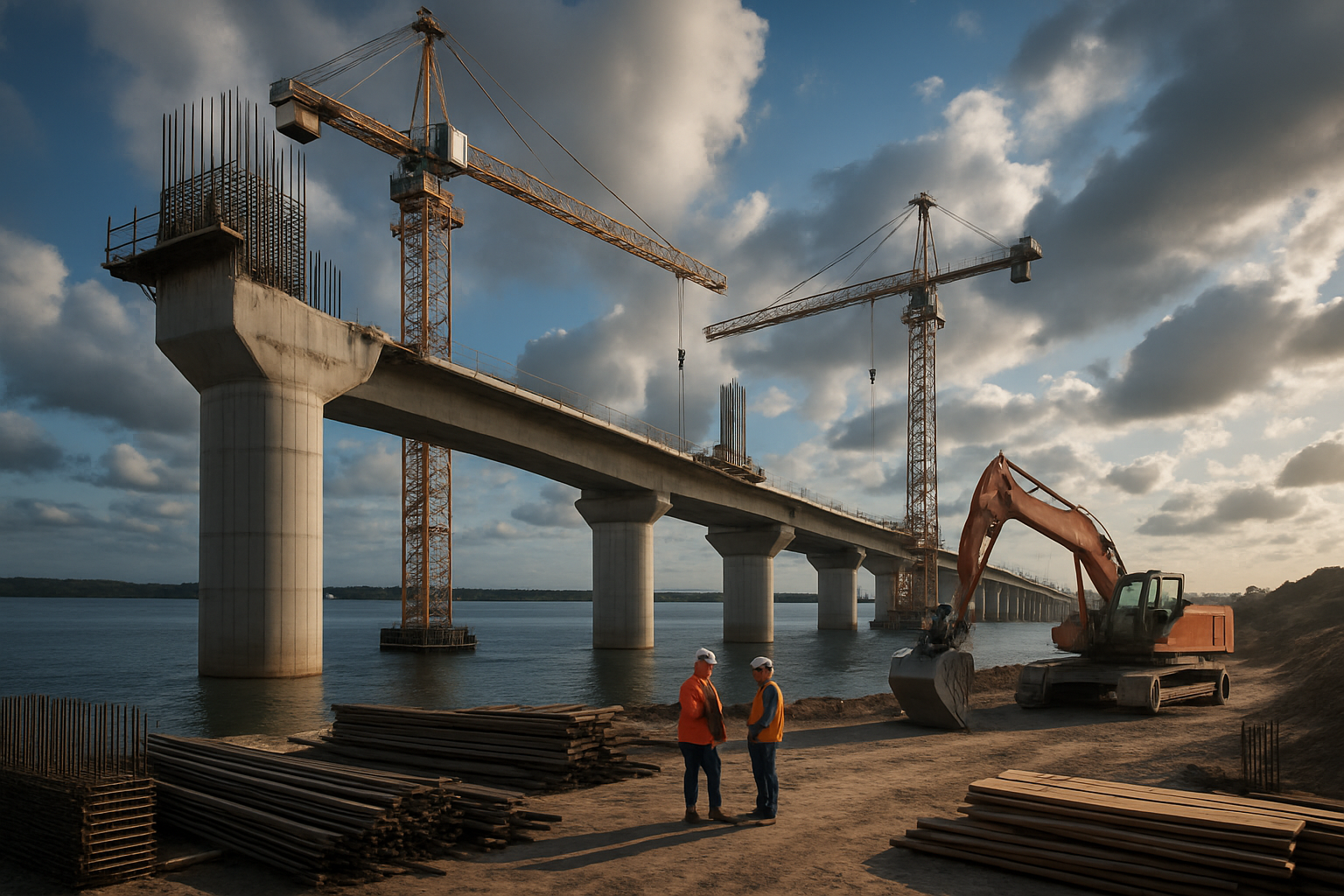
Two strategic bridge construction projects in El Salvador and a groundbreaking 720-meter bridge initiative in Tonga are marking April 2026 as a watershed moment in global infrastructure development, part of an unprecedented $570+ billion investment surge reshaping transportation networks across five continents.
The Ministry of Public Works (MOP) in El Salvador continues advancing critical infrastructure projects that exemplify the sophisticated planning and community engagement characterizing modern infrastructure development. The 9-kilometer pavimentación project toward San Agustín in Usulután department has reached significant milestones, with construction of a 31-meter bridge emerging as the strategic centerpiece of the initiative.
El Salvador's Dual Bridge Strategy
According to official reports, the San Agustín project represents more than simple road construction, incorporating comprehensive infrastructure including drainage systems, canaletas, and the vital bridge component designed to guarantee year-round connectivity for local communities. The timing proves particularly critical as the rainy season approaches, with the bridge construction addressing historical transportation disruptions that have isolated communities during extreme weather events.
Simultaneously, El Salvador's MOP has announced substantial progress on the Chilama River bridge construction along the coastal Litoral highway. This strategic project connects El Obispo with El Zonte, facilitating not only daily community transit but also supporting the region's growing tourism and commercial sectors. Officials emphasize that this infrastructure will dynamize local economies while providing enhanced safety and efficiency for the thousands who traverse this important coastal corridor daily.
"These infrastructure projects represent our commitment to connecting communities and building El Salvador's economic future through strategic transportation networks."
— Ministry of Public Works, Official Statement
Tonga's Transformational Maritime Infrastructure
Meanwhile, in the Pacific, Tonga has launched construction of the ambitious 720-meter Fangaʻuta Lagoon Bridge, representing one of the region's most significant infrastructure investments. Heavy machinery, marine equipment, and specialized construction crews have been mobilized at the lagoon site, marking the commencement of on-site works for this long-awaited project.
The Fangaʻuta Lagoon Bridge construction constitutes a central component of a comprehensive US$97 million infrastructure program funded through partnerships with the Asian Development Bank and the World Bank. This financing model demonstrates the sophisticated international cooperation frameworks enabling Pacific nations to undertake transformational projects that would have been impossible through domestic resources alone.
Global Context: The $570+ Billion Infrastructure Renaissance
These projects occur within what infrastructure experts are calling the most significant coordinated global infrastructure development surge since the post-World War II reconstruction period. The current wave, valued at over $570 billion across multiple continents, represents a fundamental shift in how nations view transportation networks—not merely as physical assets, but as strategic foundations for economic competitiveness, climate adaptation, and international cooperation.
From Kazakhstan's World Bank partnerships for massive road corridor development to Portugal's climate-resilient highway construction, from Malaysia's cross-border rail systems to Ghana's port modernization initiatives, the scope of current infrastructure investment reflects unprecedented international coordination addressing 21st-century connectivity challenges.
Technology Integration and Climate Adaptation
Modern infrastructure projects universally incorporate sophisticated technology integration from the design phase, including real-time monitoring systems, predictive maintenance capabilities, digital payment integration, and environmental optimization features. These represent standard requirements rather than optional additions, reflecting evolved understanding of infrastructure's role in sustainable development.
Climate adaptation has emerged as a fundamental design requirement rather than an afterthought. Projects must incorporate enhanced drainage systems, weather-resistant materials, and backup power capabilities designed for future climate conditions rather than historical patterns. This shift comes as January 2026 marked the 18th consecutive month of global temperatures exceeding 1.5°C above pre-industrial levels, forcing infrastructure designers to anticipate more extreme weather events than previously experienced.
Economic Multiplier Effects
Infrastructure investments create substantial economic impacts extending far beyond construction employment. Reduced logistics costs, enhanced market access, and improved business productivity support broader regional integration objectives, including the African Continental Free Trade Area (AfCFTA), ASEAN connectivity goals, and European Union transportation networks.
In El Salvador's case, the coastal bridge infrastructure supports the country's growing tourism sector while facilitating agricultural product transportation from rural areas to urban markets and ports. Tonga's bridge project will enhance inter-island connectivity crucial for economic development in a nation where geographic isolation has historically limited economic opportunities.
Implementation Challenges and Solutions
Universal challenges facing infrastructure projects include material cost inflation creating negative developer margins in some markets, skilled labor shortages, environmental compliance requirements, and coordination complexity among multiple stakeholders. The global semiconductor shortage has driven memory chip prices up sixfold, affecting smart infrastructure components and adding 20-30% to project costs for technology-dependent systems.
However, these constraints are driving innovation toward more efficient systems achieving superior performance with fewer specialized components. Countries are developing adaptive management strategies, transparent governance frameworks, and comprehensive stakeholder engagement processes that serve as templates for other nations undertaking similar projects.
International Cooperation Evolution
The sophistication of international cooperation has evolved beyond traditional North-South aid relationships toward comprehensive partnerships including technology transfer, capacity building, ongoing operational support, and knowledge sharing networks. The Tonga project exemplifies this evolution, with Asian Development Bank and World Bank partnerships providing not just financing but technical expertise and long-term operational guidance.
Regional frameworks are enabling smaller nations to access international expertise while contributing innovations to global knowledge bases. Bilateral partnerships, peer-to-peer networks, and multilateral cooperation frameworks are proving more resilient than exclusive arrangements, allowing flexible, culturally responsive strategies while maintaining evidence-based international standards.
Strategic Significance for Global Development
April 2026 represents a watershed moment in global infrastructure development, establishing precedents that will influence transportation strategies for decades ahead. The convergence of technological advancement, environmental awareness, and international cooperation is creating development models that prioritize sustainability alongside economic growth.
The choice between transformative infrastructure adaptation and reactive crisis management represents one of the most significant policy decisions of the current decade. Success in current projects will determine adaptive capacity for thriving in an interconnected, climate-challenged world where transportation networks serve as strategic foundations for economic competitiveness, environmental resilience, and international cooperation.
Infrastructure development in 2026 will potentially be remembered as the moment humanity began systematically building physical foundations for sustainable prosperity in an uncertain but interconnected future. The sophisticated project management evident in El Salvador's community-centered approach and Tonga's international partnership model provides templates for addressing immediate development needs while building long-term competitiveness and resilience.
These projects demonstrate that modern infrastructure serves as comprehensive systems supporting economic development, environmental protection, and social connectivity simultaneously, representing a fundamental evolution from simple construction projects toward strategic platforms for 21st-century development challenges and opportunities.