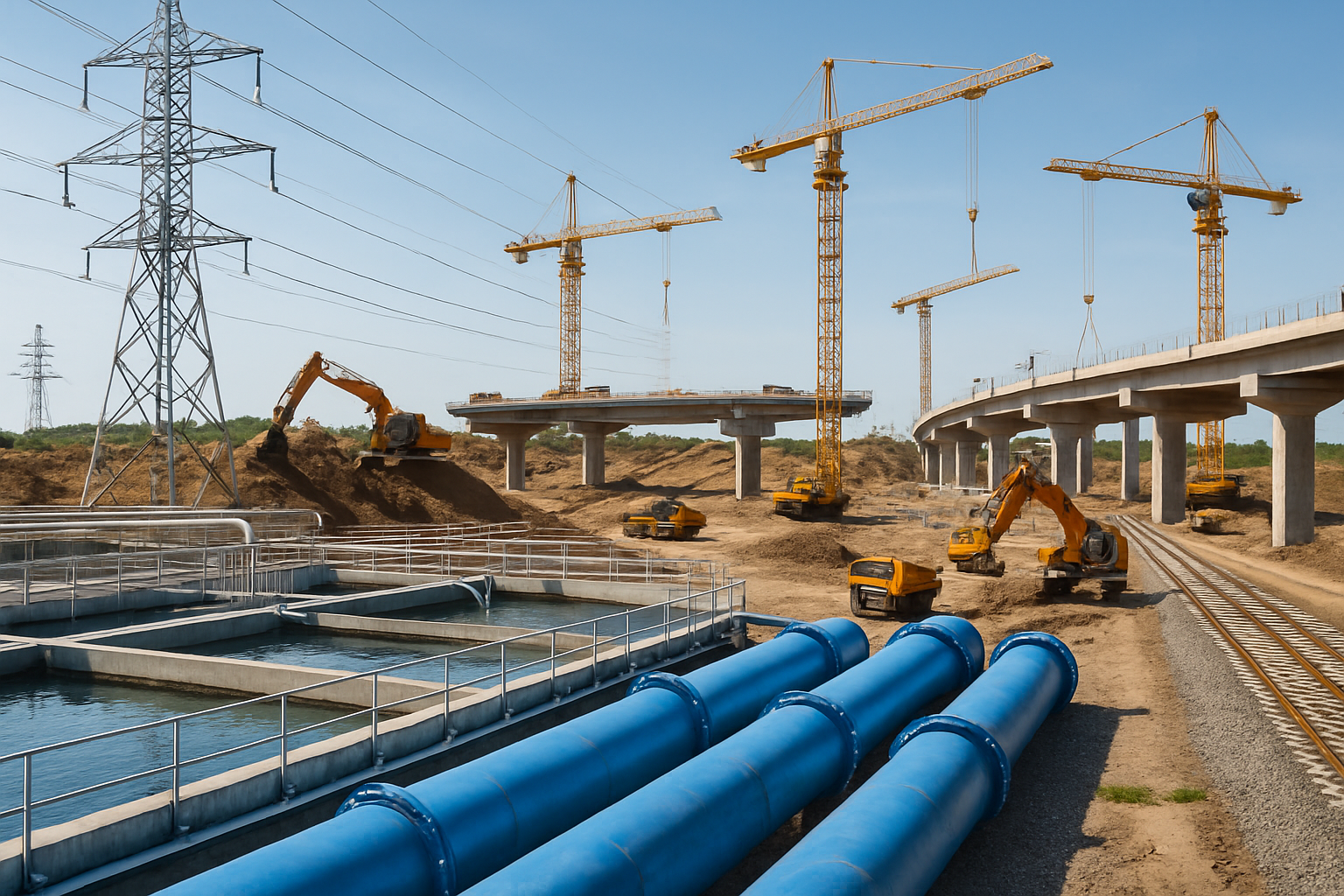
A wave of major infrastructure development projects across Armenia, Antigua and Barbuda, and Belize is reshaping regional connectivity and energy access, reflecting a broader global surge in infrastructure investment that has characterized early 2026.
These developments span diverse infrastructure categories—from tunnel construction and electrical transmission projects to road repairs and rural electrification initiatives—demonstrating the multifaceted approach nations are taking to modernize their infrastructure networks and enhance economic competitiveness.
Armenia Advances Strategic Infrastructure Projects
Armenia is making significant progress on two critical infrastructure initiatives that promise to transform regional connectivity and energy security. Public consultations have commenced in Sevan regarding land appropriation and resettlement issues for the construction of the new Dilijan tunnel, a project that will significantly improve transportation links in the mountainous region.
The tunnel project represents a major engineering undertaking designed to reduce travel times and improve year-round accessibility through challenging terrain. Public engagement in the planning process reflects modern infrastructure development practices that prioritize community involvement and transparent decision-making.
Simultaneously, Armenia's Minister of Territorial Administration and Infrastructure, Davit Khudatyan, met with Iranian Ambassador Khalil Shirgholami to discuss the crucial Iran-Armenia electrical transmission line construction. This project underscores the strategic importance of cross-border energy infrastructure in enhancing regional energy security and economic integration.
"The Iran-Armenia electrical transmission line represents a vital component of regional energy cooperation that will strengthen both nations' energy resilience."
— Davit Khudatyan, Armenian Minister of Territorial Administration and Infrastructure
Caribbean Nations Address Infrastructure Maintenance
In Antigua and Barbuda, the Ministry of Works has moved quickly to address infrastructure damage affecting Union Road in Hatton. The road suffered structural damage from heavy-duty equipment usage, creating safety concerns for the residents who depend on this vital transportation link daily.
The ministry's prompt response to undertake necessary repairs demonstrates the importance of rapid infrastructure maintenance in small island developing states, where limited transportation networks make each road connection critical for economic activity and community access.
This intervention not only restores safer conditions for motorists and pedestrians but also ensures business continuity for local enterprises that rely on reliable transportation infrastructure for their operations.
Belize Achieves Rural Electrification Milestone
Belize celebrated a transformative infrastructure achievement with the inauguration of the Rural Electrification Project on February 5, 2026, in Indian Church Village, Orange Walk District. This landmark project brings safe, reliable, and sustainable electricity to previously underserved rural communities across northern and southern Belize.
The project, implemented through a partnership between the European Union, Belize Electricity Limited (BEL), and the Government of Belize through the Ministry of Public Utilities, Energy, and Logistics (MPUEL), serves five communities: Indian Church, San Carlos, San Benito Poite, Jalacte, and San Vicente.
The initiative's origins trace back to 2021, when collaborative efforts between the EU, BEL, and Lait Up Belize secured funding to electrify these underserved communities. A formal agreement in 2022 between the EU and BEL, with government support, officially launched the project.
"This project represents more than just electrical infrastructure—it's about empowering communities, supporting agricultural development, and fundamentally improving quality of life in rural Belize."
— Rural Electrification Project Officials
Global Context of Infrastructure Investment
These regional projects occur within an unprecedented global infrastructure investment surge that has defined early 2026. From Vietnam's $120 billion commitment to build 9,000 kilometers of expressways by 2050 to Mexico's completion of the "El Insurgente" interurban train after 12 years of construction, nations worldwide are prioritizing infrastructure as a foundation for economic growth and climate resilience.
The infrastructure developments across Armenia, Antigua and Barbuda, and Belize demonstrate several key trends characterizing this global surge:
- International cooperation and partnerships in project financing and implementation
- Integration of energy security considerations with transportation infrastructure
- Emphasis on connecting underserved rural and remote communities
- Rapid response mechanisms for infrastructure maintenance and repair
- Community engagement and transparent planning processes
Economic and Strategic Implications
The economic implications of these infrastructure investments extend far beyond immediate construction activities. Armenia's tunnel and electrical transmission projects position the country as a crucial link in regional transportation and energy networks, potentially attracting increased trade and investment.
Belize's rural electrification project creates new economic opportunities for agricultural communities while supporting the country's broader development goals. Access to reliable electricity enables agricultural processing, small-scale manufacturing, and digital connectivity that can transform rural economies.
Even Antigua and Barbuda's road repairs, while seemingly routine, demonstrate the critical importance of infrastructure maintenance in preserving economic connectivity and ensuring continued business operations.
Financing Models and International Cooperation
These projects showcase diverse financing and implementation models that reflect the evolving landscape of infrastructure development. The EU-Belize partnership demonstrates how international development cooperation can address rural infrastructure gaps through multilateral engagement.
Armenia's bilateral discussions with Iran highlight how neighboring countries can collaborate on mutually beneficial infrastructure projects that enhance regional integration. The public consultation process for the Dilijan tunnel reflects growing emphasis on community participation in infrastructure planning.
Looking Forward
As these projects progress through 2026, they will serve as important case studies for infrastructure development in diverse geographic and economic contexts. The success of Belize's rural electrification project could inform similar initiatives across the Caribbean and Central America, where many rural communities still lack reliable electricity access.
Armenia's infrastructure projects, once completed, will enhance the country's strategic position as a regional transportation and energy hub, potentially attracting additional investment in complementary infrastructure projects.
The global infrastructure surge of 2026 reflects recognition that modern, resilient infrastructure serves as the foundation for economic competitiveness, climate adaptation, and social development in an increasingly interconnected world. Projects across Armenia, Antigua and Barbuda, and Belize contribute to this broader transformation while addressing specific national and regional development priorities.
As nations continue to invest in infrastructure modernization, these projects demonstrate the importance of international cooperation, community engagement, and integrated planning approaches that address multiple development objectives simultaneously. The success of these initiatives will likely influence infrastructure investment strategies and implementation approaches for years to come.