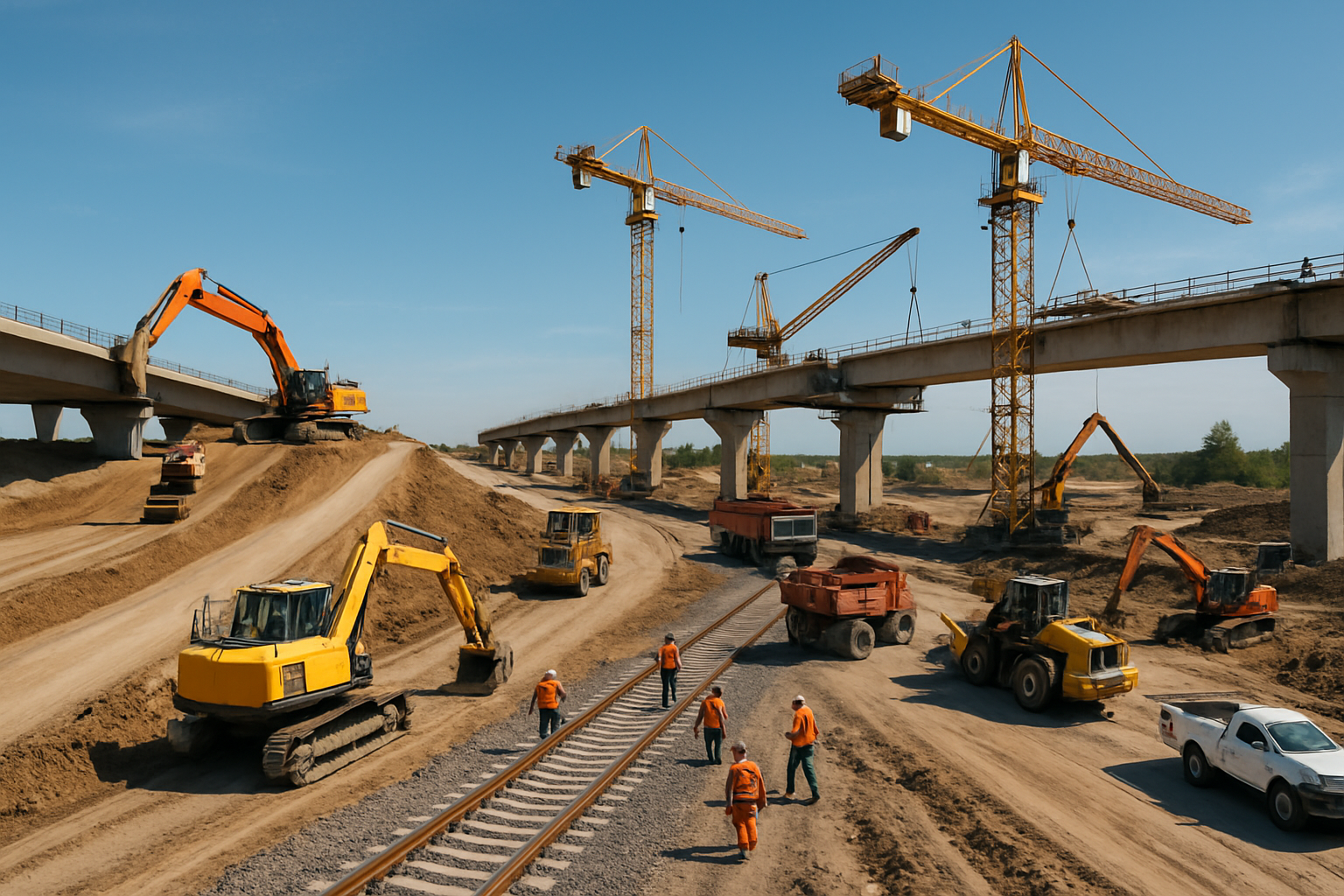
An unprecedented wave of infrastructure development is transforming economies worldwide as nations invest heavily in transportation networks, energy systems, and telecommunications infrastructure to support post-pandemic economic growth and climate adaptation goals.
Major developments across four nations demonstrate the scale and scope of current global infrastructure initiatives, representing part of an estimated $570+ billion worldwide surge in strategic development projects. From Central Asian transportation corridors to Caribbean aviation training facilities, these projects exemplify the sophisticated coordination between government policy, international financing, and technological innovation driving 21st-century development.
Kazakhstan Secures Historic World Bank Partnership for Roads, Rail, and Energy
Kazakhstan has positioned itself at the forefront of Central Asian development by securing comprehensive World Bank Group financing for multiple large-scale infrastructure projects. The country's Parliament ratified a framework partnership agreement with three World Bank organizations: the International Bank for Reconstruction and Development, the International Finance Corporation, and the Multilateral Investment Guarantee Agency.
This partnership builds on Kazakhstan's successful track record with previous World Bank collaborations, having completed 14 projects worth $4.2 billion in recent years. The new framework supports Kazakhstan's transition from a state-dominated, resource-driven economy toward private sector development and infrastructure modernization.
"This represents a fundamental shift in our development approach, emphasizing sustainable growth through enhanced connectivity and institutional capacity building,"
— World Bank Country Manager Andrei Mikhnev
Simultaneously, Kazakhstan has established seven international road corridors to strengthen regional connectivity and boost transit potential. Transport Minister Nurlan Sauranbayev confirmed completion of four major road projects: Kalbatau–Maykapshagai, Taldykorgan–Ust-Kamenogorsk, Atyrau–Astrakhan, and Karagandy sections, creating crucial links between population centers and international borders.
Portugal Advances Major Highway Construction Initiative
Portugal's infrastructure development gains momentum with Infraestruturas de Portugal (IP) launching a significant €89.5 million public procurement for the IC35 highway construction between Rans and Entre-os-Rios in Penafiel. This project carries special symbolic importance, launching exactly 25 years after the tragic Hintze Ribeiro bridge collapse that claimed multiple lives.
The timing reflects Portugal's commitment to infrastructure resilience and connectivity improvement, particularly following recent extreme weather events that have tested the nation's transportation networks. The IC35 project will enhance regional connectivity between Penafiel and Castelo de Paiva, supporting economic development and emergency response capabilities.
The investment demonstrates Portugal's sophisticated approach to infrastructure development, incorporating climate-resilient design principles and advanced construction methodologies learned from decades of EU-supported infrastructure modernization.
Saint Vincent Emerges as Regional Aviation Training Hub
Saint Vincent and the Grenadines is positioned to become a major Caribbean aviation training center, addressing critical regional and global shortages of aviation personnel. Minister Fitzgerald Bramble announced that a potential partner has expressed interest in building and operating a comprehensive aviation training institute in the country.
The initiative reflects the Caribbean's strategic approach to economic diversification, leveraging geographic advantages and international partnerships to create high-value service sectors. Aviation training represents a particularly promising opportunity given the global shortage of qualified aviation professionals and the region's established expertise in tourism-related aviation services.
This development aligns with broader Caribbean infrastructure initiatives, including significant cruise port expansions and telecommunications modernization projects that position the region as a strategic hub for transportation and digital services.
Technology Integration and Sustainable Development
Modern infrastructure projects increasingly incorporate sophisticated technology integration from the design phase, including real-time monitoring systems, predictive maintenance capabilities, digital payment integration, and environmental optimization features. These "smart infrastructure" approaches enable adaptive management and improved long-term sustainability.
Climate adaptation has become a standard requirement for major infrastructure projects, with enhanced drainage systems, weather-resistant materials, backup power systems, and flood management capabilities integrated into planning processes. This evolution reflects lessons learned from recent extreme weather events that have tested infrastructure designed for historical rather than current climate conditions.
International Cooperation and Financing Evolution
Current infrastructure development demonstrates sophisticated financing mechanisms combining multilateral development banks, private-public partnerships, bilateral cooperation agreements, and innovative funding instruments. The World Bank's expanded partnership with Kazakhstan exemplifies how international institutions support national development priorities while encouraging private sector participation.
Regional integration plays an increasingly important role, with projects designed to support broader connectivity objectives such as the European Union's Trans-European Transport Networks (TEN-T) and emerging African continental integration initiatives under the African Continental Free Trade Area (AfCFTA).
"Infrastructure investment today must serve multiple objectives: immediate economic development, long-term climate resilience, and regional integration to maximize benefits and cost-effectiveness,"
— Regional Development Expert
Economic Multiplier Effects and Job Creation
Infrastructure investments generate substantial economic multiplier effects extending far beyond construction employment. Enhanced connectivity reduces transportation costs for businesses, improves market access for remote communities, attracts additional investment, and supports tourism development.
The aviation training initiative in Saint Vincent, for example, would create high-skilled employment opportunities while addressing regional needs, potentially attracting students from across the Caribbean and establishing the country as a center of excellence for aviation education.
Similarly, Kazakhstan's road corridor development supports the country's strategic positioning as a crucial link between European and Asian markets, with enhanced transportation infrastructure enabling the nation to capture greater value from transit trade while reducing logistics costs for domestic businesses.
Challenges and Implementation Considerations
Despite optimistic projections, infrastructure development faces significant challenges including material cost inflation, skilled labor shortages, environmental compliance requirements, and coordination complexity for multi-jurisdictional projects. Global supply chain disruptions, including the ongoing semiconductor shortage affecting smart infrastructure components, require adaptive project management approaches.
Successful implementation depends on sustained political commitment beyond electoral cycles, transparent governance practices, comprehensive stakeholder engagement, and realistic timeline development that accounts for technical complexity and potential setbacks.
Strategic Significance for Global Development
The convergence of major infrastructure initiatives across diverse regions represents a fundamental shift in global development priorities. Nations are increasingly viewing infrastructure not as simple physical assets but as strategic foundations for economic competitiveness, climate resilience, and international cooperation.
These projects establish precedents for 21st-century development approaches that balance rapid modernization with environmental sustainability, national priorities with regional integration, and technological advancement with community needs. Success in current initiatives will influence infrastructure development strategies worldwide for decades to come.
As countries navigate complex global challenges including climate change, technological disruption, and evolving economic patterns, strategic infrastructure investment emerges as a crucial tool for building resilient, prosperous, and connected societies. The coordination evident in current projects suggests growing sophistication in development planning and international cooperation essential for addressing interconnected 21st-century challenges.