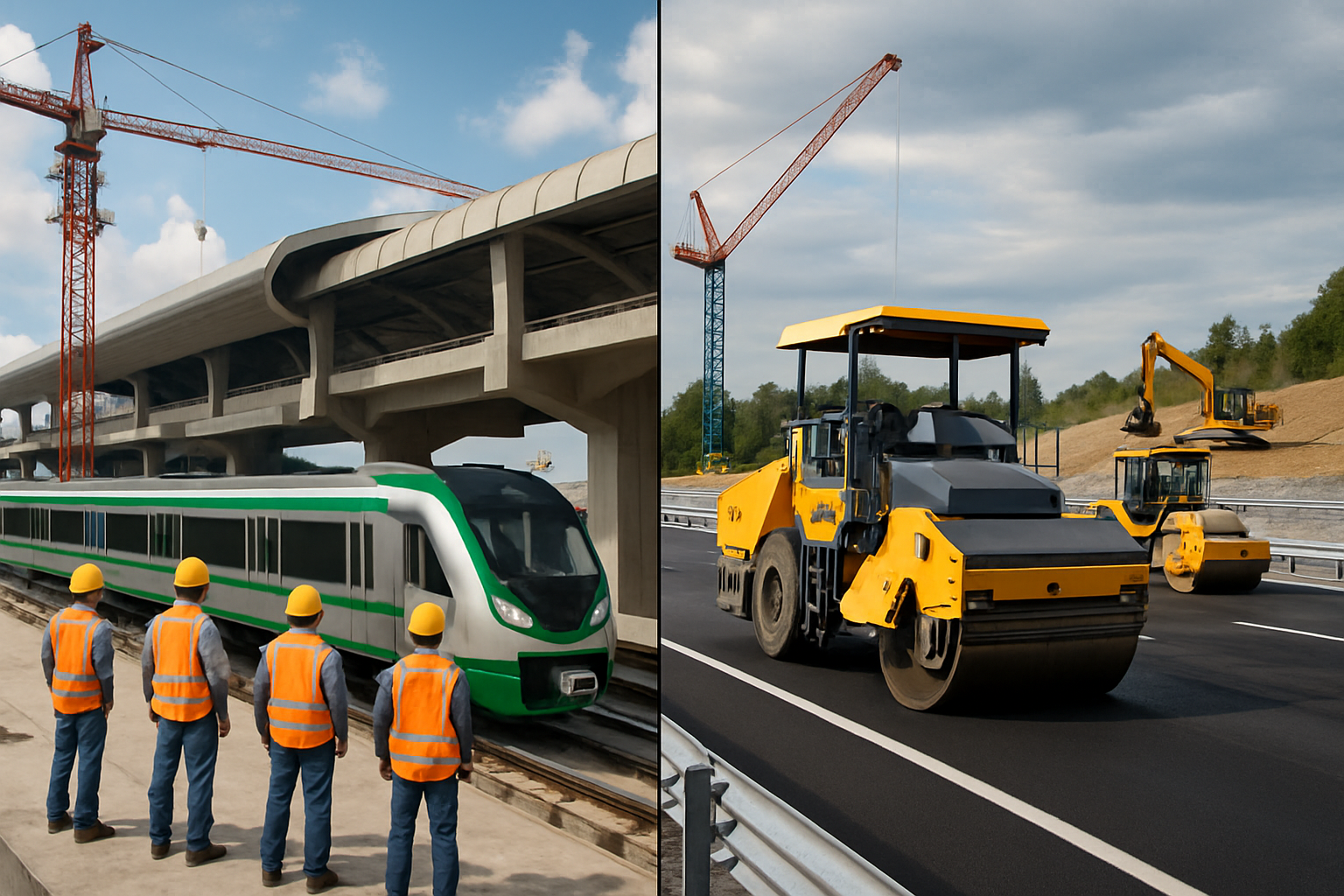
Vietnam and Sweden are spearheading a global infrastructure renaissance with transformative transportation projects that exemplify the $570+ billion international development surge reshaping connectivity worldwide, as Vietnam proposes a groundbreaking 41-kilometer metro extension to Southeast Asia's largest planned airport while Sweden eliminates critical transportation bottlenecks between major Nordic cities.
Dong Nai Province has formally proposed an ambitious 41-kilometer extension of Ho Chi Minh City's Ben Thanh-Suoi Tien metro line to establish direct connectivity with the new Long Thanh mega airport, according to official announcements released April 25, 2026. The proposed extension would create seamless transportation between Vietnam's economic center and what is positioned to become Southeast Asia's largest aviation hub, addressing the current three-hour journey time that threatens the airport's competitive positioning.
The Vietnamese initiative represents a critical component of the nation's broader $120 billion commitment to construct 9,000 kilometers of expressways by 2050, positioning the country as the region's logistics hub. The metro extension would complement the government's parallel development of 13 direct bus routes to Long Thanh Airport, expanding from the previously planned seven routes to create comprehensive multimodal connectivity.
Sweden's Strategic Transportation Modernization
Simultaneously, Sweden has announced major transportation infrastructure improvements addressing critical network vulnerabilities. The government confirmed plans to upgrade the heavily trafficked single-track railway between Karlstad and Kil to double-track capacity, eliminating what Rural Affairs Minister Peter Kullgren (Christian Democrats) described as "one of the most vulnerable stretches" on the vital Oslo-Stockholm corridor.
Sweden's transportation modernization extends beyond railway improvements to include the completion of the final "missing link" on Highway 40 between Stockholm and Gothenburg. The approximately 40-kilometer stretch will be upgraded to full motorway standard, creating an uninterrupted highway connection between Sweden's two largest cities for the first time in the country's modern transportation history.
These Swedish projects demonstrate sophisticated infrastructure planning that addresses both immediate capacity constraints and long-term regional integration objectives. The railway improvements will enhance freight capacity and passenger reliability on the critical Scandinavian corridor, while the highway completion supports Sweden's role as a Nordic transportation hub.
Technology Integration and Climate Adaptation
Both nations' infrastructure projects incorporate cutting-edge technology integration from the design phase, including real-time monitoring systems, predictive maintenance capabilities, digital payment platforms, and environmental optimization features. Vietnam's metro extension will utilize advanced tunneling technology and climate-resistant engineering suitable for tropical conditions, while Sweden's projects incorporate weather-resistant materials designed for harsh Nordic winters and increasingly volatile climate conditions.
The developments occur during the 22nd consecutive month of global temperatures exceeding 1.5°C above pre-industrial levels, the longest sustained warming period in recorded history. This climate context has made adaptive infrastructure design a fundamental requirement rather than an optional enhancement, with projects now incorporating enhanced drainage systems, weather-resistant materials, and backup power capabilities as standard features.
Economic Multiplier Effects and Regional Integration
Infrastructure experts project substantial economic multiplier effects extending far beyond construction employment. Vietnam's metro extension will create permanent technical positions while reducing transportation costs and improving metropolitan productivity, supporting the nation's ASEAN economic integration objectives. The Long Thanh Airport connectivity is essential for Vietnam's tourism strategy and its emergence as a manufacturing hub serving global supply chains.
Sweden's transportation improvements will enhance Nordic regional competitiveness through reduced logistics costs, improved reliability, and strengthened connections to European markets. The railway upgrades particularly benefit freight transportation, supporting Sweden's export economy and manufacturing sector, while the highway completion creates new opportunities for regional tourism and business development.
"This stretch between Oslo and Stockholm represents one of our most critical transportation arteries for both passenger travel and freight movement. The upgrade to double-track capacity will fundamentally transform reliability and capacity for decades to come."
— Peter Kullgren, Sweden's Minister for Rural Affairs
Financing Innovation and International Cooperation
The projects demonstrate sophisticated financing approaches combining public investment, international development cooperation, and innovative funding mechanisms. Vietnam's infrastructure development benefits from technical assistance and knowledge sharing with international partners while maintaining national ownership of development priorities. Sweden leverages European Union structural funds and regional cooperation frameworks to optimize project efficiency and environmental compliance.
Both nations participate in broader international cooperation networks addressing global infrastructure challenges. Vietnam's projects align with ASEAN connectivity objectives and support regional economic integration, while Sweden's improvements strengthen European transportation networks and contribute to continental climate adaptation strategies.
Implementation Challenges and Success Factors
Infrastructure development faces universal challenges including material cost inflation, skilled labor shortages, environmental compliance requirements, and coordination complexity across multiple stakeholders. The global semiconductor shortage has created sixfold increases in smart infrastructure component costs through 2027, accelerating innovation toward efficient algorithms and distributed processing systems that create more resilient networks despite supply chain constraints.
Success factors identified across both Vietnamese and Swedish projects include sustained political commitment transcending electoral cycles, transparent governance frameworks, comprehensive stakeholder engagement, and adaptive management capabilities responding to changing conditions while maintaining core objectives.
Global Context and Strategic Significance
These infrastructure developments occur within an unprecedented global investment surge that experts describe as the most coordinated international commitment to transportation modernization in recent decades. The $570+ billion in concurrent projects represents a fundamental shift toward viewing infrastructure networks as strategic foundations for economic competitiveness, climate adaptation, and international cooperation rather than simple physical assets.
Historical context from comprehensive infrastructure tracking reveals this surge building on momentum from projects across continents, including African continental integration initiatives, European climate-resilient transit modernization, and Asian regional connectivity enhancement. The Vietnamese and Swedish projects establish precedents for balancing immediate development needs with long-term sustainability requirements through sophisticated planning approaches.
Future Implications and Precedents
April 2026 represents a watershed moment in global infrastructure development, with decisions made during this period likely to influence transportation strategies worldwide for decades ahead. The convergence of technological advancement, environmental awareness, and international cooperation is creating development models that prioritize sustainability alongside economic growth.
The Vietnamese metro extension and Swedish transportation improvements provide practical templates for addressing immediate mobility needs while building long-term competitiveness and environmental resilience. These projects serve community requirements while establishing sustainable prosperity foundations for an interconnected but climate-challenged world.
Infrastructure choices made in 2026 will determine whether investments become assets supporting adaptive capacity or become climate-vulnerable facilities requiring costly modifications. The Vietnamese and Swedish approaches demonstrate the critical choice between transformative infrastructure adaptation and reactive crisis management that defines significant policy decisions for the current decade.
As the global infrastructure renaissance continues, the Vietnamese metro extension to Long Thanh Airport and Sweden's transportation network improvements stand as exemplars of 21st-century infrastructure development that successfully integrates technological innovation, environmental responsibility, and international cooperation to serve both immediate needs and long-term strategic objectives.