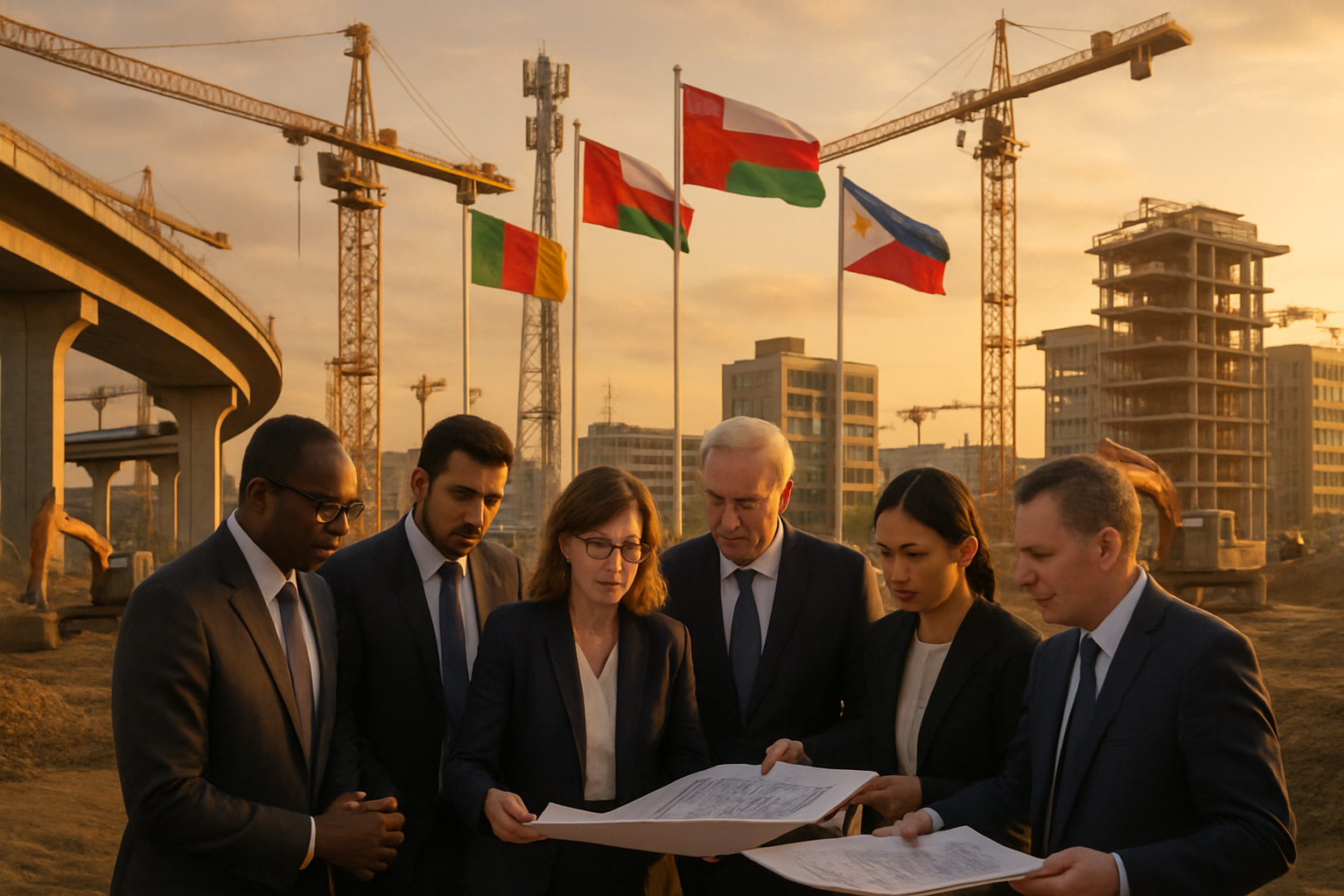
A coordinated wave of infrastructure investments is reshaping regional economies across three continents, as countries from Cameroon to the Philippines announce multi-billion dollar development initiatives for 2026, signaling a global commitment to post-pandemic economic recovery and modernization.
The scale of these simultaneous announcements reflects a broader trend of strategic government investment in critical infrastructure, even as nations grapple with security challenges, supply chain disruptions, and evolving geopolitical landscapes. From West Africa to Southeast Asia, governments are prioritizing long-term development projects that promise to transform their economic foundations.
Cameroon's Ambitious Infrastructure Push
Cameroon has allocated approximately 660.4 billion CFA francs ($1.1 billion) for major infrastructure projects in 2026, representing more than one-third of the country's public investment budget. The Ministry of Finance announced these allocations despite ongoing security challenges in the Far North, Northwest, and Southwest regions, as well as global economic pressures from the Ukraine conflict and Middle East tensions.
The budget allocation will enable the completion of numerous first-generation major projects and initiate new initiatives announced by the Head of State in addresses to the nation from 2022 to 2024. This substantial financial commitment demonstrates Cameroon's dedication to infrastructure development as a cornerstone of economic growth, even in challenging circumstances.
The ministry emphasized that this budgetary effort occurs against a backdrop of reduced state revenues due to regional security crises and international conflicts affecting global trade patterns. The allocation represents a strategic choice to prioritize long-term development over short-term fiscal constraints.
Oman's Strategic Investment Expansion
Meanwhile, Oman is experiencing a dramatic transformation in its project development landscape, with government tenders more than doubling in value during 2025. The Projects, Tenders and Local Content Authority reported that tender values rose to RO 1.703 billion ($4.4 billion) in 2025, compared to RO 811.3 million in 2024—an increase of over RO 891 million.
This surge reflects Oman's strategic shift toward larger, more comprehensive projects aligned with Vision 2040, the sultanate's long-term development framework. The emphasis on strategic projects demonstrates improved resource allocation and more efficient public spending approaches, according to government authorities.
The Suhar Investment Forum 2026, opening this week, will showcase these opportunities to over 750 participants from more than 30 countries. The forum highlights Suhar's emergence as a major industrial and logistics hub, leveraging its strategic location on the Sea of Oman and direct access to global trade routes.
"The figures point to a shift towards larger and more strategic projects as Oman advances infrastructure and development plans under Vision 2040, with emphasis on efficient public spending and improved resource allocation."
— Projects, Tenders and Local Content Authority
The forum will feature RO 300 million in investment opportunities, underlining Suhar's growing profile as one of the sultanate's key investment destinations. Representatives from governments, international organizations, major companies, and investment bodies will participate in two days of high-level dialogue and deal-making.
Philippines Accelerates Digital Infrastructure
In Southeast Asia, the Philippines under the Marcos administration has earmarked an additional PHP 5 billion ($89 million) to expand public WiFi hotspots nationwide. This initiative will provide "password-free internet access" to students in public schools and state universities and colleges across the archipelago.
The expanded WiFi program represents a significant investment in digital infrastructure, recognizing connectivity as essential infrastructure for educational advancement and economic participation. The initiative addresses the digital divide that has persisted in remote areas of the Philippines, particularly affecting educational opportunities for underserved communities.
This digital infrastructure investment complements the Philippines' broader infrastructure development programs, which have focused on transportation networks, energy systems, and telecommunications upgrades since the current administration took office.
Regional Context and Global Trends
These infrastructure announcements occur within a broader context of global investment in critical infrastructure. Recent memory of similar initiatives includes India's record-breaking Union Budget 2026-27, which allocated $133 billion for infrastructure development, and Algeria's launch of the western mining railway connecting the Gara Djebilet iron ore deposits.
The simultaneous nature of these announcements suggests coordinated global recognition of infrastructure investment as essential for economic resilience. Countries are prioritizing physical and digital infrastructure to strengthen their competitive positions in an increasingly interconnected global economy.
Strategic Implications
The geographic spread of these investments—from West Africa through the Middle East to Southeast Asia—indicates a global shift toward infrastructure-led development strategies. Each country is addressing specific regional needs while contributing to broader economic corridors and trade networks.
Cameroon's focus on completing first-generation projects suggests a systematic approach to infrastructure development, building foundational capabilities before advancing to more complex initiatives. Oman's emphasis on larger, strategic projects under Vision 2040 reflects a mature planning process that prioritizes long-term economic transformation over short-term gains.
The Philippines' digital infrastructure investment recognizes that modern economic participation requires universal connectivity, particularly in education sectors that will determine future economic competitiveness.
Challenges and Opportunities
Despite ambitious plans, these countries face significant implementation challenges. Security concerns in Cameroon's affected regions could impact project timelines and costs. Global supply chain disruptions may affect material availability and pricing for all three countries' projects.
However, the scale of investment creates substantial opportunities for international partnerships and technology transfer. The Suhar Investment Forum exemplifies how countries can leverage global networks to accelerate development and attract foreign direct investment.
These infrastructure initiatives represent more than construction projects—they constitute strategic investments in national competitiveness and regional economic integration. As these projects advance through 2026, they will likely influence investment patterns and development strategies across emerging markets globally.