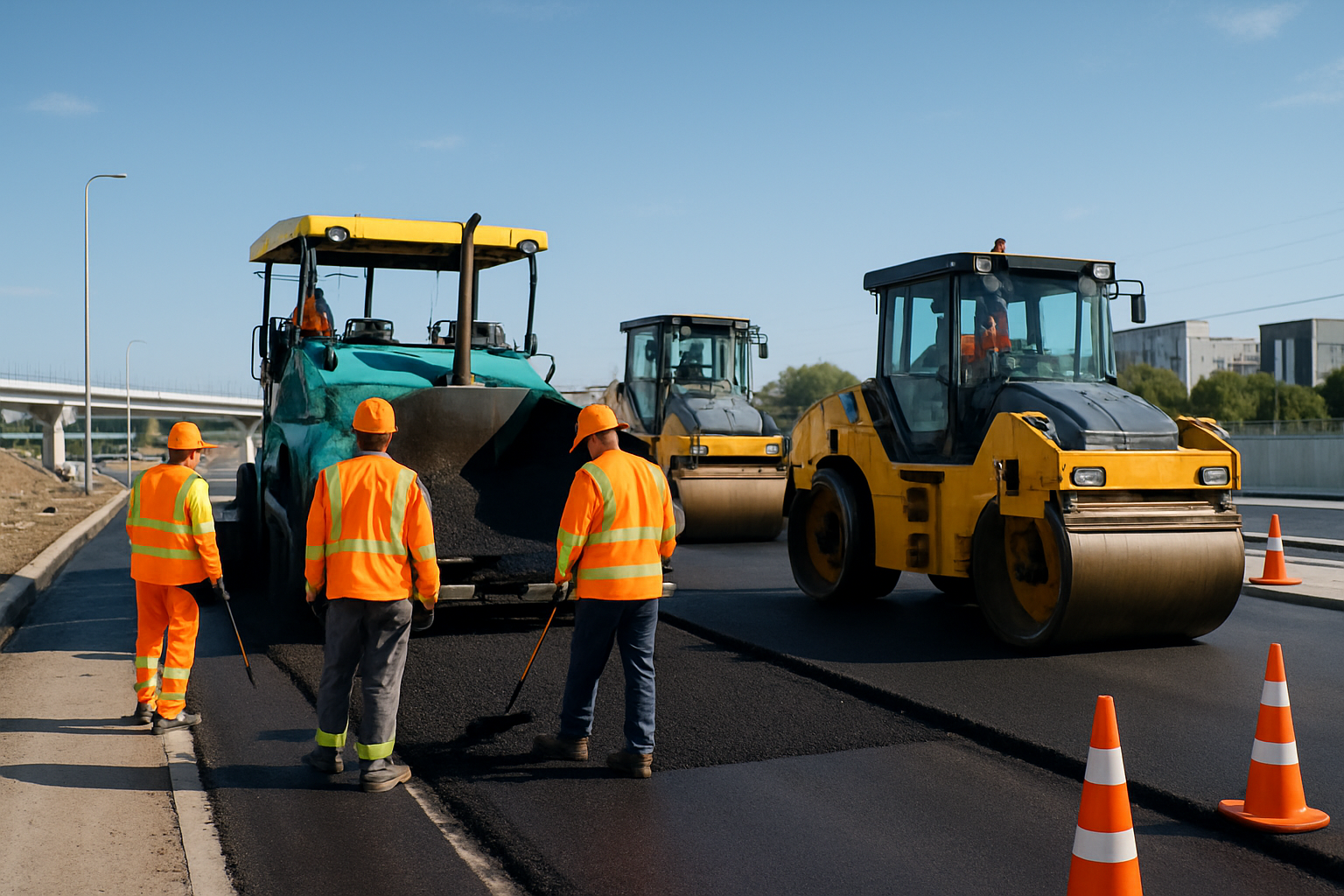
A sweeping wave of infrastructure modernization is transforming transportation networks from Ireland's rural roads to Jamaica's northeastern highways, as nations worldwide commit unprecedented resources to upgrading critical connectivity systems that serve as the backbone of modern economic development.
This comprehensive global infrastructure renaissance, valued at over $570 billion according to international development tracking, represents a fundamental shift from reactive maintenance to proactive modernization, with countries recognizing infrastructure as strategic assets essential for economic competitiveness, climate adaptation, and regional integration.
Ireland Leads Road Quality Revolution
In Ireland's East Donegal region, local officials are spearheading a technical revolution in road construction methods that could reshape how rural communities approach infrastructure durability. Councillor Martin Scanlon has called for abandoning traditional wet mix road surfaces in favor of bitmac technology, citing significant longevity advantages.
"Our issue is our wet mix not being up to standard and falling apart after a short period of time," Scanlon explained during the Lifford-Stranorlar Municipal District meeting. "I believe we should be working towards using bitmac in our works programme. A lot of other MDs and counties are doing it and we seem to be lagging behind."
The proposal represents more than a simple material change. Councillor Patrick McGowan, who seconded the motion, emphasized that while bitmac carries higher initial costs, the long-term economic benefits justify the investment. "It's more expensive overall but in the long run it's there for the future – you're not going to be back in 5 years filling potholes," Scanlon noted.
This technical evolution reflects broader lessons learned from global infrastructure experiences, where initial cost savings often result in significantly higher maintenance expenses over time. Ireland's approach aligns with contemporary "build back better" principles that prioritize lifecycle costs over upfront savings.
Pedestrian Safety Infrastructure Innovation
Meanwhile, in Letterkenny, municipal leaders are advancing innovative pedestrian safety solutions that demonstrate how modern infrastructure addresses both connectivity and community safety. Councillor Donal Coyle has proposed an underground pedestrian passage connecting Atlantic Technological University's main campus with the heavily utilized student car park across the busy Port Road.
The proposed underpass represents sophisticated urban planning that acknowledges how educational infrastructure requires integrated transportation solutions. While traffic-light controlled crossings already exist, the volume of daily student pedestrian traffic necessitates more comprehensive safety measures.
Councillor Michael McBride has complemented this initiative with proposals for pedestrian crossover installations, creating a comprehensive safety network that prioritizes foot traffic while maintaining vehicular flow efficiency. These developments showcase how contemporary infrastructure planning addresses multiple stakeholder needs simultaneously.
Historic Walkway Restoration Demonstrates Community Persistence
Perhaps no project better illustrates the intersection of community advocacy and infrastructure development than the restoration of the Drumboe woodland walkway in Stranorlar. After being closed for 13 years, this community asset is finally nearing reopening following sustained political pressure and community engagement.
The restoration project, championed by Councillors Martin Harley and Patrick McGowan, demonstrates how infrastructure extends beyond transportation efficiency to encompass community recreation, environmental stewardship, and quality of life improvements. Councillor Harley's previous threat to "take an angle grinder there myself" to resolve access disputes highlights the passionate community investment in these projects.
Now, with works progressing well and completion expected by month's end, the walkway represents successful collaboration between community advocacy, local government, and educational institutions. The connection between the woodland area and Finn Valley College creates educational and recreational opportunities that serve multiple community functions.
Jamaica's Northeastern Highway Transformation
Across the Atlantic, Jamaica's National Works Agency (NWA) is implementing a $193.6 million road rehabilitation programme that demonstrates how developing nations are prioritizing infrastructure as economic development catalysts. The hotmix patching and local rehabilitation initiative covers the northeastern parishes of Portland, St Mary, and St Ann.
Stephen Shaw, Manager of Communication and Customer Services at the NWA, explained that these works form part of the agency's comprehensive $1.7 billion islandwide Graded Overlay (GO) Road Rehabilitation Programme. The scale represents one of the Caribbean's most ambitious infrastructure modernization initiatives.
Key corridors receiving attention include the Dover to Agualta Vale to Martins route and the Highgate to Guys Hill to Rio Nuevo corridors in St Mary, along with multiple Portland roadways from Boundbrook to Rio Grande. These strategic selections demonstrate how modern infrastructure planning prioritizes economic corridors that support multiple communities and commercial activities.
The January-to-March timeline for completion showcases accelerated project management approaches that have become essential for infrastructure development in climate-vulnerable regions where weather windows for construction are increasingly constrained.
Technology Integration and Climate Adaptation
Both Irish and Jamaican projects reflect the contemporary infrastructure paradigm that integrates sophisticated technology from the design phase rather than retrofitting systems after completion. Modern infrastructure increasingly incorporates real-time monitoring, predictive maintenance capabilities, digital payment systems, and environmental optimization features.
Climate adaptation has evolved from optional consideration to standard requirement. Projects must now demonstrate resilience to future climate conditions rather than historical weather patterns, incorporating enhanced drainage systems, weather-resistant materials, and backup power infrastructure.
The global memory chip shortage, with semiconductor prices increasing sixfold, has affected smart infrastructure components but has also accelerated innovation in efficient system design and alternative technological approaches, including edge computing and energy-efficient architectures.
Economic Multiplier Effects and Regional Integration
Infrastructure investments create substantial economic multiplier effects extending far beyond construction employment. Ireland's road quality improvements support rural economic development by reducing transportation costs and improving market access for agricultural and commercial activities.
Jamaica's highway rehabilitation programme enhances the island's position as a Caribbean logistics hub while supporting tourism infrastructure essential for the region's economic recovery. The northeastern parishes, with their combination of natural attractions and agricultural production, benefit particularly from improved connectivity.
These projects support broader regional integration objectives, including the African Continental Free Trade Area (AfCFTA) and Caribbean Community (CARICOM) initiatives that require enhanced physical connectivity to realize their economic potential.
Financing Innovation and International Cooperation
Modern infrastructure projects demonstrate sophisticated financing mechanisms that combine public sector commitment with innovative funding structures. Jamaica's $1.7 billion programme represents coordinated national investment that leverages both domestic resources and international development cooperation.
Ireland's infrastructure development benefits from European Union structural funds that emphasize climate-conscious infrastructure priorities, while local initiatives demonstrate how community engagement can accelerate project implementation and ensure long-term maintenance commitment.
Success factors increasingly include comprehensive stakeholder engagement, transparent procurement processes, adaptive management capabilities, and integration of traditional community knowledge with contemporary engineering solutions.
Implementation Challenges and Success Factors
Contemporary infrastructure development faces universal challenges including material cost inflation, skilled labor shortages, environmental compliance requirements, and coordination complexity across multiple government agencies and community stakeholders.
The global supply chain disruptions, including the semiconductor shortage affecting smart infrastructure components, require adaptive management and alternative technological approaches. Success depends on sustained political commitment, comprehensive community engagement, realistic timeline development, and transparent governance frameworks.
Environmental compliance and community consultation have evolved from optional considerations to essential project components. Modern infrastructure must demonstrate positive community impact while meeting international environmental standards and contributing to climate adaptation objectives.
Future Infrastructure Planning and Global Implications
The infrastructure developments in Ireland and Jamaica represent broader global trends toward viewing transportation networks as strategic foundations for economic competitiveness, climate resilience, and international cooperation rather than simple physical assets.
Contemporary projects establish precedents for 21st-century development that balances rapid modernization with environmental sustainability, national development priorities with regional integration objectives, and technological advancement with community needs.
Success in these initiatives could catalyze additional international investment and cooperation, creating positive development cycles that strengthen national capabilities while contributing to regional integration frameworks.
As nations worldwide commit unprecedented resources to infrastructure modernization, the coordination demonstrated in projects spanning from Ireland's rural roads to Jamaica's highway networks provides valuable templates for addressing interconnected global challenges through sophisticated infrastructure planning that serves immediate community needs while building foundations for sustainable long-term prosperity.