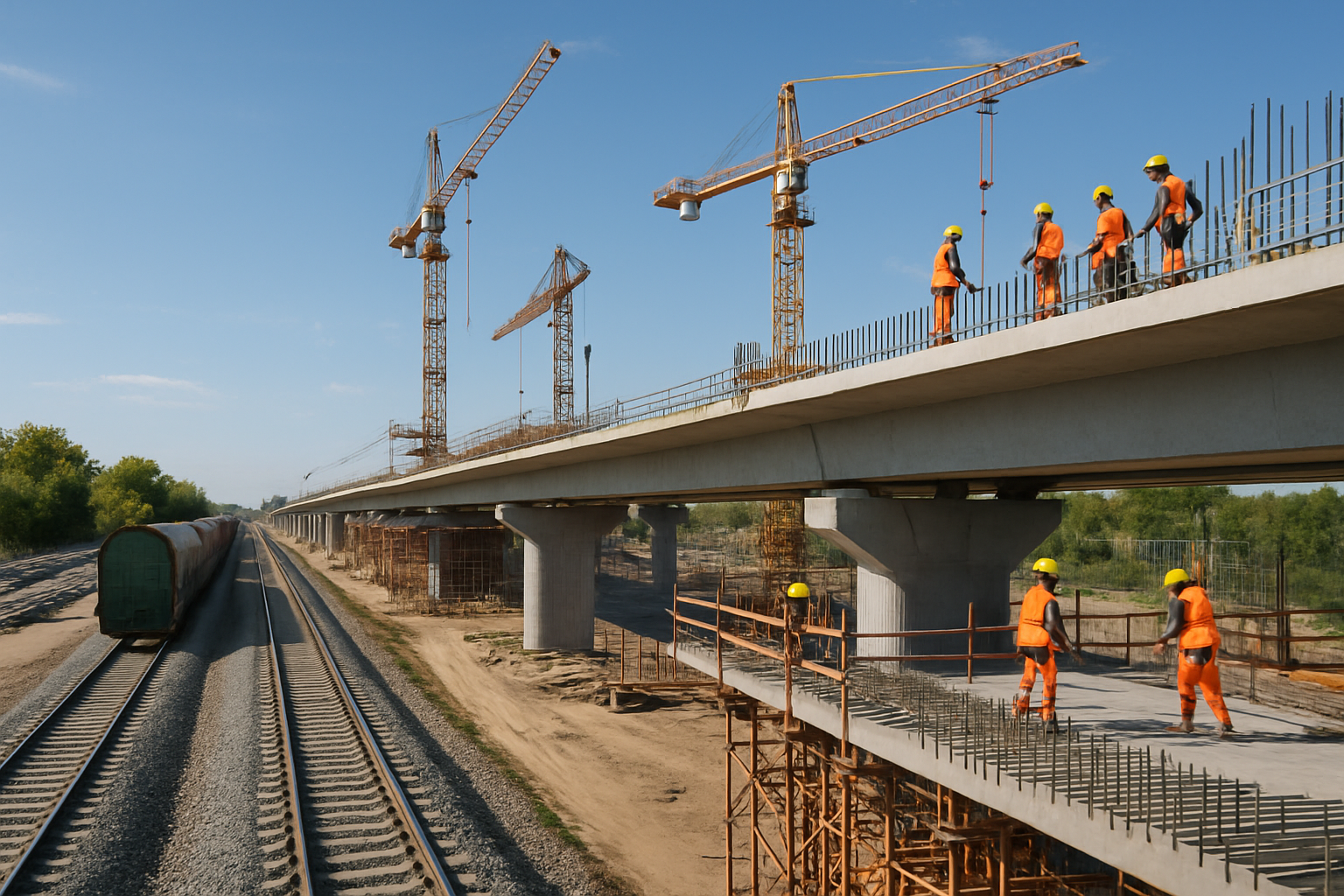
A new chapter in global infrastructure development is unfolding as Malaysia advances its historic Batu Kawa bridge project with substantial landowner compensation reaching nearly RM1 million, while Bolivia prepares to restart passenger railway services after a six-year suspension, highlighting the worldwide infrastructure investment surge transforming regional connectivity.
Malaysia's Bridge Project Sets Compensation Precedent
The Batu Kawa second bridge project in Kuching has reached a critical milestone with the beginning of compensation payments to affected landowners, some reaching nearly RM1 million, according to Deputy Premier Datuk Amar Dr Sim Kui Hian. The groundbreaking ceremony is tentatively scheduled for April 2026, marking a significant step forward in Malaysia's transportation infrastructure development.
"Many people may not realise that for the second bridge, a lot of the landowners are already receiving compensation. Just now, you saw one of the cheques (shown on screen), it was almost RM1 million," Dr Sim explained during a public announcement. The substantial compensation payments demonstrate Malaysia's commitment to fair treatment of affected communities while advancing critical infrastructure projects.
"The contract has been awarded and once the contract is awarded, the land acquisition and compensation have started. What you saw just now was just one example of the compensation paid. So, you see, a lot of people in Batu Kawa have become very rich because of the second bridge."
— Datuk Amar Dr Sim Kui Hian, Deputy Premier
Bolivia's Railway Renaissance After Six-Year Gap
In South America, Bolivia is celebrating the imminent return of passenger railway services along the Santa Cruz – Puerto Quijarro route, scheduled to resume on February 27, 2026. The reactivation comes after more than two months of intensive collaboration between the Ministry of Public Works, ATT, UTF, and Provincial Civic Committees representing communities throughout the eastern Bolivian region.
Juan Marcelo Méndez, president of the Provincial Civic Committees of Cruceñidad, expressed widespread enthusiasm for the project's revival. "I'm happy. We've been working for more than two months with the Ministry of Public Works, ATT, UTF, and the Provincial Civic Committees and civics from all the towns. And this February 27, the train returns," he celebrated.
The railway service suspension had left eastern Bolivia without passenger rail transport for six years, significantly impacting regional connectivity and economic development. The reactivation is expected to boost tourism, improve transportation options for local communities, and stimulate economic activity across the affected regions.
Part of Unprecedented Global Infrastructure Surge
These developments occur within the context of an unprecedented $570+ billion global infrastructure investment surge documented throughout 2026. From Vietnam's $120 billion expressway commitment to build 9,000 kilometers of roads by 2050, to Africa's extensive railway developments including Algeria's Gara Djebilet mining railway and Angola's Lobito Corridor revival, nations worldwide are prioritizing connectivity infrastructure as essential for economic competitiveness and regional integration.
The Malaysia-Bolivia examples demonstrate diverse approaches to infrastructure development financing and community engagement. Malaysia's substantial compensation model sets new standards for fair treatment of affected populations, while Bolivia's multi-stakeholder collaboration approach showcases effective coordination between government agencies and civic organizations.
Economic and Social Impact
The economic implications of these projects extend far beyond immediate construction activities. Malaysia's Batu Kawa bridge will enhance connectivity within the Kuching metropolitan area, reducing travel times and supporting economic development in surrounding regions. The substantial compensation payments have already created significant wealth for affected landowners, demonstrating infrastructure development's potential to generate immediate economic benefits for local communities.
Bolivia's railway reactivation addresses transportation challenges that have persisted since the service suspension in 2020. The restored connection will provide reliable transportation options for communities along the route while supporting the development of tourism infrastructure in the Chiquitanía region, known for its cultural heritage and natural attractions.
Technology and Sustainability Integration
Modern infrastructure projects increasingly incorporate advanced technology and sustainability considerations as standard requirements rather than optional additions. Both the Malaysian bridge project and Bolivian railway reactivation benefit from contemporary planning approaches that integrate digital monitoring systems, environmental protection measures, and climate adaptation features.
The global infrastructure surge reflects evolved understanding of connectivity requirements for 21st-century economic development. Projects must address not only immediate transportation needs but also long-term sustainability, environmental protection, and resilience to climate change impacts.
International Cooperation and Knowledge Sharing
The simultaneous advancement of major infrastructure projects across different continents demonstrates increased international cooperation and knowledge sharing in project development and financing. Contemporary infrastructure initiatives benefit from global expertise in engineering, environmental management, and community engagement practices developed through decades of international development experience.
Regional integration objectives drive many current infrastructure investments, with projects like Malaysia's bridge supporting ASEAN connectivity goals and Bolivia's railway contributing to South American transportation networks. These initiatives align with continental integration frameworks including AfCFTA in Africa and various regional cooperation agreements worldwide.
Future Implications and Precedents
The Malaysian compensation model and Bolivian collaborative approach provide templates for future infrastructure development worldwide. Malaysia's commitment to substantial landowner compensation sets precedents for fair treatment of affected communities, while Bolivia's inclusive stakeholder engagement demonstrates effective coordination mechanisms for complex multi-jurisdictional projects.
Success in both projects will influence infrastructure development practices globally, particularly regarding community engagement, environmental protection, and sustainable financing mechanisms. The integration of traditional infrastructure needs with contemporary sustainability and social responsibility requirements reflects evolved approaches to development planning.
As these projects advance through 2026, they will contribute to the growing body of evidence supporting infrastructure investment as essential for economic competitiveness, regional integration, and sustainable development. Their outcomes will help establish best practices for balancing immediate development needs with long-term environmental and social considerations in an era of unprecedented global connectivity transformation.