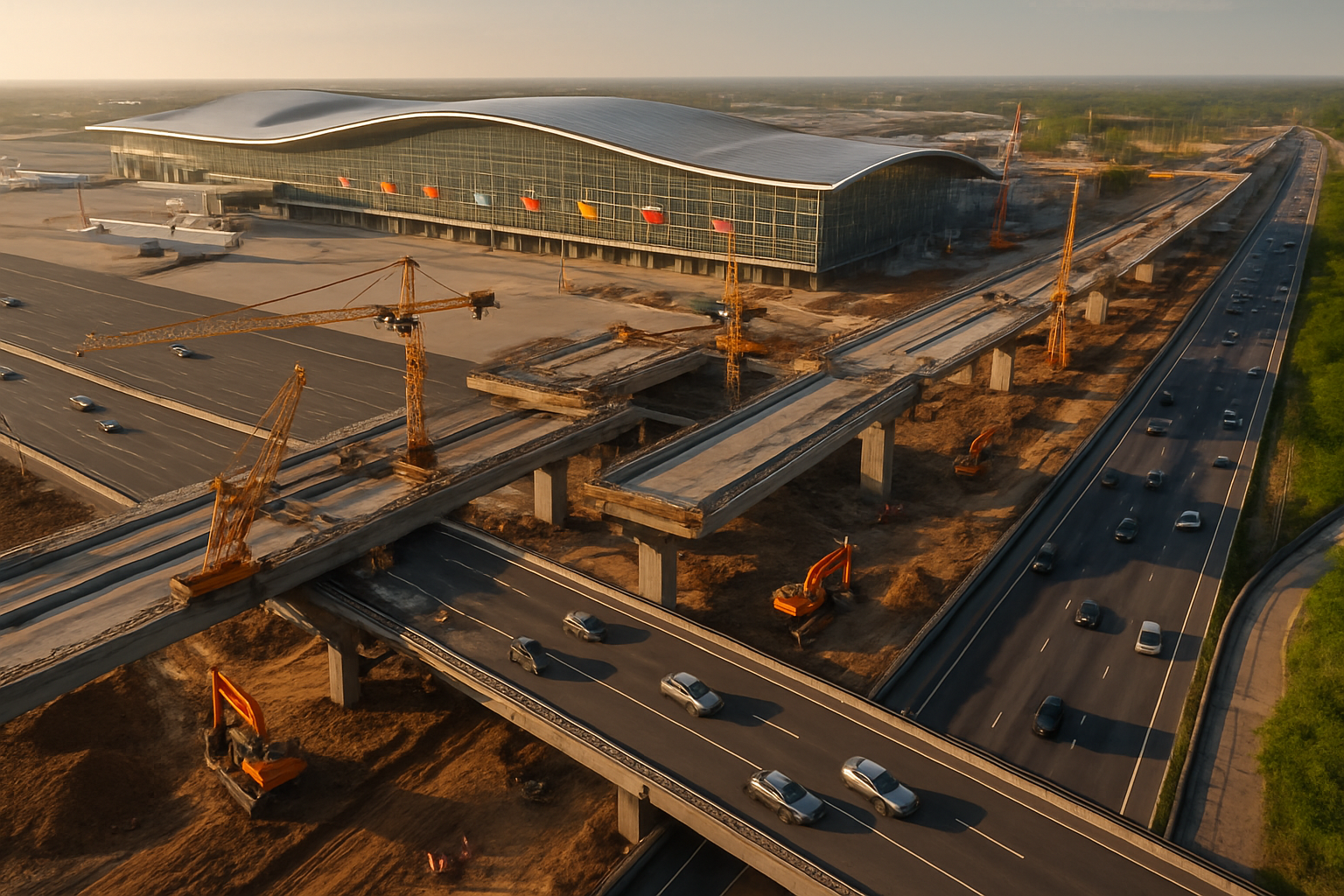
Infrastructure development is experiencing an unprecedented surge across five nations this February, with major airport transitions, light rail expansions, and critical transportation upgrades demonstrating the global commitment to modernizing connectivity systems and enhancing economic growth.
From Angola's historic airport transition to Canada's long-awaited LRT opening, these developments represent billions in investment and years of planning culminating in transformative projects that will reshape transportation networks for decades to come.
Angola's Historic Airport Transition Nears Completion
Angola stands on the brink of a major aviation milestone as the complete transfer of airline operations from 4 de Fevereiro Airport in Luanda to the new Dr. António Agostinho Neto Airport (AIAAN) in Icolo e Bengo is scheduled for completion in March 2026. Director of airport operations and cargo Soraia de Sousa announced this critical transition phase on February 3, marking the culmination of one of Africa's most significant airport infrastructure projects.
The new AIAAN facility represents a substantial upgrade in capacity and capabilities compared to the aging Luanda airport, which has served as Angola's primary international gateway for decades. This transition is expected to significantly enhance Angola's position as a regional aviation hub while improving passenger experience and cargo handling capabilities.
"The completion of this transfer marks a new era in Angola's aviation infrastructure, positioning us to better serve both domestic and international travelers while supporting our growing economy."
— Soraia de Sousa, Director of Airport Operations and Cargo
Brazil Advances Airport Privatization with Galeão Concession
Brazil's Ministry of Ports and Airports has initiated a comprehensive roadshow for the concession auction of Rio de Janeiro's Galeão International Airport, signaling the government's continued commitment to airport privatization. This strategic move aims to improve operational efficiency and infrastructure investment at one of the country's most important aviation facilities.
The Galeão concession represents part of Brazil's broader privatization program, designed to attract private investment and expertise to modernize the country's aviation infrastructure. The airport, which serves as a crucial gateway to Rio de Janeiro, is expected to benefit from enhanced management and capital investment under private operation.
Canada's Eglinton LRT Finally Opens After Delays
After years of construction delays and mounting public frustration, Toronto's Eglinton LRT is set to open on Sunday, February 9, 2026, with a phased opening plan that includes free rides for passengers on the first day of operations. TTC CEO confirmed the long-awaited launch, marking a significant milestone for Toronto's public transportation network.
The delay-plagued light rail transit system has faced numerous construction challenges and timeline revisions, making its opening a particularly celebrated achievement for city planners and commuters alike. The system represents a crucial addition to Toronto's transit infrastructure, designed to improve east-west connectivity across the city.
Early testing phases showed promising results, with test trains successfully navigating the route while members of the public queued for buses along Eglinton Avenue. The phased opening approach allows for gradual system integration and operational refinement while ensuring passenger safety and service reliability.
Ecuador Modernizes Municipal Services Infrastructure
Ecuador's capital, Quito, is implementing significant changes to municipal service delivery through its public utilities company EPMAPS. The organization has reinforced agencies, personnel, and mobile brigades to guide users through new waste collection fee structures integrated into water bills.
This infrastructure modernization extends beyond physical construction to encompass service delivery systems, representing a comprehensive approach to urban management. The initiative demonstrates how cities are adapting their operational frameworks to improve efficiency and citizen services while maintaining sustainable financing mechanisms.
Papua New Guinea Advances Regional Road Connectivity
Papua New Guinea is making substantial progress on crucial road infrastructure with the Sohe District Development Authority (DDA) releasing K250,000 for the Wau-Kira road link. This funding, presented by the Sohe DDA chairman to Wau-Waria MP Marsh Narewec, signals a coordinated cross-district effort to advance the Northern Highway project.
The road development initiative represents critical infrastructure for rural connectivity in Papua New Guinea, where geographic challenges have historically limited transportation options between communities. The Northern Highway project aims to improve economic opportunities and access to essential services for remote populations.
The cross-district collaboration demonstrates how regional governments are pooling resources to address large-scale infrastructure challenges that extend beyond individual administrative boundaries. Such cooperation is essential for nations with dispersed populations and challenging terrain.
Global Infrastructure Investment Trends
These developments across five nations reflect broader global trends in infrastructure investment, with governments and private sectors recognizing transportation connectivity as fundamental to economic development. The February 2026 infrastructure surge builds on recent major completions including Mexico's El Insurgente train, Malaysia's aviation fleet expansion, and Paraguay's Bioceanic Bridge nearing completion.
According to recent analysis, global infrastructure investment has reached unprecedented levels, with particular emphasis on sustainable transportation solutions and regional connectivity projects. The combination of airport modernization, rail expansion, and road development demonstrates a comprehensive approach to addressing 21st-century transportation needs.
Economic and Social Impact
The economic implications of these infrastructure projects extend far beyond immediate construction jobs and spending. Angola's new airport positions the nation to capture increased tourist and business traffic, while Brazil's airport privatization aims to improve operational efficiency and service quality.
Canada's LRT opening addresses urban mobility challenges while supporting sustainable transportation goals. Ecuador's service modernization reflects evolving municipal management approaches, and Papua New Guinea's road development tackles rural connectivity challenges that have historically limited economic opportunities.
Challenges and Opportunities
Despite the positive momentum, these projects also highlight common challenges in large-scale infrastructure development. Canada's LRT delays underscore the complexity of urban transit construction, while Angola's airport transition requires careful coordination to maintain operational continuity.
Environmental considerations, financing mechanisms, and construction timeline management remain critical factors across all projects. However, the successful progression of these initiatives demonstrates improved project management capabilities and political commitment to infrastructure development.
Looking Forward
The February 2026 infrastructure developments represent just the latest phase in a global transformation of transportation networks. As these projects become operational, they will serve as models for future infrastructure initiatives while demonstrating the economic and social benefits of strategic transportation investment.
The success of these diverse projects across different continents and economic contexts provides valuable lessons for future infrastructure planning. From airport transitions to rural road development, the February 2026 milestone month showcases the potential for transformative infrastructure investment to reshape national and regional connectivity.
As these projects move from construction to operation, their long-term impact on economic development, social connectivity, and regional integration will become increasingly apparent, setting the stage for the next generation of global infrastructure innovation.