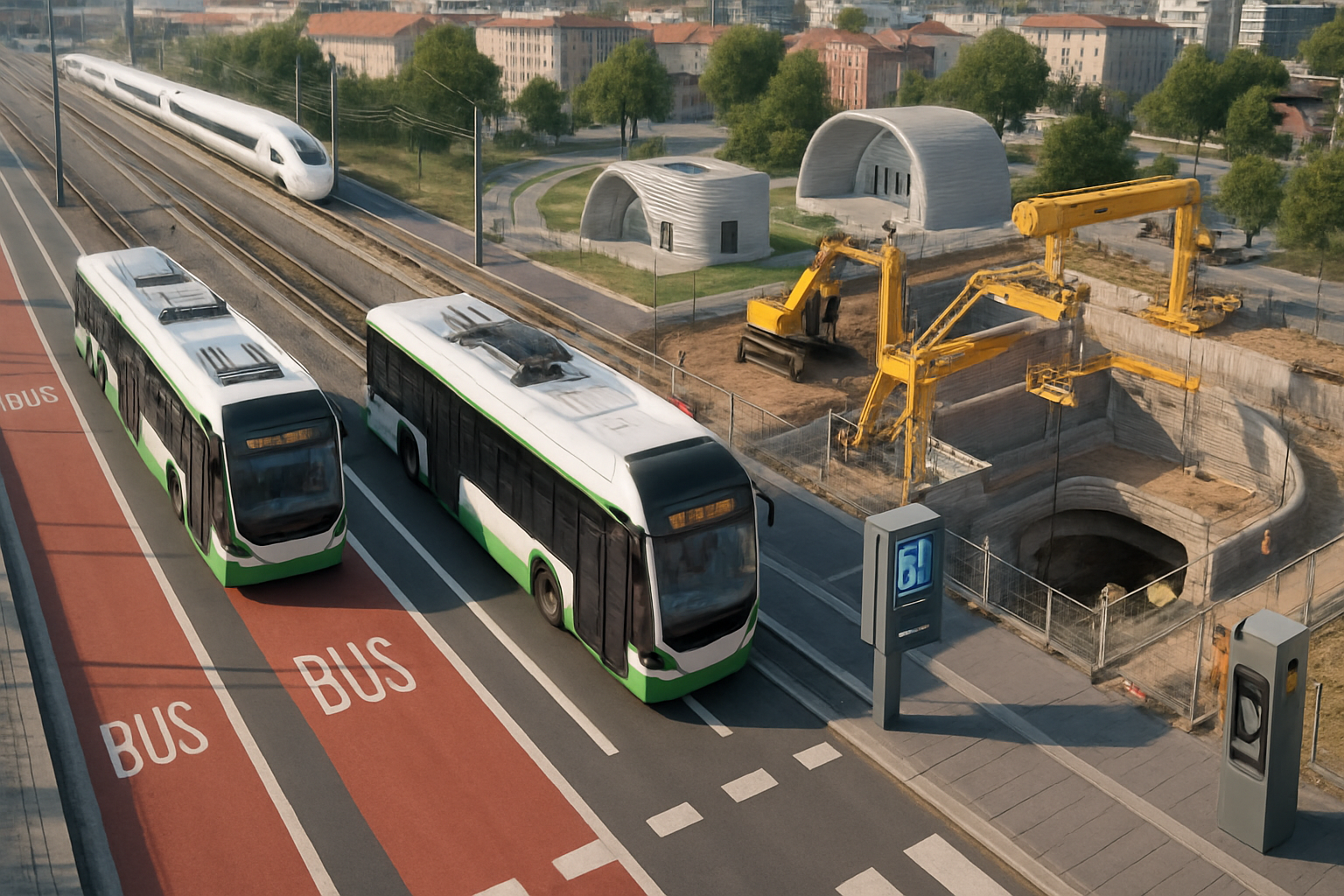
A sweeping transformation of global transportation infrastructure is reshaping urban mobility across Europe and Asia, as governments from Bulgaria to Singapore implement groundbreaking projects that could define the next decade of sustainable development.
The latest developments span from Sofia's comprehensive urban bus route reorganization to Singapore's world-first 3D-printed pedestrian bridge, representing part of an unprecedented $570+ billion global infrastructure surge that has accelerated throughout 2026. These initiatives demonstrate how nations are leveraging cutting-edge technology to address 21st-century mobility challenges while building climate-resilient transportation networks.
Eastern Europe Embraces Electric Revolution
Bulgaria is leading Eastern Europe's transportation transformation with Sofia's most comprehensive public transit overhaul in decades. The city is implementing sweeping changes to 24 ground-based network routes, including new trolleybus lines, expanded bus connections, and systematic optimization across the entire urban mobility system.
The centerpiece of Bulgaria's initiative is the secured contracts for 125 new electric vehicles—75 trolleybuses and 50 electric buses—plus essential charging infrastructure through "Stolichen Elektrotransport" EAD. This represents Eastern Europe's most significant public transportation electrification project, positioning Sofia as a regional leader in sustainable urban mobility.
Meanwhile, from April 6, 2026, Sofia's bus line 801 began operating on a redesigned route aimed at improving connectivity between Metro station "Krasno selo" and the "Monastirski livadi" neighborhood. The new route travels along major boulevards including "Tsar Boris III," "Bratya Bokshton," "Todor Kableshkov," and "Gotse Delchev," creating enhanced accessibility across previously underserved areas.
Baltic Innovation in Digital Infrastructure
Estonia continues to demonstrate Nordic leadership in sustainable transportation innovation, building on its remarkable achievement of 88% renewable electricity usage and Europe's largest battery storage system serving 90,000 households. The nation maintains a 99.25% EU funding absorption rate—the highest among member states—showcasing exceptional project management capabilities.
Estonia's approach to infrastructure development emphasizes the integration of environmental stewardship with operational efficiency, as demonstrated by ongoing developments in the Pelguranna tram route through the innovative "Pollinator Highway" concept. This represents a sophisticated balance between transportation needs and biodiversity conservation that could serve as a template for other European cities.
Mediterranean Parking Policy Innovation
Croatia is pioneering experimental parking management systems that could revolutionize urban mobility planning. Zagreb introduced its first-ever "brown zone" in Block 13 on Tratinska Street in the heart of Trešnjevka, running as a pilot program from April 11 through September 11, 2026.
This special parking zone restricts access to residents with permanent addresses or business premises in the specific area, requiring valid preferential parking tickets. While the implementation results in approximately 60 parking spaces being removed, the experiment aims to gather valuable data on urban space allocation and community-based mobility solutions.
Latvia faces similar urban parking challenges, with Rīga City Council's Traffic and Transport Affairs Committee actively discussing potential solutions for the Old Town and city center. The ongoing deliberations reflect the universal challenge of balancing vehicle access with livability in historic urban cores, though strong objections from various stakeholders have delayed implementation of specific measures.
Cyprus Infrastructure Investment
Cyprus is advancing critical infrastructure projects that extend beyond transportation to essential urban services. The island nation has operationalized a new desalination facility in Limassol, with plans to integrate an additional unit in Garyllis within the coming weeks. While primarily focused on water infrastructure, this development represents the type of integrated utility planning that supports broader urban development and transportation connectivity.
Singapore's Technological Leap Forward
Singapore is establishing new global standards for construction innovation with its first 3D concrete-printed pedestrian bridge planned for Jurong. This 10-meter-long structure represents a breakthrough in addressing the city-state's labor shortages while improving construction productivity through automated manufacturing processes.
The project exemplifies Singapore's systematic approach to leveraging 3D concrete printing technology to transform its construction sector. As one of the world's most densely populated nations, Singapore's innovations in space-efficient infrastructure could provide valuable lessons for other urban centers facing similar constraints.
However, Singapore's transportation sector also faces regulatory evolution, with new Civil Aviation Authority restrictions limiting air passengers to carrying a maximum of two power banks each from April 15, 2026. The regulation prohibits charging power banks aboard aircraft, reflecting the complex balance between technological convenience and safety protocols in modern travel infrastructure.
Technology Integration and Climate Resilience
Modern infrastructure projects across these regions incorporate sophisticated technology integration from the design phase, including real-time monitoring, predictive maintenance capabilities, digital payment systems, and environmental optimization features. Climate adaptation has evolved from an optional consideration to a mandatory requirement, with enhanced drainage, weather-resistant materials, and backup power systems becoming standard specifications.
The global semiconductor shortage, which has driven prices sixfold higher until 2027, initially posed challenges for smart infrastructure implementations. However, this constraint has paradoxically accelerated innovation in efficient algorithms and distributed processing systems, creating more resilient and adaptable transportation networks.
Economic Multiplier Effects and Regional Integration
These infrastructure investments generate substantial economic benefits extending far beyond construction employment. Reduced logistics costs, enhanced market access, and improved business productivity support broader regional integration objectives, including the African Continental Free Trade Area (AfCFTA) and European Union connectivity goals.
The projects demonstrate diverse financing approaches, from EU structural funds supporting climate priorities to innovative public-private partnerships. Success factors consistently include comprehensive community engagement, transparent governance frameworks, and adaptive management strategies that can respond to changing conditions while maintaining core objectives.
Implementation Challenges and Solutions
Universal challenges include material cost inflation, skilled labor shortages, environmental compliance requirements, and coordination complexity across multiple stakeholders. However, successful projects demonstrate that international cooperation through technical assistance, knowledge sharing, and coordinated procurement can effectively address supply chain disruptions and quality control standards.
Environmental sustainability has evolved from optional to fundamental project requirements, with climate resilience planning, renewable energy integration, and waste reduction protocols becoming essential for project approval and financing approval processes.
Strategic Significance for the Future
The convergence of technological advancement, environmental awareness, and international cooperation evident in these April 2026 developments represents a watershed moment in global infrastructure development. These projects are establishing precedents that will influence transportation strategies worldwide for decades to come.
Success in building climate-resilient, technologically sophisticated transportation systems will determine whether societies can develop the adaptive capacity necessary to thrive in an increasingly interconnected yet climate-challenged world. The choice between transformative infrastructure adaptation and reactive crisis management represents one of the most significant policy decisions of the current decade.
As nations continue to navigate the balance between immediate mobility needs and long-term sustainability, the lessons emerging from Bulgaria's electrification initiatives, Croatia's parking innovations, and Singapore's construction breakthroughs will likely shape the future of urban development across all continents.