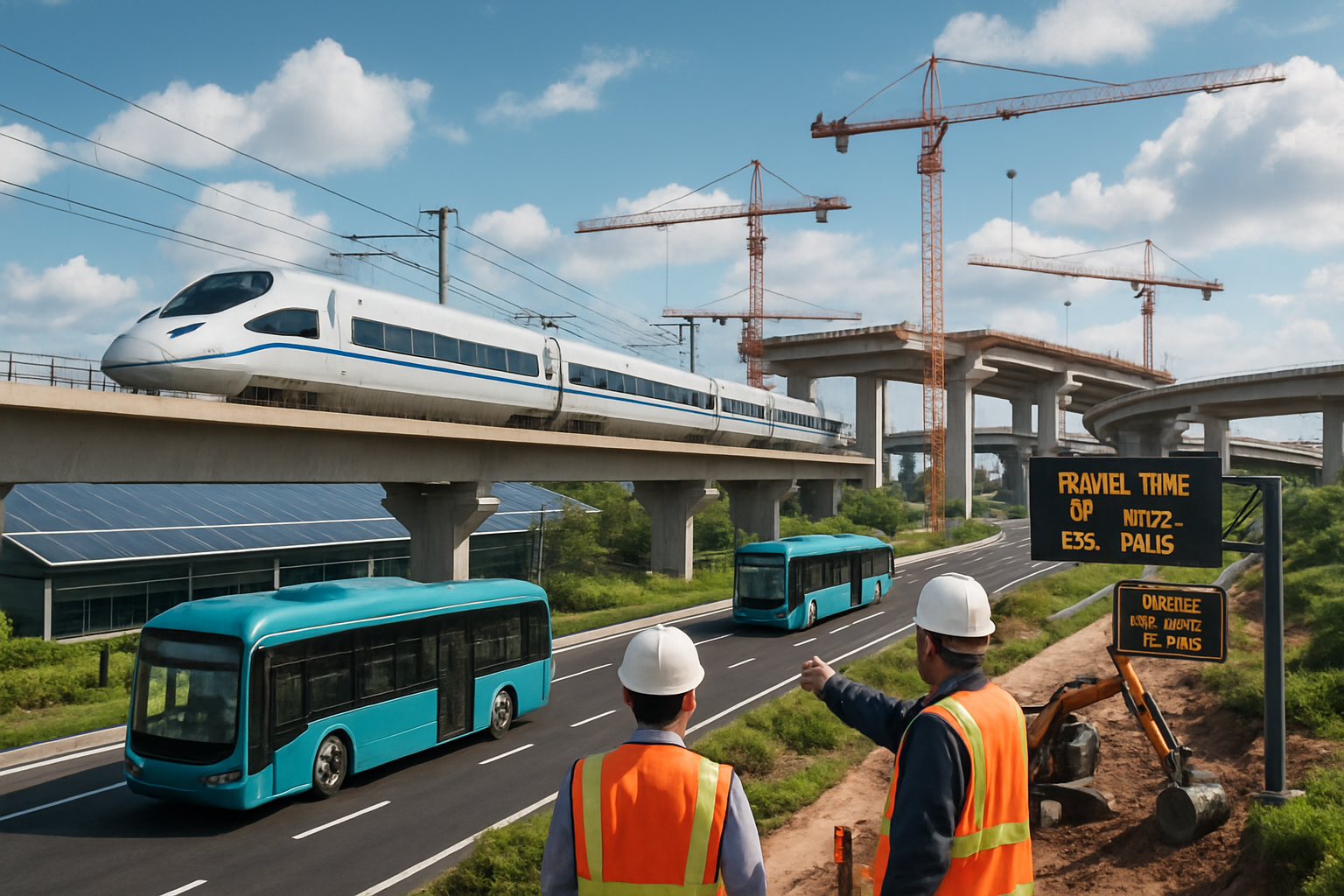
March 2026 has emerged as a watershed moment in global infrastructure development, with transformative transportation projects spanning from Bolivia's historic railway interconnection initiative to Germany's enhanced European connectivity, marking an unprecedented surge in coordinated international investment exceeding $570 billion worldwide.
Bolivia's Railway Renaissance: East-West Connection Vision
At the forefront of Latin American infrastructure transformation stands Bolivia's ambitious project to interconnect the railway networks of western and eastern regions. Minister Mauricio Zamora of the Ministry of Public Works, Services and Housing has positioned this initiative as a cornerstone of national development strategy, aimed at strengthening domestic logistics, boosting tourism, and promoting comprehensive economic growth.
Javier Valdivia, General Manager of Ferroviaria Andina, emphasized the project's national significance, noting that Minister Zamora has successfully placed railway interconnection back on the national agenda after decades of being considered merely an aspiration. "This project represents more than infrastructure—it's about national integration and economic transformation," Valdivia stated during recent coordination meetings.
"Minister Mauricio Zamora has put the importance of railway interconnection back on the national agenda, transforming a decades-old aspiration into actionable policy."
— Javier Valdivia, General Manager, Ferroviaria Andina
The initiative builds upon Bolivia's broader transportation modernization efforts, including the recent reactivation of the Santa Cruz-Puerto Quijarro passenger railway service after a six-year suspension. This eastern corridor restoration, celebrated in February 2026, demonstrated successful multi-stakeholder coordination between the Ministry of Public Works, transportation authorities, and regional civic committees.
European Integration Through Rail Innovation
Germany's transportation sector is simultaneously advancing European connectivity through the launch of a new Paris-Berlin overnight rail service, scheduled to begin operations within weeks. The route confirmation includes three additional stops, representing a significant enhancement to sustainable cross-border travel options and supporting European Union integration objectives.
This development aligns with broader European infrastructure trends, including the ongoing Rail Baltica construction connecting Baltic states to the continental European network and Austria's Franz-Josefs-Bahn modernization enabling seamless Prague-Vienna operations without locomotive changes—addressing longstanding international rail traffic bottlenecks.
Central American Urban Transformation
El Salvador demonstrates sophisticated urban development through dual infrastructure initiatives. Minister Romeo Herrera announced the commencement of intervention works on Las Truchas Street in Nuevo Cuscatlán, designed to optimize mobility between the La Libertad Port Highway and Santa Tecla. The project includes constructing approximately 200 meters of new access from Las Olas Sur Avenue, providing direct connectivity and eliminating unnecessary detours for local communities.
Simultaneously, San Salvador continues advancing Phase 6 of its ambitious Historic Center revitalization plan under Mayor Mario Durán's leadership, implementing President Nayib Bukele's urban renewal vision. The comprehensive initiative targets emblematic sectors including Avenida España, Plaza 14 de Julio, and La Placita, combining intensive cleaning campaigns, irregular structure removal, and public infrastructure recovery.
These projects exemplify modern urban planning approaches that balance operational efficiency with community engagement, featuring constant dialogue with merchants and affected sectors to ensure orderly, consensual reordering of urban spaces.
Colombian Mega-Infrastructure Advancement
Colombia's infrastructure development showcases large-scale transportation solutions with the initiation of third-lane construction on the Floridablanca highway, representing one of the region's most significant megaprojects. The initiative addresses chronic traffic congestion while implementing climate-resilient engineering standards and comprehensive utility network development.
The project encompasses essential network infrastructure improvements designed to enhance southeastern regional connectivity, incorporating advanced traffic management systems and environmental optimization from the design phase rather than as retrofitted additions.
Strengthening Regional Administrative Infrastructure
Nicaragua's infrastructure development focuses on administrative efficiency through the establishment of a new Citizen Service Center in Managua. This facility addresses high demand across existing service centers by streamlining procedures and reducing waiting times for essential government services, demonstrating how infrastructure investment extends beyond transportation to encompass comprehensive public service delivery.
The country has simultaneously achieved significant progress in port infrastructure, with commercial ports moving over 132,000 metric tons of cargo in recent weeks, indicating robust economic activity supported by enhanced logistics capabilities.
Technology Integration and Climate Adaptation
Modern infrastructure projects increasingly incorporate sophisticated technology integration from the design phase, including real-time monitoring systems, predictive maintenance capabilities, digital payment platforms, and environmental optimization. Climate adaptation has evolved from optional consideration to fundamental requirement, with projects incorporating enhanced drainage systems, weather-resistant materials, and backup power infrastructure designed for future rather than historical climate conditions.
The global semiconductor shortage, with prices increasing sixfold through 2027, has accelerated innovation in alternative approaches including efficient algorithms and distributed processing systems, making infrastructure networks more resilient and adaptable.
Economic Multiplier Effects and Regional Integration
These infrastructure investments create substantial economic multiplier effects extending far beyond construction employment. Reduced logistics costs, enhanced market access, and improved business productivity support regional integration objectives including the African Continental Free Trade Area (AfCFTA) and Latin American economic cooperation frameworks.
Success factors consistently include sustained political commitment, transparent governance frameworks, comprehensive community engagement, and adaptive management strategies. International cooperation has become increasingly sophisticated, featuring technical assistance, knowledge sharing, and coordinated procurement approaches addressing supply chain disruptions while maintaining quality control standards.
Strategic Global Context and Future Implications
March 2026's infrastructure developments occur within an unprecedented global investment surge representing coordinated international recognition of transportation networks as strategic foundations for economic competitiveness, climate adaptation, and international cooperation. The convergence of technological advancement, environmental awareness, and enhanced international cooperation is creating new development models that prioritize comprehensive sustainability alongside economic growth.
These projects establish precedents that will influence global transportation strategies for decades ahead, determining whether societies develop the adaptive capacity necessary for thriving in an increasingly interconnected and climate-challenged world. The choice between transformative infrastructure adaptation and reactive crisis management represents one of the most significant policy decisions of the current decade.
From Bolivia's railway interconnection vision to Germany's enhanced European connectivity, from El Salvador's urban transformation to Nicaragua's administrative modernization, March 2026 demonstrates how coordinated infrastructure investment can address immediate development needs while building foundations for sustainable long-term prosperity through sophisticated international cooperation and technological innovation.