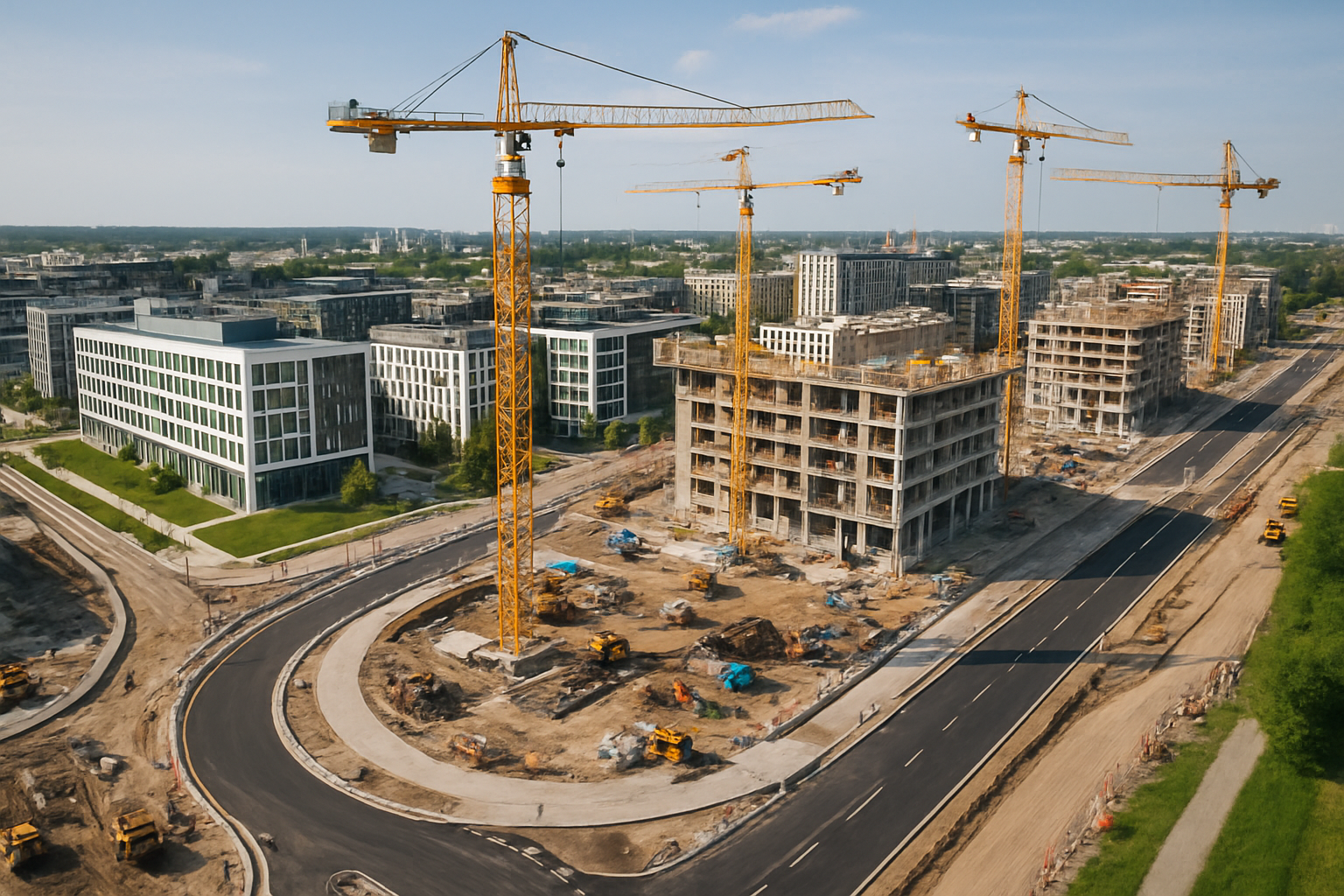
Urban development projects across multiple continents are encountering unprecedented challenges, from closure of completed facilities to canceled infrastructure contracts, revealing systemic issues in modern city planning and execution.
In Sydney, Australia, a $1.8 million plaza project that was promoted as a transformative modern urban space has been indefinitely shuttered by local authorities, while in Colombia, a crucial highway infrastructure project worth millions has been abandoned through canceled public bidding processes. These developments represent broader challenges facing urban infrastructure projects globally amid rising costs, regulatory complexities, and evolving social requirements.
Sydney's $1.8 Million Plaza Closure
Crescent Plaza, located in Sydney and pitched as a modern urban community space, has been fenced off indefinitely by the council that commissioned its construction. Local authorities cited concerns about alcohol-fueled "anti-social behavior" as the primary reason for the closure, raising questions about the planning and design processes that failed to anticipate community usage patterns.
The closure represents a significant loss of public investment and highlights the complex relationship between urban design theory and practical community needs. The project, which cost taxpayers $1.8 million, was intended to create a gathering space for residents but instead became what officials describe as a problematic area requiring ongoing security concerns.
Urban planning experts suggest that the failure points to insufficient community consultation during the design phase and inadequate consideration of how such spaces integrate with existing neighborhood dynamics. The indefinite closure means the substantial public investment has failed to deliver intended community benefits.
Colombia's Infrastructure Setback
In Colombia's Santander region, authorities have canceled the public tender for the San Gil Bypass (Variante San Gil), a critical infrastructure project that was originally scheduled for completion in 2023. The cancellation represents another significant blow to regional transportation infrastructure investment, described by officials as "one of the most important works needed by the region to improve its road infrastructure."
The project's cancellation highlights systemic challenges in Latin American infrastructure procurement, including complex regulatory frameworks, financing difficulties, and technical complications that have become increasingly common in major public works projects. Regional officials emphasize that improved road infrastructure remains essential for economic development and connectivity.
Transportation infrastructure experts note that such cancellations create cascading effects on regional economic development, as businesses and communities plan around expected improvements that fail to materialize. The repeated delays and cancellations in major infrastructure projects across Colombia reflect broader governance and project management challenges affecting urban and regional development.
Global Infrastructure Context
These setbacks occur within a broader global infrastructure landscape experiencing unprecedented challenges. According to comprehensive analysis from Planet News archives, the international community has committed over $570 billion to infrastructure development projects during 2026, yet implementation faces universal obstacles including material cost inflation, skilled labor shortages, and complex regulatory environments.
Memory chip shortages have driven semiconductor prices up sixfold, affecting smart infrastructure technologies that have become standard requirements for modern urban development projects. This technological constraint adds 20-30% to construction costs across projects that incorporate digital monitoring, automated systems, and environmental optimization features.
Climate adaptation has evolved from optional consideration to mandatory requirement, with infrastructure projects now required to incorporate enhanced drainage, weather-resistant materials, and backup power systems designed for future rather than historical climate conditions. These requirements, while necessary, add complexity and costs to urban development projects.
Economic and Social Implications
Failed infrastructure projects represent more than financial losses; they undermine community trust in public institutions and planning processes. The Sydney plaza closure demonstrates how poor community engagement can render expensive projects unusable, while the Colombia highway cancellation shows how procurement failures prevent essential regional connectivity improvements.
Economic multiplier effects from successful infrastructure projects include job creation during construction, permanent operational employment, reduced transportation costs, and enhanced market access. When projects fail or face cancellation, these benefits are lost, and communities may face decreased confidence in future public investment initiatives.
Regional integration objectives suffer when major transportation projects encounter delays or cancellations. In Colombia's case, the canceled highway project was intended to support broader economic connectivity across Santander, contributing to national transportation networks essential for trade and development.
Solutions and Best Practices
Successful infrastructure projects demonstrate several critical success factors: comprehensive community engagement from initial planning stages, transparent governance frameworks, realistic project timelines, and adaptive management strategies that can respond to changing conditions while maintaining core objectives.
International cooperation increasingly provides technical assistance, knowledge sharing, and coordinated procurement approaches to address supply chain disruptions and quality control challenges. Countries achieving infrastructure success typically demonstrate sustained political commitment beyond electoral cycles and sophisticated project management combining international best practices with local expertise.
Technology integration, despite current constraints, offers potential solutions through predictive maintenance systems, real-time monitoring, and automated operations that can improve project outcomes and long-term sustainability. However, such technologies require careful planning and adequate budgets to avoid the cost overruns affecting current projects.
Future Outlook
The infrastructure challenges exemplified by Sydney's plaza closure and Colombia's highway cancellation represent critical junctures in urban development planning. Success requires balancing immediate community needs with long-term sustainability goals, national infrastructure priorities with local community requirements, and technological advancement with practical implementation constraints.
Urban planning experts emphasize that infrastructure development has evolved beyond simple construction toward comprehensive systems supporting economic development, environmental protection, and social connectivity simultaneously. Projects that fail to integrate these multiple objectives risk becoming expensive failures rather than community assets.
The choice between transformative infrastructure adaptation and reactive crisis management represents a significant policy decision for the current decade. As global urbanization continues and climate adaptation requirements intensify, the lessons from both failed and successful projects will influence infrastructure strategies worldwide for decades ahead.