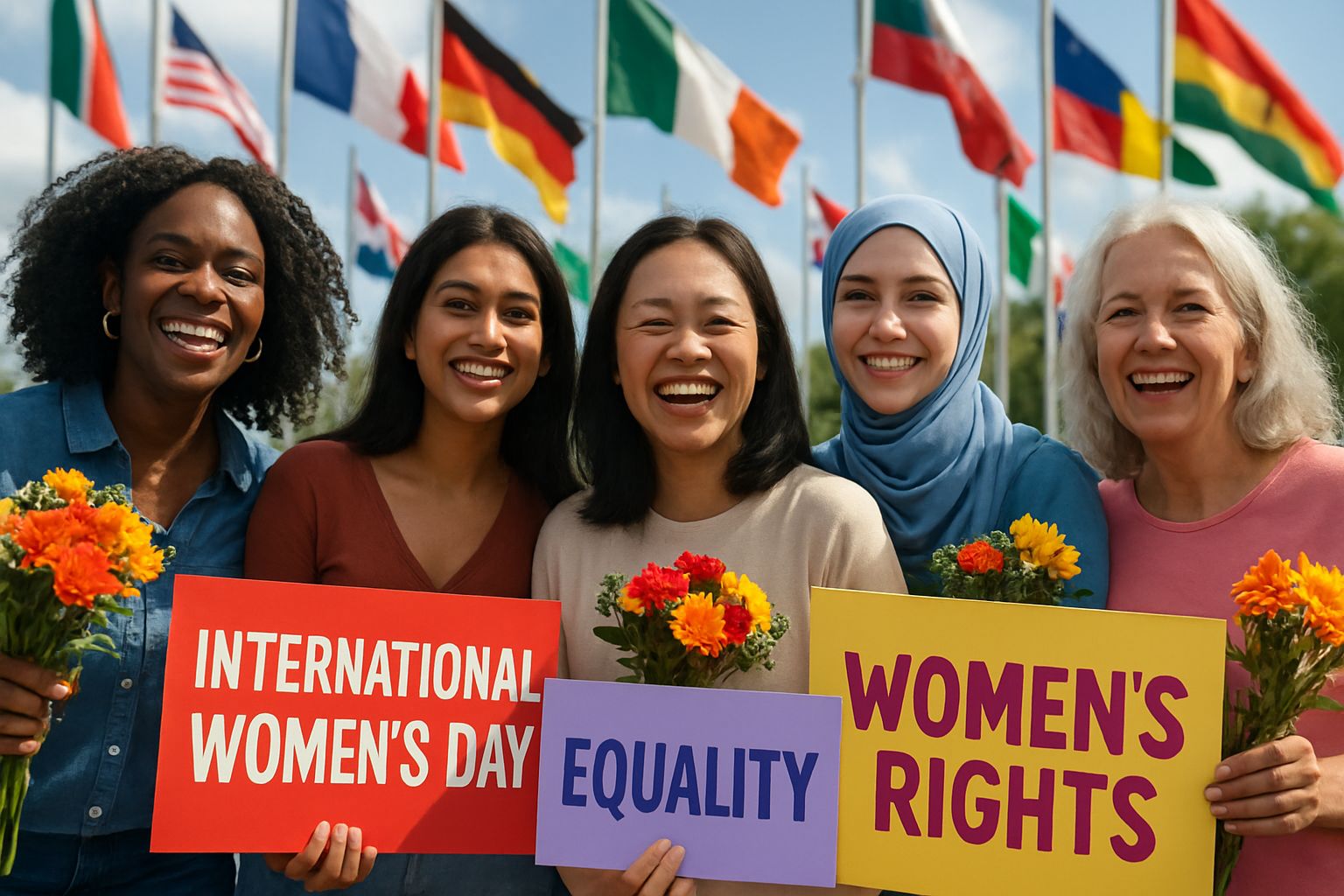
International Women's Day 2026 marked a pivotal moment for gender equality globally, with political leaders, activists, and institutions across 12 countries making significant statements and announcing concrete initiatives to advance women's rights, even as persistent challenges continue to demand urgent attention.
From Austria's political leadership calling for greater female representation to Spain's recognition of influential feminist thinkers, this year's commemorations demonstrate both remarkable progress and the substantial work that remains ahead. The day's events spanned continents, revealing a complex landscape where historical achievements intersect with contemporary struggles for equality.
Austrian Political Leadership Addresses Gender Representation
In Austria, prominent political figures used International Women's Day to highlight the persistent underrepresentation of women in political life. Governor Johanna Mikl-Leitner and Regional Councilor Christiane Teschl-Hofmeister emphasized that "more women are needed in politics," acknowledging that despite decades of progress, women remain significantly underrepresented in decision-making positions.
This political messaging was reinforced by Regional Councilor Barbara Rosenkranz, who stressed that "women need clear conditions" in both professional and social contexts. The Austrian statements reflect a broader European trend toward recognizing the structural barriers that continue to limit women's full participation in political and public life.
"Women are still underrepresented in politics, and we need both social and professional recognition to be equally important."
— Regional Councilor Barbara Rosenkranz, Austria
Democratic Republic of Congo Signs Strategic Partnership
One of the day's most significant developments occurred in Kinshasa, where the Ministry of Gender, Family and Children signed a strategic partnership agreement with the Friedrich Ebert Foundation (FES). This collaboration aims to strengthen Congolese women's voices and increase their access to decision-making positions.
The agreement represents a concrete step toward addressing the systematic exclusion of women from governance structures in Central Africa. The partnership will focus on capacity building, leadership development, and creating pathways for women's political participation in one of Africa's most influential nations.
This initiative builds on documented progress across the continent, where countries like Kazakhstan report that women now constitute 48% of entrepreneurs, demonstrating significant economic empowerment alongside persistent political representation challenges.
Spain Recognizes Feminist Intellectual Leadership
Spain's contribution to International Women's Day 2026 took on a distinctly intellectual character, with El País publishing an extensive analysis of the "10 Most Influential Feminist Thinkers." The comprehensive survey, conducted among philosophers, political scientists, journalists, historians, and sociologists, positioned Judith Butler at the top of the list as the initiator of queer theory.
The recognition extends beyond individual achievements to acknowledge the diverse currents within contemporary feminism, from classical approaches to intersectional frameworks. This intellectual recognition occurs against the backdrop of concerning data showing that 38% of young Spanish people identify as feminist, while surveys reveal troubling attitudes among Generation Z men globally who increasingly believe "enough has been done for gender equality."
Adding historical depth to Spain's commemoration, researchers highlighted that Queen Urraca, a pioneering figure of female empowerment, died during childbirth on March 8th exactly 900 years ago, creating an unexpected connection between historical and contemporary struggles for women's rights.
Educational Initiatives and Youth Empowerment
In Guyana, Minister of Education Sonia Parag addressed female students at Queen's College in Georgetown, encouraging them to "pursue opportunities, support one another, and cultivate strong self-confidence." The ministerial address reflected a strategic focus on educational empowerment as a foundation for broader gender equality.
This educational emphasis aligns with global trends documented in our historical analysis, where Austria recently achieved a milestone of having more women than men enrolled in higher education programs for the first time. However, these educational gains occur alongside persistent economic challenges, with research showing that 40% of women in various countries consider leaving their jobs due to inadequate compensation.
Kazakhstan Reports Demographic and Economic Progress
Kazakhstan provided concrete statistical evidence of women's growing influence, with the Bureau of National Statistics reporting that women now comprise over 10.4 million people in the country. More significantly, the data reveals that women represent 48% of entrepreneurs and 82% of educators, demonstrating both economic empowerment and continued occupational concentration in traditionally feminized professions.
These statistics reflect broader patterns across the region, where women's economic participation has increased substantially, though questions remain about whether increased participation translates into equal representation across all sectors and leadership levels.
Ireland Focuses on Life Wisdom and Experience
The Irish approach to International Women's Day emphasized the power of experience and resilience, with The Irish Times featuring influential women sharing life lessons. The theme "You're always young enough to start over" highlighted the importance of second chances and the accumulated wisdom that comes from navigating challenges throughout life.
This focus on experiential wisdom provides a counterbalance to youth-focused narratives, recognizing that women's contributions span entire lifetimes and that experience itself becomes a form of empowerment and leadership.
Papua New Guinea Corporate Recognition
In the Pacific region, Papua New Guinea's CIMC (Chinese-Pacific Mining Corporation) organized celebrations recognizing women's contributions to the mining industry and broader economic development. While details of specific initiatives remain limited, the corporate recognition represents growing awareness of women's roles in traditionally male-dominated industries.
This corporate engagement reflects global trends where businesses increasingly recognize gender equality not just as a social imperative but as a strategic business advantage that drives innovation, improves decision-making, and enhances overall organizational performance.
Uganda Emphasizes Voice and Visibility
Uganda's approach centered on the theme "Why Women's Voices Must Be Seen, Heard and Celebrated," with communications specialist Clare Tumwesigye emphasizing the need to tell more stories about women who are "quietly transforming communities and economies." This narrative-focused approach recognizes that representation in media and public discourse remains crucial for changing perceptions and inspiring future generations.
The emphasis on storytelling addresses a persistent challenge where women's contributions often remain invisible or undervalued, despite their substantial impact on community development and economic growth.
"I believe we need to tell more stories about women who are quietly transforming communities and economies."
— Clare Tumwesigye, Communications Specialist, Uganda
France Confronts Extremist Infiltration
France's International Women's Day preparations revealed the complex intersection between feminism and broader political movements. Several unions and associations successfully prevented the far-right identitarian collective Némésis from participating in the March 8th feminist demonstration, reaffirming what organizers called "the necessity of the anti-fascist struggle."
Youlie Yamamoto, spokesperson for Attac, articulated this position clearly: "We cannot consider the feminist struggle outside of the anti-fascist struggle." This development highlights how contemporary women's rights movements must navigate not only traditional gender inequality but also the rise of extremist ideologies that threaten democratic institutions and inclusive societies.
Historical Context and Persistent Challenges
The 2026 commemorations occur against a complex backdrop of both progress and setbacks. Historical analysis reveals that countries implementing comprehensive gender equality policies have seen measurable improvements: Austria's gender income gap has decreased from 31.4% (1975 birth cohort) to 19.4% (2025 cohort), representing the most significant reduction in the country's modern history.
However, these achievements coexist with concerning trends. Afghanistan continues to rank 181st out of 181 countries in the Women, Peace and Security Index, with 88% of female-headed households unable to meet minimum living requirements under Taliban rule. This stark contrast demonstrates that while some regions advance rapidly, others face the most severe rollbacks of women's rights in modern history.
Generational challenges also emerge from recent research showing that significant portions of Generation Z men believe "enough has been done for gender equality" and that "men are being discriminated against," suggesting that progress is neither linear nor guaranteed across demographic groups.
Economic Empowerment and Workplace Equality
Economic themes dominated many national commemorations, reflecting the understanding that financial independence remains fundamental to women's overall empowerment. The European Union's implementation of pay transparency directives has begun showing results, with some countries reporting significant progress in closing wage gaps.
However, persistent economic challenges remain evident. Research shows that women continue to face substantial barriers to economic advancement, with many considering leaving employment due to inadequate compensation and limited advancement opportunities. Migrant women face additional challenges, often encountering both traditional gender role expectations within families and structural discrimination in employment markets.
Technology and Digital Rights
An emerging theme in 2026's commemorations involves the intersection of gender equality with digital rights and technological access. Countries implementing prevention-focused digital rights strategies report better outcomes for women's participation in technology sectors, while others struggle with online harassment and digital exclusion.
The development of artificial intelligence and digital platforms creates both opportunities for economic participation and new forms of discrimination that require innovative policy responses. Success stories demonstrate that technology can enhance rather than replace traditional advocacy and support networks when implemented thoughtfully.
International Cooperation and Solidarity
Despite geopolitical tensions and funding challenges facing international organizations, 2026's International Women's Day demonstrated remarkable examples of international cooperation. Bilateral partnerships and regional collaboration networks continue to share knowledge and resources through peer-to-peer exchanges.
This distributed cooperation model represents a potentially transformative approach to international coordination on gender equality, allowing for culturally responsive approaches while maintaining evidence-based standards and universal human rights commitments.
Prevention-First Approaches
A significant shift evident across multiple countries involves the transition from crisis-response to prevention-first approaches in addressing gender-based violence and discrimination. Countries implementing comprehensive prevention programs report superior cost-effectiveness compared to traditional treatment-focused approaches.
These prevention strategies include enhanced educational programs, workplace policy reforms, community engagement initiatives, and systemic changes in how institutions respond to gender-based challenges. The economic benefits extend beyond immediate cost savings to include improved community resilience, enhanced workforce productivity, and stronger social cohesion.
Looking Toward Implementation
The diverse approaches showcased during International Women's Day 2026 highlight that gender equality requires sustained daily commitment rather than annual symbolic recognition. Success depends on several critical factors: sustained political commitment, adequate resource allocation, comprehensive professional training, robust community engagement, and continued international cooperation.
Experts emphasize that gender equality must be treated as fundamental community infrastructure rather than individual crisis management. This perspective requires systematic approaches that address interconnected challenges including healthcare access, legal protection, economic opportunity, educational advancement, and cultural transformation.
The convergence of evidence-based prevention strategies, technological innovation, and unprecedented international cooperation provides a foundation for comprehensive women's empowerment that could determine whether societies organize around human flourishing versus merely addressing periodic crises.
As the world moves beyond the symbolic importance of March 8th, the true measure of progress will be whether the commitments and initiatives announced during International Women's Day 2026 translate into sustained policy implementation, institutional change, and cultural transformation that creates more equitable societies for all.