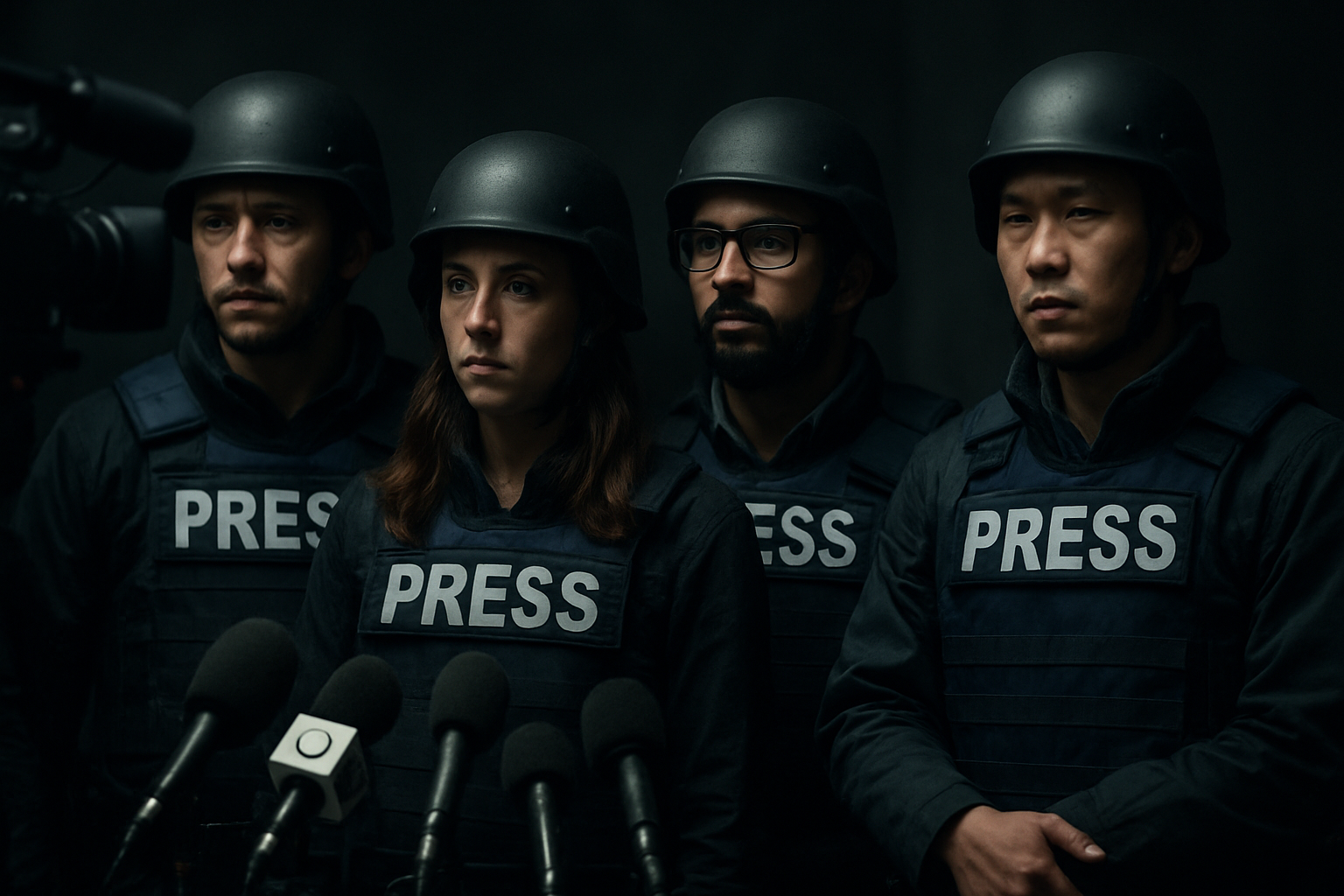
International press freedom organizations have issued urgent calls for Pakistan to immediately halt the detention and deportation of Afghan journalists, as new data from the Committee to Protect Journalists reveals that 129 media workers were killed globally in 2025, marking one of the deadliest years for press freedom in recent history.
A coalition of international media freedom and human rights organizations wrote to Pakistani Prime Minister Shehbaz Sharif on Wednesday, February 26, demanding an immediate cessation of arrests and deportations of Afghan journalists residing in the country. The organizations warned that these journalists face grave risks if returned to Afghanistan, where Taliban authorities have systematically dismantled press freedom since their return to power in 2021.
Pakistan's Crackdown on Afghan Media Workers
Despite providing refuge to hundreds of Afghan journalists who fled their homeland following the Taliban takeover, Pakistan has increasingly targeted these media professionals for detention and deportation. The international coalition's letter emphasized that Pakistani authorities are placing Afghan journalists at serious risk by forcing them back to a country where independent journalism has been effectively eliminated.
Over 600 political prisoners remain detained across various countries according to human rights monitoring organizations, with journalists representing a significant portion of those targeted for their professional activities. The situation has created what press freedom advocates describe as a "double jeopardy" scenario, where Afghan journalists face persecution both in their homeland and in countries that once offered them sanctuary.
"These deportations represent a fundamental violation of the principle of non-refoulement and place journalists at immediate risk of persecution, imprisonment, or worse,"
— International Press Freedom Coalition Statement
Record-Breaking Year of Violence Against Journalists
The urgent situation for Afghan journalists comes against the backdrop of what the Committee to Protect Journalists has documented as one of the most dangerous years ever for media workers worldwide. According to CPJ's annual report, 129 journalists and media workers were killed globally in 2025, with the vast majority of deaths occurring in active conflict zones.
This figure represents a significant increase from previous years and underscores the deteriorating conditions for press freedom across multiple regions. The deaths span across various countries and conflict zones, with journalists covering wars, investigating corruption, and reporting on sensitive political developments bearing the heaviest toll.
Gaza emerged as one of the most dangerous locations for journalists, with systematic targeting of media workers during the ongoing conflict. The pattern of violence has raised serious concerns about the deliberate targeting of press personnel, a potential war crime under international humanitarian law.
Systematic Erosion of Press Freedom
The global crisis in journalist safety reflects broader patterns of democratic backsliding and authoritarian consolidation worldwide. From Hungary's media capture to Hong Kong's national security crackdowns, governments across the political spectrum have intensified their pressure on independent journalism.
In Afghanistan specifically, the Taliban have implemented what international observers describe as the most comprehensive assault on press freedom in recent memory. Since returning to power, Taliban authorities have:
- Banned female journalists from working
- Restricted male journalists' access to government officials
- Imposed severe content restrictions on all media
- Shut down independent media outlets
- Arrested and detained dozens of journalists
The systematic nature of these restrictions has forced hundreds of Afghan journalists to seek refuge abroad, with many initially finding sanctuary in Pakistan. However, the recent Pakistani crackdown has left these media professionals in an increasingly precarious position.
International Response and Obligations
The international community's response to the crisis has been mixed, with some countries offering expanded visa programs for journalists at risk while others have tightened their borders. The European Union has called for immediate unconditional protection of journalists worldwide, while individual member states have implemented varying levels of support.
Legal experts emphasize that Pakistan has binding obligations under international law to protect refugees and asylum seekers, including journalists fleeing persecution. The principle of non-refoulement prohibits countries from returning individuals to territories where they face serious threats to their life or freedom.
"Pakistan's actions violate fundamental principles of international refugee law and represent a dangerous precedent for other countries hosting journalists at risk,"
— International Human Rights Lawyer, speaking anonymously
Economic and Political Pressures
The situation facing Afghan journalists reflects broader economic and political pressures affecting host countries. Pakistan, facing its own economic challenges and complex relationship with the Taliban government in Afghanistan, has come under increasing pressure to limit the presence of Afghan refugees, including media professionals.
These economic considerations, however, should not override fundamental human rights obligations, according to international law experts. The international community has been called upon to provide greater financial and logistical support to countries hosting journalists at risk, helping to alleviate the burden while ensuring protection for media workers.
Technology and Digital Threats
Beyond physical violence, journalists worldwide face increasing digital threats and surveillance. The rise of sophisticated surveillance technologies has enabled governments to monitor and harass journalists even across borders, creating new challenges for press freedom protection.
Cybersecurity experts have documented numerous cases of journalists being targeted with spyware, having their communications intercepted, and facing coordinated online harassment campaigns. These digital threats complement physical violence in creating a comprehensive assault on independent journalism.
Regional Implications
The crisis has significant implications for press freedom across South Asia and beyond. If Pakistan's deportation of Afghan journalists continues without international intervention, it could set a precedent encouraging other countries to similarly abandon their protection obligations.
Regional media organizations have expressed concern that the normalization of journalist deportations could undermine press freedom protections throughout the region, where many countries already struggle with authoritarian pressures on independent media.
Looking Forward: Protection Mechanisms
International organizations are working to develop stronger protection mechanisms for journalists at risk, including emergency visa programs, rapid relocation services, and enhanced legal support. However, these efforts require greater international coordination and financial commitment.
The European Union has announced plans to expand its emergency support for journalists, while several countries have committed to creating special visa categories for media workers fleeing persecution. These initiatives, while promising, require rapid implementation to address the immediate crisis.
The situation also highlights the need for stronger preventive measures, including diplomatic pressure on countries that systematically target journalists and enhanced early warning systems to identify emerging threats to press freedom before they escalate to life-threatening levels.
Global Solidarity and Action
The international journalism community has responded with unprecedented solidarity, with major news organizations and press freedom groups coordinating their advocacy efforts. This coordination represents a recognition that threats to journalists anywhere threaten press freedom everywhere.
Professional journalism organizations worldwide have committed to maintaining public attention on the crisis, ensuring that the situation facing Afghan journalists and other threatened media workers remains visible despite competing global priorities.
As the international community grapples with this crisis, the fundamental question remains whether governments will uphold their commitments to press freedom and human rights, or whether economic and political considerations will continue to override protection obligations.
The coming weeks will be crucial in determining whether international pressure can secure protection for Afghan journalists in Pakistan and establish stronger global mechanisms for defending press freedom in an increasingly dangerous world.