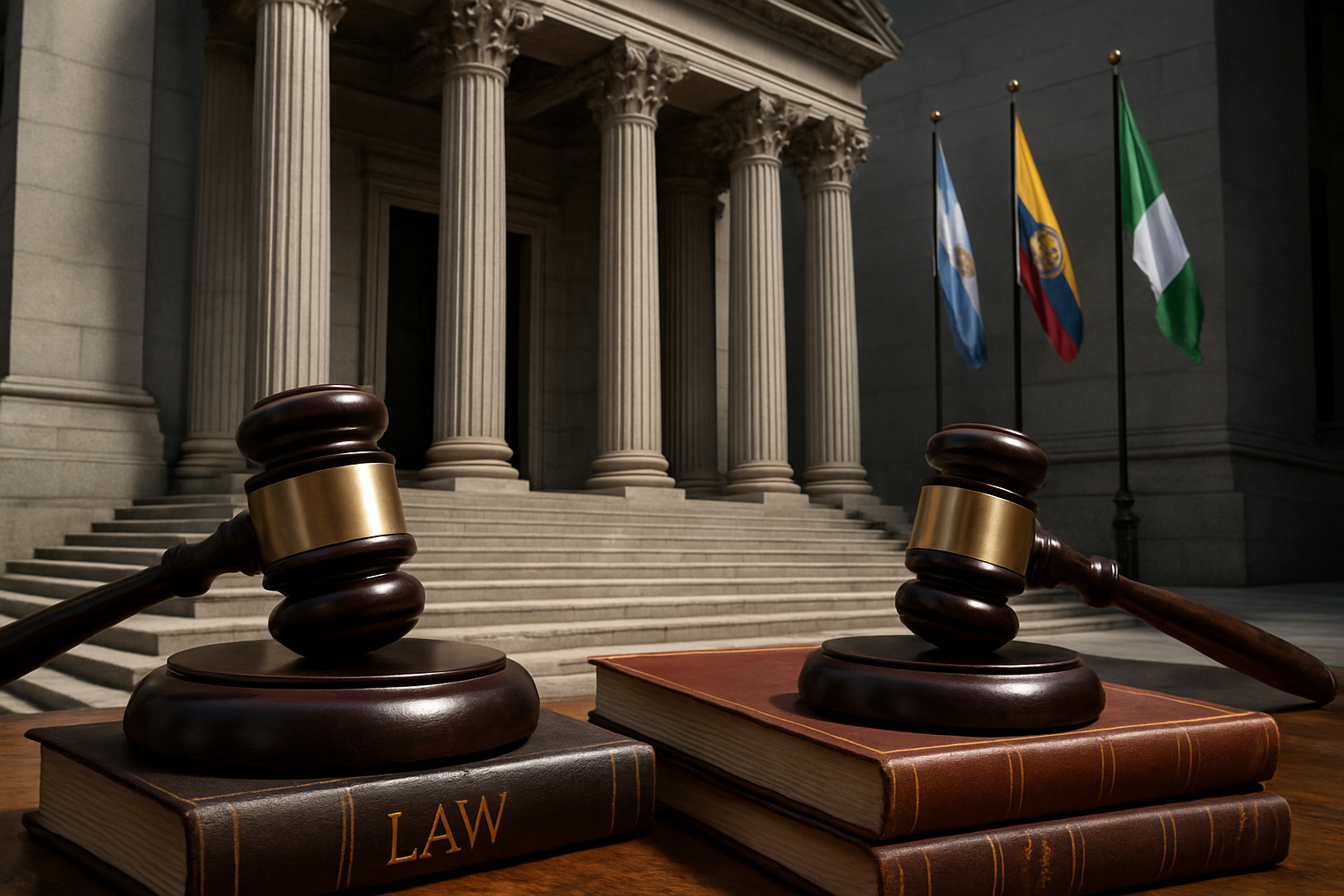
Judicial systems worldwide are confronting an unprecedented wave of complex legal challenges, from corruption prosecutions to electoral law reforms, as courts struggle to maintain democratic accountability amid political pressures and institutional disputes.
Recent developments across Argentina, Ecuador, and Nigeria highlight the mounting pressures facing legal institutions as they navigate high-stakes cases involving government officials, electoral procedures, and judicial authority. These cases underscore broader global trends affecting the rule of law and democratic governance.
Argentina: Federal Court Orders High-Profile Corruption Trial
Federal Judge Sebastián Casanello has delivered a significant blow to Argentina's disability services establishment by ordering former ANDIS (National Disability Agency) chief Diego Spagnuolo to stand trial on serious corruption charges. The decision, announced February 10, 2026, marks a crucial step in the country's ongoing anti-corruption efforts.
Spagnuolo faces charges of fraud, illegal association, and graft in connection with his leadership of the national disability agency. Three additional defendants will also stand trial alongside the former agency chief, according to court documents released by the Buenos Aires Times.
The case represents part of Argentina's broader judicial reckoning with corruption in public institutions, particularly those serving vulnerable populations. ANDIS, which oversees disability services and benefits nationwide, has been under scrutiny for financial irregularities and administrative misconduct during Spagnuolo's tenure.
"This decision demonstrates our judicial system's commitment to holding public officials accountable, regardless of their position or the institutions they represent."
— Legal analyst speaking on condition of anonymity
The prosecution's case against Spagnuolo has been building for months, with investigators examining financial records, procurement procedures, and administrative decisions made during his leadership of the disability agency. The charges of illegal association suggest prosecutors believe the corruption involved multiple participants working in concert.
Ecuador: Judicial Council Leadership Crisis Deepens
Ecuador's judicial system faces a constitutional crisis following decisions regarding the temporary presidency of the Judicial Council. Alexandra Villacís, a substitute member, has been declared ineligible to assume the temporary presidency of the Council of the Judiciary, creating a leadership vacuum in one of the country's most important judicial institutions.
The controversy surrounding Villacís highlights deeper structural problems within Ecuador's judicial framework. According to El Diario's reporting, Villacís learned of the disqualification decision through media outlets rather than formal notification, raising questions about due process and institutional communication protocols.
This judicial leadership dispute comes at a critical time for Ecuador, which has been working to strengthen its legal institutions amid ongoing security challenges and corruption investigations. The Judicial Council plays a central role in court administration, judicial appointments, and oversight of the country's legal system.
Legal experts express concern that the leadership crisis could affect the council's ability to address urgent judicial reforms and manage ongoing high-profile cases. The situation also highlights the complex interplay between judicial independence and administrative efficiency in Ecuador's evolving legal framework.
Nigeria: Senate Confronts Electoral Law Controversy
Nigeria's Senate has become the center of intense public debate over proposed amendments to the Electoral Act, particularly regarding provisions for electronic transmission of election results. The controversy has sparked nationwide criticism and calls for greater transparency in the legislative process.
According to Vanguard News reporting, the Senate initially removed the phrase "real-time" from provisions governing electronic transmission of election results, prompting widespread concern about the integrity of future electoral processes. This change has generated significant public opposition, with critics arguing that real-time transmission is essential for transparent and credible elections.
Senate leadership has acknowledged the public criticism, with the spokesperson stating that the body is "not averse to criticisms" and promising to address the controversy during emergency plenary sessions. The Senate has scheduled discussions to resolve the issue, demonstrating responsiveness to public pressure while maintaining legislative independence.
"The controversy surrounding the removal of 'real-time' from provisions on electronic transmission of election results will be addressed at an emergency plenary sitting."
— Senate Spokesperson
The electronic transmission dispute reflects broader challenges facing Nigeria's electoral system as the country seeks to modernize voting procedures while maintaining public confidence. Electronic transmission of results has been viewed as crucial for reducing electoral fraud and increasing transparency, making the Senate's initial position particularly controversial.
Global Context: Judicial Systems Under Strain
These cases from Argentina, Ecuador, and Nigeria reflect broader global trends affecting judicial systems worldwide. Courts and legal institutions are increasingly called upon to address complex corruption cases, electoral disputes, and questions of democratic accountability while facing resource constraints and political pressures.
Recent memory shows similar challenges across multiple continents. From the UK's legal system warnings of being "on the brink of collapse" to India's progressive juvenile justice approaches and Venezuela's massive political prisoner releases, judicial systems globally are adapting to unprecedented demands.
The Digital Services Act enforcement in Europe, the Epstein files investigations affecting multiple countries, and various anti-corruption campaigns demonstrate how legal systems must now coordinate across borders while maintaining domestic accountability. These developments highlight the evolving nature of 21st-century judicial challenges.
Implications for Democratic Governance
The cases in Argentina, Ecuador, and Nigeria illustrate how judicial independence and effectiveness directly impact democratic governance. When courts can successfully prosecute corruption, as in Argentina's ANDIS case, they reinforce public trust in institutions and the rule of law.
Conversely, leadership crises like Ecuador's Judicial Council situation can undermine institutional effectiveness and public confidence. Similarly, electoral law controversies such as Nigeria's transmission debate demonstrate how technical legal decisions can have profound implications for democratic legitimacy.
These developments occur against the backdrop of increasing global scrutiny of judicial independence and effectiveness. International organizations, civil society groups, and citizens worldwide are demanding greater transparency, accountability, and responsiveness from legal institutions.
Looking Forward: Challenges and Opportunities
The judicial challenges facing Argentina, Ecuador, and Nigeria represent both obstacles and opportunities for strengthening democratic institutions. Successful resolution of corruption cases can demonstrate judicial effectiveness and deter future misconduct. Transparent handling of electoral law reforms can enhance public confidence in democratic processes.
However, these cases also highlight persistent vulnerabilities in legal systems. Institutional leadership crises, political interference, and public pressure can all compromise judicial independence and effectiveness. The key lies in balancing accountability with independence, transparency with efficiency, and public expectations with institutional capacity.
As legal systems worldwide continue to evolve in response to modern challenges, the experiences of Argentina, Ecuador, and Nigeria provide valuable lessons. Their successes and failures in addressing corruption, managing institutional crises, and reforming electoral procedures will likely influence judicial reform efforts globally.
The international community continues to monitor these developments closely, recognizing that strong, independent, and effective judicial systems remain fundamental to democratic governance and the rule of law in the 21st century. The outcomes of these current challenges will help determine the future trajectory of judicial reform and democratic accountability worldwide.