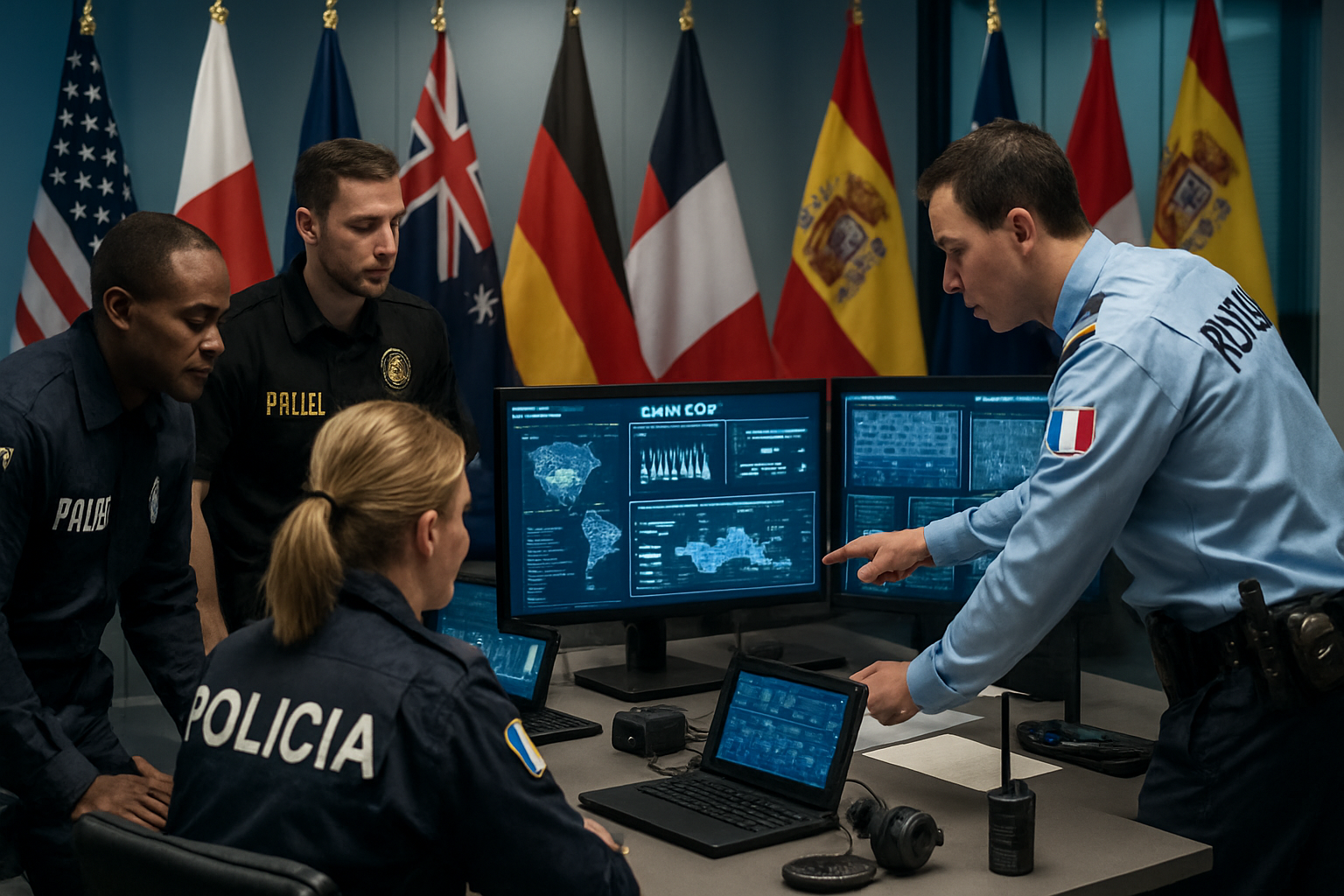
A wave of criminal activities spanning eleven countries from March 16, 2026, has exposed the escalating sophistication of transnational crime networks, prompting an urgent reassessment of international law enforcement coordination strategies.
From the arrest of award-winning Australian author Craig Silvey on additional child exploitation charges to explosive devices targeting referees in Cyprus, the past 24 hours have demonstrated how criminal organizations are leveraging advanced technology and cross-border operations to challenge traditional policing methods.
Australia: High-Profile Literary Figure Faces Expanded Charges
In a development that has shocked Australia's literary community, Craig Silvey, the 43-year-old author of acclaimed novels "Jasper Jones" and "Rhubarb," appeared in court facing additional child exploitation charges. Originally charged in early January with possessing and distributing child exploitation material, Silvey now faces accusations of producing such material between January and June 2022, along with an additional count of possession.
The case highlights the challenges law enforcement faces when investigating digital crimes involving public figures. Sources close to the investigation indicate that sophisticated encryption methods and international server networks have complicated the evidence-gathering process.
Cyprus Under Siege: Coordinated Violence Escalates
The Mediterranean island nation of Cyprus experienced an unprecedented 24-hour period of coordinated violence that has security officials concerned about organized crime infiltration. The incidents began with an explosive device detonating at a futsal referee's business premises in Nicosia at 10:30 PM on March 14, causing significant property damage and prompting all futsal referees to suspend their duties for the week.
"Such malicious acts against our members will not be tolerated," said the Cyprus Referees Association in a statement condemning the attack.
— Cyprus Referees Association, Official Statement
Hours later, a low-powered improvised explosive device exploded under a 45-year-old woman's car in Limassol at 4:20 AM, triggering a fire that damaged both her vehicle and a nearby car belonging to a relative. Police forensics teams confirmed the use of homemade explosive devices in both incidents.
Meanwhile, Nicosia police conducted raids that netted a wanted 35-year-old woman as part of burglary and theft investigations. The operation uncovered a sophisticated criminal cache including firearms, drugs, and stolen electric scooters and bicycles, suggesting organized theft networks operating across the island.
International Criminal Network Sophistication
The incidents span multiple jurisdictions and demonstrate concerning patterns of criminal evolution. In Kenya, three suspects were arrested following a violent robbery where seven individuals ambushed a motorist and his companions, stealing Ksh320,000 at gunpoint. The coordinated nature of the attack suggests professional criminal organization.
Liberia's Drug Enforcement Agency achieved a significant victory, arresting a 47-year-old Guinean national at the Ganta border crossing and seizing narcotics valued at more than L$7.7 million. This operation represents the growing cooperation between West African nations in combating drug trafficking corridors.
Technology and Criminal Innovation
Law enforcement experts note that modern criminal networks are adopting technological capabilities at an unprecedented pace. The use of explosive devices in Cyprus, sophisticated document forgery in Malaysia, and international drug smuggling operations demonstrates how criminals are leveraging both digital and physical tools to evade detection.
In New Zealand, coordinated operations targeting Comanchero gang members resulted in three arrests and the seizure of AR-15 rifles, cash, and methamphetamine. The operation was part of Taskforce Morpheus, a joint Australia-New Zealand law enforcement initiative designed to combat transnational organized crime.
Emerging Challenges in Democratic Policing
The global nature of these incidents raises fundamental questions about the capacity of democratic institutions to address sophisticated criminal networks that operate across jurisdictional boundaries. Serbian authorities investigating financial fraud at a Novi Sad school, where millions intended for construction work allegedly disappeared, exemplifies how corruption can undermine public institutions.
In Malaysia, concerns about police conduct emerged as a lawyer reported visible bruises on a suspect arrested in connection with the Cikgu Chandra attack case, highlighting the ongoing tension between effective law enforcement and protecting suspect rights.
International Cooperation Imperative
Security analysts emphasize that the sophisticated nature of these criminal operations requires enhanced international cooperation mechanisms. The successful arrest operations in New Zealand and Liberia demonstrate that coordinated intelligence sharing can yield significant results against transnational criminal networks.
However, experts warn that criminal organizations are evolving faster than law enforcement adaptation. The use of encrypted communications, advanced surveillance technology, and compartmentalized organizational structures allows criminal networks to operate with capabilities approaching those of state actors.
Looking Forward: Adaptation and Response
The events of March 16, 2026, represent a critical juncture for international law enforcement. As criminal networks become increasingly sophisticated and globally connected, traditional approaches to policing may require fundamental restructuring to address 21st-century security challenges.
Law enforcement agencies across the affected countries are reportedly developing enhanced cooperation protocols, investing in advanced forensic technologies, and establishing specialized units trained to combat technology-enabled criminal operations. The success of these initiatives will likely determine whether democratic institutions can maintain effective crime prevention while preserving civil liberties and international cooperation.
The coming months will test whether international law enforcement can adapt quickly enough to counter the evolving threat posed by sophisticated criminal networks that increasingly operate with the resources and capabilities of nation-states.