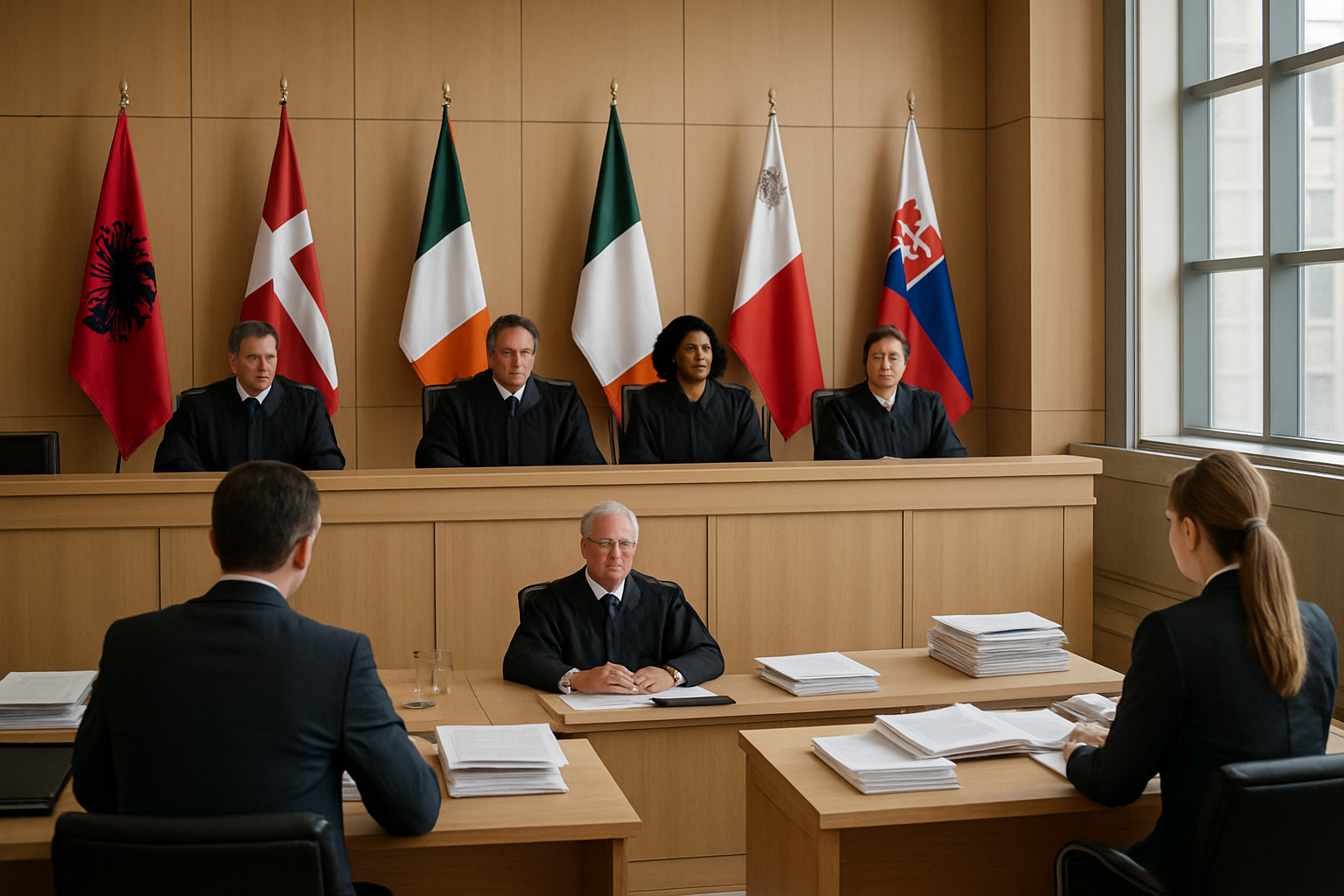
Courts across multiple continents are processing an extraordinary range of cases that test the limits of democratic institutions, from constitutional challenges to complex criminal prosecutions, highlighting both the unprecedented strain on global judicial systems and their remarkable institutional resilience in the face of mounting pressures.
Constitutional Challenges and Institutional Responses
In a groundbreaking constitutional ruling, an Albanian court declared the country's TikTok ban unconstitutional, marking a significant victory for digital rights advocates. The decision, reported by Denmark's DR media, represents part of broader global tensions between national security concerns and freedom of expression in the digital age.
Burkina Faso launched its 2026 annual review of the justice and human rights sector dialogue framework in Ouagadougou, with Justice Minister Edasso Rodrigue Bayala presiding over proceedings focused on implementing the RELANCE Plan. The initiative represents a comprehensive effort to strengthen judicial accountability and transparency in resource management while fostering dialogue among legal sector stakeholders.
"The work of this day will be devoted to examining draft reports on sectoral performance for 2025 and the sectoral action plan 2026-2028, strengthening dialogue between actors in the same planning sector to guarantee accountability and transparency."
— Justice Minister Edasso Rodrigue Bayala, Burkina Faso
High-Profile Criminal Proceedings Test Judicial Independence
Ireland's legal system faces intense scrutiny with multiple significant cases unfolding simultaneously. The ongoing civil action against former Sinn Féin leader Gerry Adams has revealed new testimony about his alleged role in the IRA, with a retired officer stating that "the significance of the role played by Gerry Adams in the IRA became clear only after his 1973 arrest." The proceedings highlight the complex intersection of historical accountability and contemporary justice.
In a separate Irish case, Ross Deegan, 22, admitted to punching RTÉ broadcaster Brendan Courtney in a Dublin assault, demonstrating the courts' handling of cases involving public figures and the importance of voluntary cooperation with authorities.
Reproductive Rights and Legal Precedents
Malta's judicial system delivered a controversial verdict involving reproductive rights, as a woman received a three-year suspended sentence for inducing her own abortion using medication in early 2024. The case has sparked intense debate about the intersection of criminal law and reproductive healthcare in jurisdictions with restrictive abortion laws.
Digital Age Extremism Prosecutions
Slovakia's courts processed a significant case involving far-right extremism in the digital age. Internet provocateur Daniel Bombic received a three-year prison sentence suspended for four years on extremism charges. Both prosecution and defense have appealed the decision, reflecting the ongoing challenges courts face in addressing online radicalization and hate speech in the digital era.
Systemic Challenges Facing Global Justice Systems
These cases occur against a backdrop of unprecedented strain on judicial institutions worldwide. According to historical analysis of legal system developments, courts are experiencing mounting pressure from case backlogs, resource constraints, and evolving social expectations while maintaining their constitutional guardian roles.

Enhanced international cooperation has become essential for addressing transnational criminal networks, with European law enforcement coordination reaching new levels of sophistication. Technology integration offers opportunities for improved efficiency but must be balanced with due process preservation and privacy protection.
Institutional Resilience Amid Democratic Testing
Despite mounting pressures, judicial institutions are demonstrating fundamental resilience in delivering fair and transparent justice regardless of defendants' political or social status. Professional accountability mechanisms are strengthening with expanded transparency requirements, specialized training programs, and improved public engagement.
The cases from Ireland involving both historical IRA connections and contemporary assault charges illustrate how courts must navigate complex political sensitivities while maintaining equal treatment under law. Similarly, the Albanian TikTok ruling demonstrates judicial independence in the face of government security arguments.
Regional Patterns and Global Implications
The diversity of cases across these jurisdictions reveals both universal challenges and unique regional factors shaping judicial responses. From Burkina Faso's systematic approach to justice sector reform to Slovakia's handling of digital extremism, courts are adapting to 21st-century realities while preserving core legal principles.
Malta's reproductive rights case reflects broader global tensions around bodily autonomy and criminal law, while Ireland's handling of both historical terrorism allegations and contemporary assault cases demonstrates the evolution of legal approaches to different forms of violence.
"Courts serve as constitutional guardians beyond dispute resolution, protecting civil rights and maintaining social order through fair application of legal principles."
— Legal Analysis from Recent Judicial Reviews
Technology Integration and Modern Justice
The Albanian TikTok ban ruling highlights how courts must now grapple with digital platforms' role in society and the limits of government authority in the digital sphere. This technological dimension of modern justice extends to evidence collection, case management, and international cooperation mechanisms.
Digital case management systems, advanced forensic analysis, and sophisticated evidence-gathering techniques are becoming critical components of modern criminal justice, requiring substantial investment in training and equipment while maintaining traditional legal protections.
Future Challenges and Adaptation Requirements
Success in addressing these complex challenges depends on sustained political commitment to judicial independence, adequate resource allocation, and robust international cooperation frameworks. The outcomes of current high-profile cases will establish crucial precedents for democratic institutional responses to contemporary governance challenges.
Enhanced information sharing protocols, coordinated training programs, and best practices sharing across jurisdictions are essential for addressing transnational challenges while maintaining respect for legal traditions and national sovereignty.
Precedent-Setting Implications
These cases collectively establish crucial precedents for how democratic institutions respond to complex 21st-century challenges while preserving fairness, accountability, and equal treatment principles. The balance between security concerns and civil liberties, efficiency and due process, and national sovereignty and international cooperation remains central to institutional evolution.
The success or failure of judicial systems in delivering justice while maintaining institutional integrity will shape global public confidence in democratic governance for years to come. International observers are closely monitoring these developments as indicators of democratic resilience in an era of increasing political polarization and technological disruption.
From constitutional challenges involving digital platforms to complex criminal prosecutions involving historical terrorism and contemporary extremism, the current moment represents a critical test of whether democratic institutions can maintain their essential functions while adapting to contemporary realities and preserving the rule of law principles that underpin constitutional government.