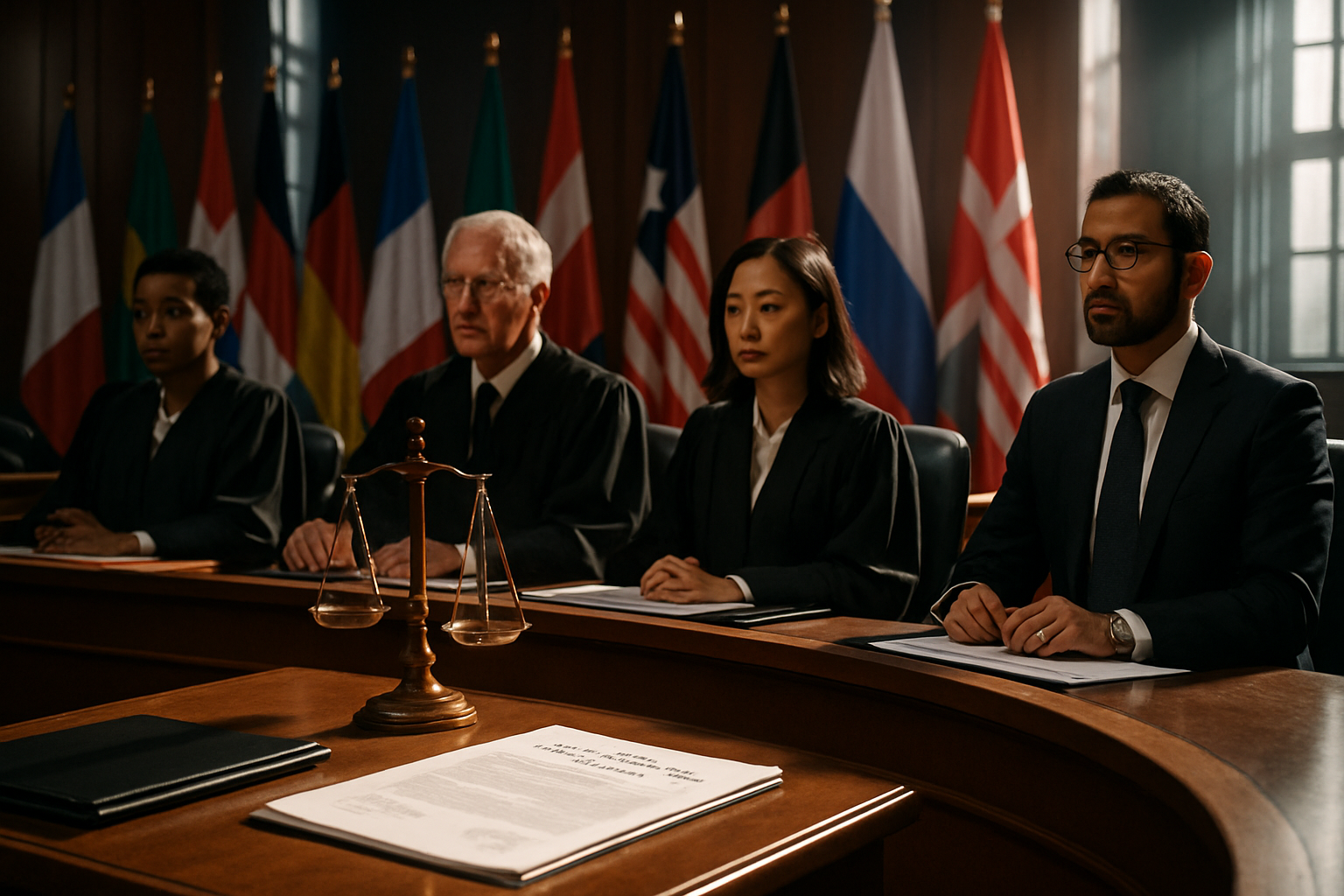
As judicial systems across the globe confront an unprecedented wave of complex legal proceedings, from Iranian assassination plots targeting former presidents to copyright infringement cases that could reshape digital rights, democratic institutions are facing their greatest stress test in decades while demonstrating remarkable resilience.
This comprehensive investigation reveals how courts worldwide are processing cases of extraordinary complexity and political sensitivity, from New York federal prosecutors securing convictions in international terrorism cases to Nigerian authorities pursuing copyright infringement charges against prominent tech executives, all while constitutional frameworks strain under pressure.
Iranian Agent Convicted in Trump Assassination Plot
In a landmark terrorism conviction that highlights the global reach of state-sponsored violence, a New York federal jury found Pakistani businessman Asif Merchant guilty of orchestrating a foiled assassination plot against then-presidential candidate Donald Trump during the 2024 campaign. According to court documents, Merchant admitted to seeking hired killers on behalf of Iran's Revolutionary Guards before an acquaintance tipped off federal authorities.
The case represents a significant victory for U.S. counterterrorism efforts and underscores the sophisticated nature of modern international assassination attempts. Federal prosecutors successfully demonstrated how Iranian intelligence services attempted to leverage foreign nationals and criminal networks to eliminate political targets on American soil.
"This conviction sends a clear message that the United States will not tolerate foreign interference in our democratic processes through violence or intimidation."
— Federal Prosecutor, Southern District of New York
The conviction comes at a time of heightened tensions between the United States and Iran, with the case serving as concrete evidence of Tehran's willingness to conduct extraterritorial operations against American political figures. Intelligence experts note that this represents part of a broader pattern of authoritarian regimes attempting to silence opposition voices through international assassination programs.
Constitutional Crisis Tests Democratic Institutions
Parallel to high-profile criminal cases, democratic institutions are facing an unprecedented constitutional crisis. Recent historical context reveals how the U.S. Supreme Court's February 2026 ruling striking down presidential tariff authority created a watershed moment for executive power limitations. The 6-3 decision, authored by Chief Justice John Roberts, applied the "major questions doctrine" to require congressional authorization for policies of "vast economic and political significance."
This constitutional precedent has far-reaching implications for how democratic societies balance executive authority with legislative oversight, particularly during periods of expanded presidential power. Legal scholars emphasize that this represents a critical test of whether institutional checks and balances can function effectively in the 21st-century governance environment.
Copyright Infringement Cases Reshape Digital Rights
In Nigeria, the Federal High Court in Abuja has become the center of a significant copyright enforcement case that could establish important precedents for digital content platforms across Africa. Emmanuel Analike, CEO of NetNaija, has been arraigned on charges of copyright infringement and remanded to Kuje Correctional Centre pending a bail hearing.
The case highlights the growing tension between digital content accessibility and intellectual property protection in developing nations. NetNaija, a popular platform for sharing movies and other media content, operates in a legal gray area where copyright enforcement has traditionally been limited by resource constraints and jurisdictional challenges.
Legal experts note that this prosecution represents a significant shift toward strengthening intellectual property enforcement in Nigeria, potentially affecting similar platforms across West Africa. The outcome could establish crucial precedents for how African courts balance digital innovation with copyright protection in an increasingly connected world.
Florida Bar Investigation Controversy
Adding to the complexity of legal system challenges, the Florida Bar has issued contradictory statements regarding investigations into Trump attorney Lindsey Halligan. Initial February communications suggested an active probe, but recent statements from the Florida Bar deny any ongoing investigation, creating confusion about professional accountability mechanisms within the legal profession.
This controversy illustrates the broader challenges facing professional regulatory bodies as they navigate politically sensitive cases involving high-profile attorneys. Legal ethics experts emphasize that maintaining consistent standards regardless of political affiliations remains crucial for preserving public confidence in professional accountability systems.
Criminal Damage Cases Strain Local Systems
Even seemingly minor cases reflect the broader strain on judicial systems. In Ireland, Gardaí are investigating criminal damage to three train carriages at Athlone Train Station, with graffiti damage occurring during daylight hours on a Saturday. While this represents a relatively minor offense, it illustrates how local law enforcement resources are stretched thin addressing various forms of criminal activity.
The incident demonstrates how modern policing must address not only major crimes but also quality-of-life offenses that affect public infrastructure and community well-being. Irish authorities are seeking public assistance in identifying perpetrators, reflecting the community-based approach increasingly necessary for effective law enforcement.
International Cooperation and Institutional Resilience
Despite mounting pressures, judicial institutions are demonstrating fundamental resilience in delivering fair and transparent justice. Enhanced international cooperation has become critical for addressing transnational criminal networks, with European law enforcement coordination reaching new levels of sophistication.
Specialized courts for corruption and organized crime are emerging as institutional innovations that provide templates for addressing complex criminal enterprises. Technology integration, including digital case management and advanced forensic analysis, is enabling more effective responses to criminal networks while raising important questions about privacy and due process protection.
Democratic Accountability Challenges
The balance between accountability demands and institutional stability remains a central challenge for democratic societies. Progressive judicial interpretations sometimes advance social justice when legislative processes lag, but this approach risks political backlash and questions about the proper role of courts in democratic governance.
Professional accountability mechanisms are strengthening with expanded transparency requirements and specialized training programs, though implementation varies significantly across different legal systems. Public confidence in judicial fairness and institutional integrity remains paramount for the success of democratic governance in an interconnected but politically fragmented world.
Precedent-Setting Implications
These cases collectively establish crucial precedents for how democratic institutions respond to 21st-century challenges while preserving fundamental principles of fairness, accountability, and equal treatment under law. The outcomes influence not only the immediate participants but also the broader evolution of global justice systems and public confidence in democratic governance worldwide.
Success in delivering justice while maintaining institutional credibility shapes international approaches to institutional development, democratic accountability mechanisms, and the rule of law. Whether dealing with international terrorism, copyright enforcement, or constitutional limitations on executive power, courts are serving as constitutional guardians that extend far beyond dispute resolution.
Looking Forward: Institutional Adaptation
As legal systems worldwide adapt to contemporary challenges, several key trends emerge. Enhanced international cooperation is essential for addressing criminal networks that operate across borders using sophisticated technology and financial instruments. European coordination models demonstrate effective approaches to jurisdictional challenges while maintaining democratic principles and civil liberties.
Technology integration offers opportunities for improved efficiency while requiring careful balance with due process preservation and privacy protection. Resource allocation for complex investigations requiring expert witnesses, technical analysis, and extended proceedings strains budgets under increasing caseload pressure.
The success of these adaptations depends on sustained political commitment to judicial independence, adequate resource allocation for unprecedented demands, and continued public support for fair legal processes that maintain equal treatment regardless of an individual's status or political connections.
"The resilience of democratic institutions is being tested in ways we haven't seen in generations. These cases will establish precedents that affect governance for decades to come."
— Constitutional Law Expert
As democratic societies navigate these complex challenges, the fundamental question remains whether institutional checks and balances can effectively address sophisticated transnational threats while preserving the civil liberties and democratic principles they are designed to protect. The answer will shape the future of democratic governance in an increasingly interconnected world where criminal networks, constitutional crises, and technological challenges transcend traditional boundaries.