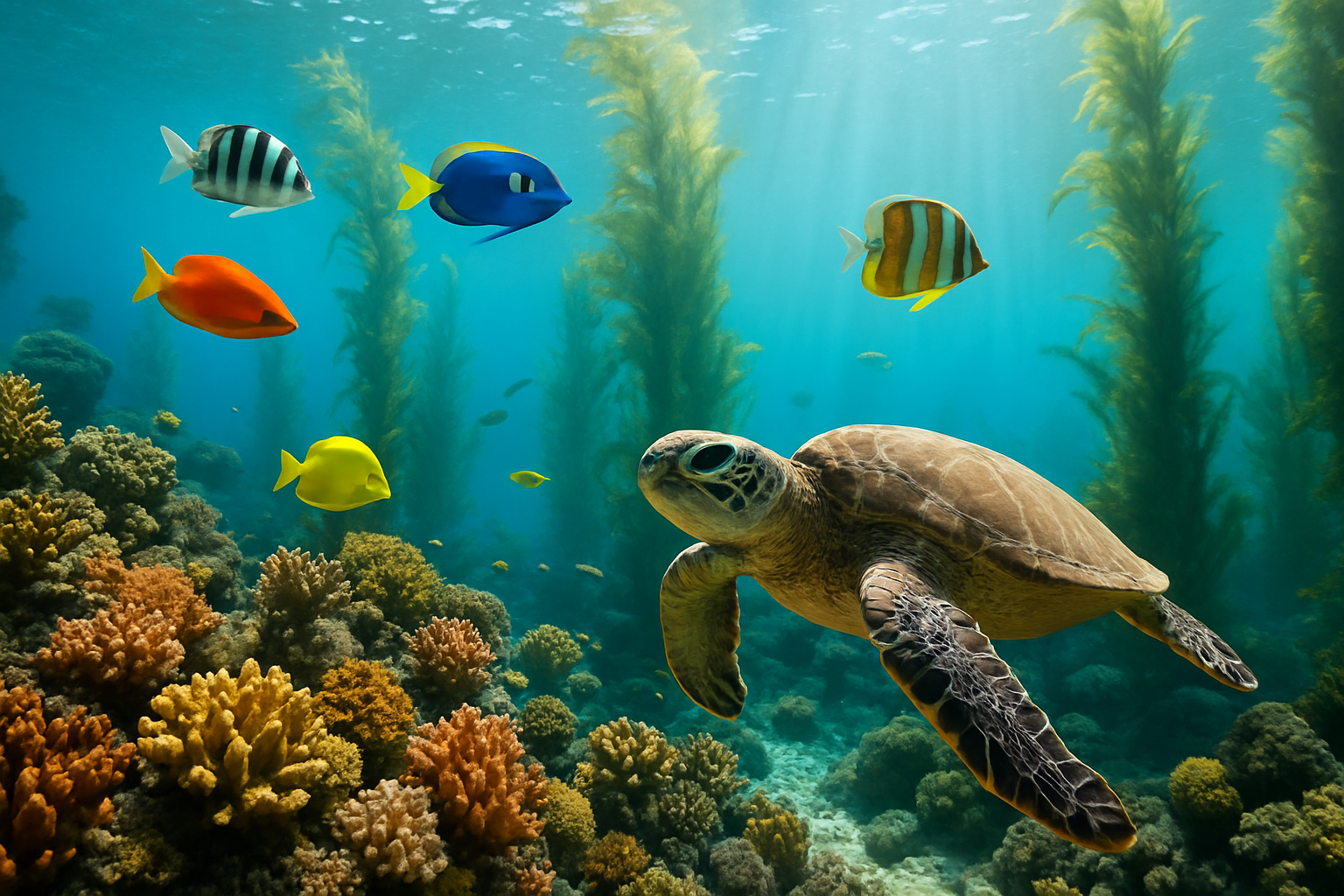
A coordinated crisis is threatening marine ecosystems worldwide as four nations grapple with unprecedented challenges to ocean health, from illegal fishing operations to catastrophic sewage pollution, signaling a critical moment for global marine conservation efforts.
Recent developments across Cyprus, New Zealand, Finland, and Palau reveal the interconnected nature of marine ecosystem threats, demonstrating how local environmental failures can cascade into global conservation crises. These developments occur as January 2026 was recorded as the hottest month in human history, with 18 of the past 19 months exceeding 1.5°C above pre-industrial levels.
Cyprus Leads EU Fight Against Fishing Vessel Transparency
As Cyprus assumes the EU Council Presidency, the Mediterranean nation faces an early test of its environmental leadership through fisheries transparency reform. International conservation organization Oceana has formally urged Agriculture Minister Maria Panayiotou to implement stronger regulations on fishing vessel ownership to combat illegal fishing operations.
The organization warns that operators are exploiting regulatory loopholes by registering vessels in countries with weak oversight, allowing them to conceal their identities while engaging in destructive fishing practices. This "flag of convenience" system undermines both environmental protection efforts and honest fishing operators who comply with strict EU regulations.
"Cyprus is now at the centre of policy debates extending beyond national borders, including fisheries governance where environmental protection, economic fairness and regulatory credibility intersect."
— Oceana Environmental Organization
The timing of this challenge is particularly significant as Cyprus works to establish its credibility as an EU leader while addressing one of the most complex conservation issues facing Mediterranean marine ecosystems.
Wellington's Sewage Crisis Threatens Kelp Forest Ecosystem
In New Zealand's capital, a marine biologist has issued a stark warning about the potential collapse of Wellington's kelp forest ecosystem due to ongoing untreated sewage discharge into coastal waters. The crisis represents one of the most severe threats to a marine protected area documented in New Zealand's conservation history.
The kelp forests along Wellington's coastline serve as critical nursery habitats for numerous marine species and act as natural carbon sinks. Marine biologists warn that continued sewage pollution could trigger a complete ecosystem die-off, eliminating decades of conservation progress and devastating local biodiversity.
The sewage outflow crisis highlights critical infrastructure failures in wastewater treatment systems, exposing how urban development pressures can overwhelm environmental protection systems even in countries with strong conservation traditions like New Zealand.
Finland's Protected Species Controversy
Finnish authorities are investigating a controversial clear-cutting operation in Jyväskylä that allegedly destroyed habitat belonging to the protected Siberian flying squirrel. The case has sparked intense debate about the effectiveness of Finland's nature protection laws and regulatory oversight.
According to reports, the nature protection authority provided guidance and approved the logging operation despite the presence of the endangered species. A biologist involved in the case has stated bluntly that "a flying squirrel has been killed" through this regulatory decision, highlighting tensions between economic interests and wildlife protection.
The Siberian flying squirrel is among Finland's most threatened species, and its protection is mandated under both national law and EU conservation directives. This case represents a critical test of how effectively European nature protection laws can be implemented at the local level.
Palau's Marine Research Advances
Offering a rare bright spot in the global conservation picture, the Palau International Coral Reef Center (PICRC) has published groundbreaking research on longnose emperor spawning aggregations. This research represents crucial scientific advancement in understanding Pacific marine ecosystems and fish population dynamics.
The study provides essential data for sustainable fisheries management and marine protected area design in the Pacific region. Palau's commitment to marine research demonstrates how small island nations can lead global conservation efforts through scientific excellence and innovative partnerships.
The research comes as Pacific Island nations face increasing pressure from climate change, overfishing, and ocean acidification, making such scientific work essential for effective conservation planning.
Global Context and Systemic Challenges
These four cases illustrate broader systemic challenges facing marine conservation efforts worldwide. The convergence of regulatory failures, infrastructure inadequacies, and enforcement gaps creates a perfect storm of threats to ocean health.
Historical context from recent environmental initiatives shows that successful marine conservation requires coordination across multiple levels: international treaty development, national regulatory frameworks, local community engagement, and scientific research collaboration.
Technology and Innovation Solutions
Despite these challenges, technological innovations are providing new tools for marine conservation. Advanced monitoring systems, satellite tracking of fishing vessels, and sophisticated water quality sensors offer unprecedented capabilities for detecting and preventing environmental violations.
The integration of artificial intelligence with traditional conservation methods is enabling rapid response to environmental threats while providing the data needed for evidence-based policy making.
Economic and Social Dimensions
The marine conservation crisis extends far beyond environmental concerns, encompassing significant economic and social implications. Fishing communities dependent on healthy marine ecosystems face livelihood threats, while tourism industries relying on pristine ocean environments see their foundations eroding.
The economic costs of marine ecosystem collapse far exceed the investments required for effective conservation. New Zealand's kelp forest crisis alone could devastate local tourism and fishing industries worth millions annually, while Cyprus's fishing transparency challenges affect the entire Mediterranean fishing economy.
International Cooperation Imperatives
The transnational nature of marine ecosystems demands unprecedented levels of international cooperation. Ocean currents, fish migration patterns, and pollution plumes cross national boundaries, making unilateral conservation efforts insufficient.
Recent successful examples include regional partnerships in marine protected area management and shared research initiatives like Palau's coral reef studies, which provide scientific foundations for conservation decisions across the Pacific region.
Climate Change Amplification
The marine conservation crisis is occurring against the backdrop of accelerating climate change, with ocean temperatures, acidity levels, and sea level rise creating additional stress on already vulnerable ecosystems.
January 2026's record-breaking temperatures represent a continuation of warming trends that are fundamentally altering ocean conditions worldwide. Marine ecosystems face the dual challenge of direct human impacts and climate-driven environmental changes.
Future Conservation Strategies
Moving forward, marine conservation efforts must evolve to address multiple simultaneous threats through integrated approaches combining regulatory reform, technological innovation, community engagement, and international cooperation.
Success stories from recent global environmental initiatives demonstrate that coordinated action can achieve remarkable results when political will, scientific knowledge, and community support align effectively.
The window for effective marine conservation action is narrowing rapidly, but the tools and knowledge needed for success are available. The question remains whether the global community can mobilize the necessary resources and political commitment before irreversible ecosystem damage occurs.
As these four nations grapple with their specific marine conservation challenges, their experiences provide critical lessons for the broader global effort to protect ocean ecosystems for future generations. The stakes could not be higher, and the time for action could not be more urgent.