International conservation efforts are intensifying across multiple continents as rare marine species face mounting environmental pressures, with new sightings and protection measures highlighting both the fragility and resilience of global ecosystems.
Recent developments from Saudi Arabia, Cyprus, and Gabon demonstrate how nations are implementing diverse strategies to protect endangered species and marine habitats, while also revealing the complex challenges facing conservationists in an era of climate change and human encroachment.
Rare Leatherback Turtle Spotted in Saudi Red Sea Reserve
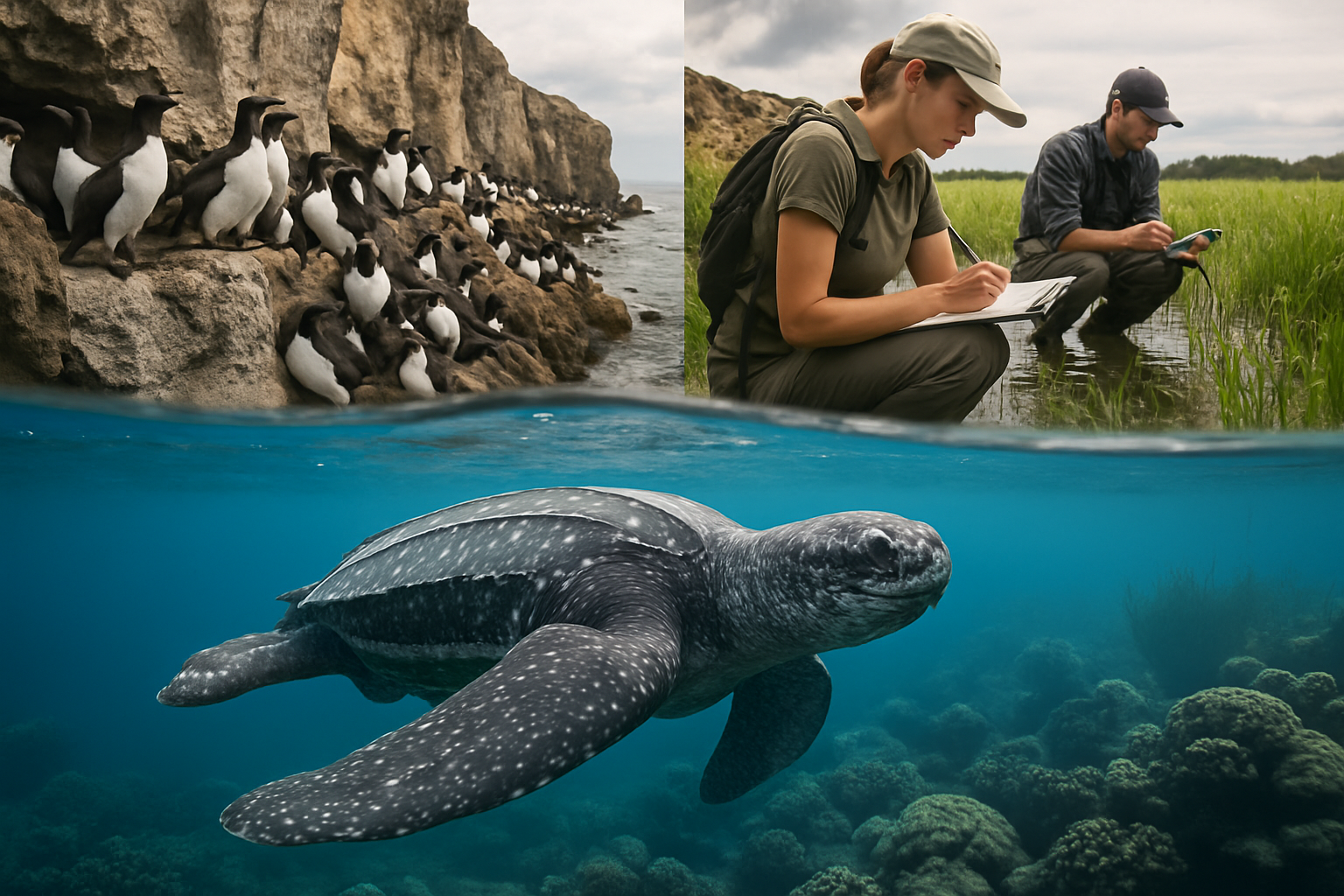
Saudi Arabia's National Center for Wildlife Development achieved a significant milestone with the rare sighting of a critically endangered leatherback sea turtle in the Red Sea, approximately 30 kilometers off Al-Qunfudhah Governorate within the recently designated Blue Holes Marine Reserve. The observation represents one of the few documented sightings of this species in the Red Sea region.
The leatherback turtle, recognized as the world's largest sea turtle species, can weigh up to 900 kilograms and dive to depths of around 1,000 meters. Distinguished by its distinctive black, leather-like skin and five longitudinal ridges along its back, the species undertakes remarkable long-distance migrations spanning thousands of kilometers in search of its primary food source: jellyfish.
According to the Wildlife Development Center, the nearest known populations of leatherback turtles are located in the Indian Ocean off South Africa and Sri Lanka, as well as nesting sites in India's Andaman Islands - all significantly distant from the Red Sea. This geographical separation makes the Saudi sighting particularly noteworthy for marine biologists studying migration patterns and habitat expansion.
"This sighting demonstrates the importance of our marine protected areas and the potential for the Red Sea to serve as a corridor for critically endangered species."
— National Center for Wildlife Development spokesperson
The Blue Holes Marine Reserve, where the sighting occurred, represents part of Saudi Arabia's broader commitment to environmental conservation under its Vision 2030 program, which aims to protect 30% of the kingdom's land and marine areas.
Mediterranean Seabird Colony Faces Population Decline
Meanwhile, in the Mediterranean, Cyprus has been designated a conservation priority under the European Union's new International Action Plan for Audouin's gull, one of the region's rarest seabirds. The rocky islets off Cyprus's Karpasia peninsula, known as the Kleides islets, host the island's only breeding colony of this endangered species.
Monitoring data reveals concerning population decline trends for the Audouin's gull colony, prompting BirdLife Cyprus and international partners to implement enhanced protection measures. The EU adopted the comprehensive action plan in 2025, developed by BirdLife International and SPEA Portugal based on the latest scientific data from 15 countries.
The plan maps the bird's distribution areas and identifies specific pressures facing the species while establishing targeted conservation priorities. The Kleides islets site has been identified as vital not only for Cyprus's seabird populations but for the broader Mediterranean ecosystem.
BirdLife Cyprus described the location as playing a crucial role in maintaining regional biodiversity, serving as a breeding sanctuary for a species that has experienced significant habitat loss across its traditional range. The conservation efforts include habitat restoration, monitoring programs, and measures to reduce human disturbance during critical breeding seasons.
Gabon's Holistic Environmental Vision
From Central Africa, Gabon continues to demonstrate leadership in environmental protection through its comprehensive ecosystem management approach. The recently aired documentary "Finding Harmony: A King's Vision" highlights Gabon's philosophy that the planet should be viewed as an integrated system rather than a collection of resources to exploit.
This perspective aligns with King Charles III's environmental message and reflects Gabon's long-standing commitment to conservation. The nation has maintained approximately 85% forest cover and designated 13 national parks covering 11% of its territory, making it a global leader in habitat preservation.
Gabon's approach emphasizes the interconnectedness of marine and terrestrial ecosystems, recognizing that coastal conservation efforts must be integrated with inland forest protection to maintain ecological balance. The country's experience demonstrates how comprehensive environmental policies can achieve both conservation goals and sustainable development.
Global Conservation Context and Challenges
These developments occur against the backdrop of accelerating climate change, with January 2026 recorded as the hottest month on record - marking 18 of the past 19 months exceeding 1.5°C above pre-industrial levels. This warming trend places additional stress on marine ecosystems and migration patterns of endangered species.
Recent memory of conservation efforts reveals a pattern of both successes and ongoing challenges. Finland's Korkeasaari Zoo has demonstrated exceptional winter animal care capabilities, while Estonia launched innovative citizen-science bat monitoring programs. Croatia's Krka National Park discovered 11 new fungi species, highlighting the continued biodiversity potential in protected areas.
However, conservation efforts also face economic and political pressures. Environmental controversies, such as the Philippines' debate over wind farm development in protected landscapes, illustrate the complex balance between renewable energy development and ecosystem protection.
Technology and International Cooperation
Modern conservation efforts increasingly rely on technological innovation and international cooperation. Advanced monitoring systems, satellite tracking, and genetic analysis provide researchers with unprecedented insights into species behavior and habitat requirements.
The success of marine protected areas like Saudi Arabia's Blue Holes Marine Reserve demonstrates how strategic conservation planning can create havens for endangered species while supporting broader ecosystem health. Similarly, the EU's coordinated approach to seabird protection shows how international frameworks can address conservation challenges that transcend national borders.
Cross-border collaboration proves essential for protecting migratory species like leatherback turtles, which require coordinated conservation efforts across multiple countries and ocean basins. The integration of local knowledge with scientific research, as demonstrated in Gabon's community-based conservation programs, provides models for sustainable environmental protection.
Future Outlook and Investment in Conservation
The global conservation sector is increasingly recognized as both an environmental necessity and an economic opportunity. Water infrastructure investments, for example, serve dual purposes of supporting human populations while maintaining ecosystem health through watershed management and pollution control.
Ethiopia's shift toward long-term climate resilience through water infrastructure emphasizes watershed management, while Rwanda has identified 417,000 hectares of undeveloped irrigation potential that could support both food security and habitat preservation.
As climate change continues to alter marine ecosystems and species distribution patterns, adaptive management approaches become crucial. The success stories from Saudi Arabia, Cyprus, and Gabon demonstrate that proactive conservation measures can create positive outcomes even in challenging environmental conditions.
The integration of conservation goals with national development strategies, as exemplified by Saudi Arabia's Vision 2030 and Gabon's sustainable development model, suggests that environmental protection and economic progress can be mutually reinforcing when properly implemented.