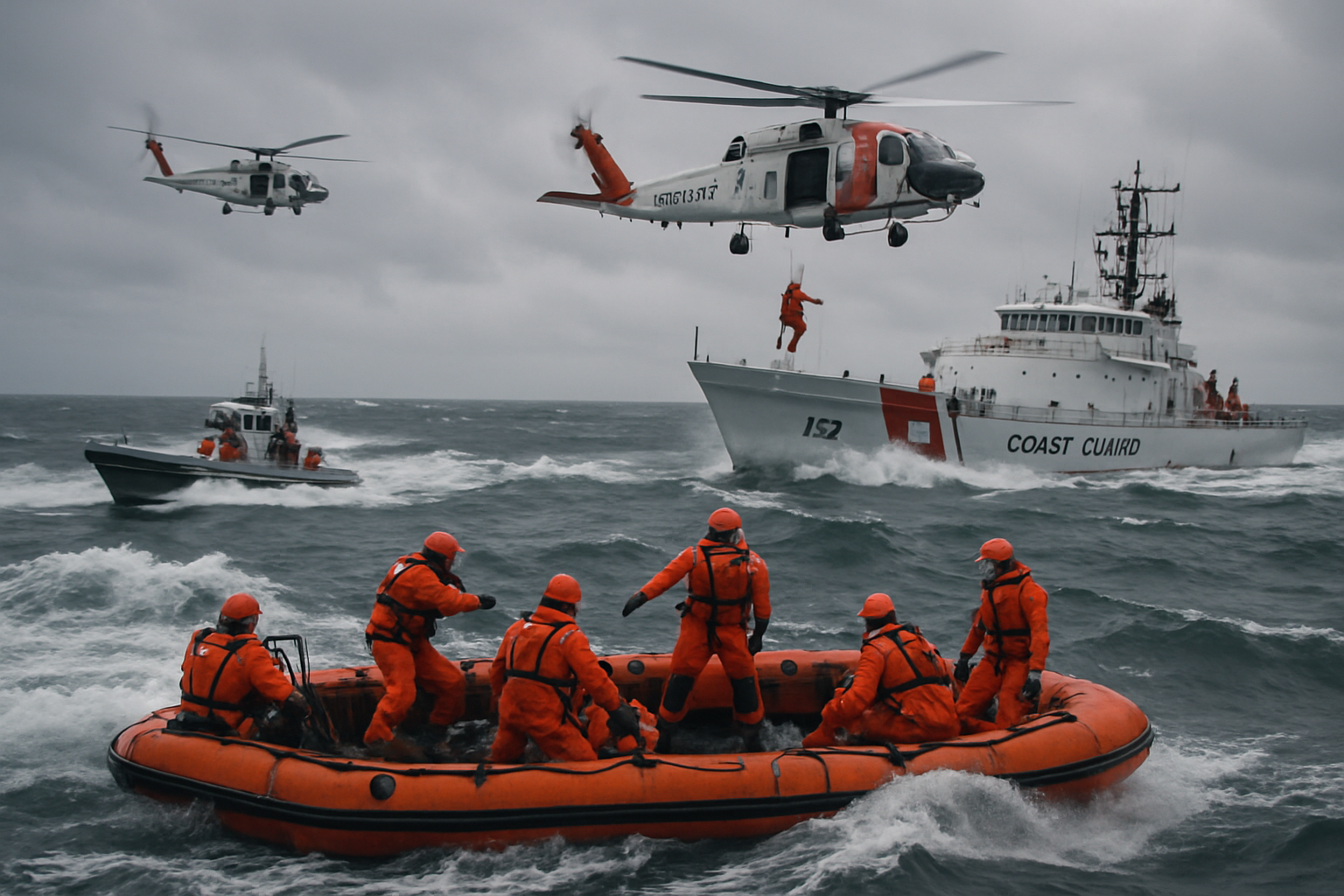
Maritime authorities across three continents are coordinating urgent search and rescue operations as a Thai cargo ship explosion in the Strait of Hormuz leaves three crew members missing and Mexican navy searches for two aid vessels bound for Cuba that vanished without trace.
The latest incidents underscore mounting pressures on global maritime safety systems as regional conflicts create increasingly dangerous operating environments for commercial vessels and humanitarian missions.
Strait of Hormuz Emergency Intensifies
A Thailand-flagged cargo vessel suffered a devastating explosion in the strategically critical Strait of Hormuz, with Oman's Royal Navy successfully rescuing 20 crew members while three remain missing. The vessel, which had previously been struck by unknown projectiles earlier this month according to Iranian news agency Tasnim, ran aground following the blast that triggered an onboard fire.
The incident occurs amid broader tensions in the Persian Gulf, where the 21-mile waterway handles approximately 40% of global seaborne oil transit. Norwegian maritime authorities confirmed the rescue operation demonstrates continued vulnerability of commercial shipping in contested waters.
"The explosion followed previous attacks with unknown projectiles, highlighting the evolving threats facing commercial vessels in international waters."
— Maritime Security Analysis
Missing Aid Vessels Bound for Cuba
Mexico's Navy has launched an extensive search operation after two vessels carrying humanitarian aid to Cuba disappeared during their journey, according to multiple international reports. The vessels carried a total of nine crew members representing various nationalities, raising international concern about their fate.
Swedish authorities confirmed the vessels' disappearance, while Finnish reports indicate the humanitarian mission was part of ongoing aid efforts to Cuba amid the island's severe economic challenges. The Mexican Navy's search operation encompasses broad areas of the Caribbean Sea, utilizing multiple vessels and aircraft.
Global Maritime Security Context
These incidents occur within a broader pattern of maritime emergencies affecting global shipping throughout 2026. The maritime industry faces unprecedented challenges as regional conflicts increasingly impact civilian vessels, while humanitarian operations navigate complex security environments.
Recent months have witnessed a significant increase in maritime incidents across multiple regions, from the Mediterranean to the Indian Ocean, forcing shipping companies to implement enhanced security protocols and route modifications.
Economic Implications
The maritime crisis extends beyond immediate safety concerns to global economic stability. Major shipping companies have suspended operations in certain regions, while insurance premiums surge as underwriters assess new risk factors in maritime operations.
Supply chain disruptions affecting industries from automotive to electronics demonstrate the interconnected nature of global commerce and its vulnerability to maritime security threats. The Strait of Hormuz incidents particularly impact energy markets given the waterway's critical role in oil transit.
International Response Coordination
Maritime authorities worldwide are enhancing coordination mechanisms to address the evolving crisis. The International Maritime Organization has called for improved information sharing and standardized emergency response protocols across jurisdictions.
Search and rescue operations demonstrate both the capabilities and limitations of current international maritime emergency frameworks. While coordination between nations has shown effectiveness, the scale and geographic spread of incidents strain available resources.
Technology and Safety Advances
The crisis accelerates adoption of advanced maritime safety technologies, including enhanced satellite tracking systems, AI-powered monitoring, and real-time weather analytics. However, coordination across multiple jurisdictions remains challenging despite technological advances.
Industry experts emphasize the need for comprehensive safety protocol reviews, enhanced crew training programs, and improved emergency communication systems to address emerging maritime threats.
Regional Variations in Maritime Challenges
Different regions face distinct maritime security challenges. The Strait of Hormuz incidents reflect geopolitical tensions affecting commercial shipping, while the missing Cuba-bound aid vessels highlight humanitarian mission vulnerabilities in militarized environments.
Each incident requires tailored response approaches while contributing to broader understanding of maritime security in an increasingly complex international environment.
Future Implications
Maritime industry analysts warn that current incidents may represent a new normal rather than temporary disruptions. The convergence of geopolitical tensions, climate challenges, and aging maritime infrastructure creates persistent risks requiring fundamental adaptations.
International cooperation frameworks must evolve to address the scale and complexity of modern maritime emergencies. Success in managing current crises will determine whether the international community can develop effective mechanisms for protecting civilian maritime operations in an unstable world.
The ongoing search operations across three continents serve as a stark reminder of the human costs when maritime security systems face unprecedented strain. As rescue efforts continue, the international maritime community confronts the urgent need for enhanced safety protocols capable of protecting crews and cargo in increasingly challenging operational environments.