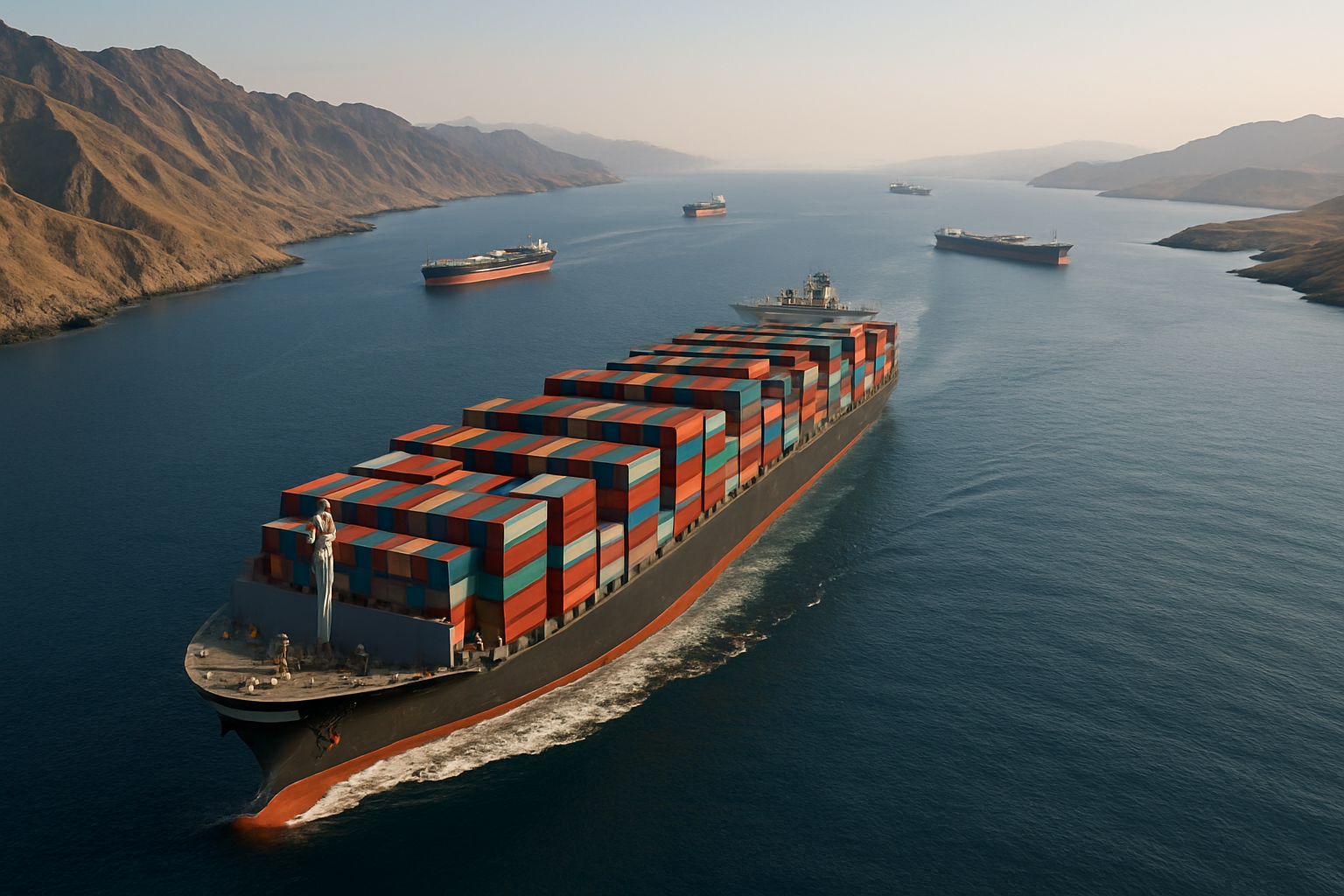
The global shipping industry continues to face its most severe operational challenges in decades as disruptions to key maritime routes, enhanced security threats, and environmental pressures reshape international trade patterns and supply chain strategies.
Strait of Hormuz: The Continuing Crisis
The strategic waterway handling 40% of global oil transit remains at the center of international maritime concerns. Despite diplomatic efforts and temporary ceasefires, the situation continues to affect global shipping patterns fundamentally.
According to recent developments, Iran has maintained various levels of control over the 21-mile chokepoint, implementing what international observers describe as an unprecedented vetting system for commercial vessels. This has forced the international community to confront the vulnerability of single-point failures in global logistics networks.
"Any payment system for passage through the Strait of Hormuz would create a dangerous precedent for global maritime routes," warned EU High Representative for Foreign Affairs.
— EU Official Statement
Industry Response and Adaptation
Major shipping companies have been forced to implement comprehensive crisis management strategies. The Cyprus Shipping Chamber has voiced strong support for international efforts to create unified approaches to shipping decarbonization, while simultaneously dealing with operational disruptions.
The organization has emphasized the critical importance of coordinated action under the International Maritime Organisation (IMO) to ensure stability and regulatory certainty for the industry during these challenging times.
Security Challenges Beyond Hormuz
Maritime security concerns extend far beyond the Persian Gulf. Latvia has offered its explosive ordnance disposal expertise to help ensure freedom of navigation in critical waterways, highlighting the international cooperation required to maintain secure shipping lanes.
Recent incidents have demonstrated the vulnerability of maritime operations to various security threats, from traditional piracy to state-sponsored interference with commercial shipping routes.
Environmental and Regulatory Pressures
The shipping industry faces mounting pressure to address environmental concerns while managing operational disruptions. The upcoming IMO MEPC 84 session represents a crucial opportunity for member states to align positions on emission reduction strategies.
Industry leaders stress that effective implementation of environmental measures must balance greenhouse gas reduction targets with maintaining the resilience of global trade networks. The challenge lies in ensuring practical solutions that don't compromise supply chain stability during already difficult times.
Supply Chain Restructuring
The crisis has accelerated discussions about fundamental changes to global supply chain architecture. Companies are increasingly investing in route diversification strategies and enhanced risk assessment methodologies to reduce dependence on vulnerable chokepoints.
Alternative routing options, while more expensive and time-consuming, are becoming standard contingency measures. The Arabian Peninsula alternative routes, despite their limitations, have seen increased utilization as companies seek to minimize exposure to geopolitical risks.

Technology and Innovation Response
The maritime industry is accelerating adoption of advanced technologies in response to current challenges. Enhanced satellite tracking systems, AI-powered navigation, and improved communication protocols are becoming standard equipment rather than optional upgrades.
Port automation and predictive maintenance technologies are being deployed more rapidly as companies seek to optimize operations and reduce vulnerabilities in their logistics networks.
Economic Impact and Market Adaptation
The ongoing crisis has exposed the interconnected nature of global maritime commerce. Financial markets have demonstrated extreme sensitivity to shipping disruptions, with major indices experiencing significant volatility in response to maritime security concerns.
Companies with operational excellence and strategic flexibility have shown remarkable resilience during volatile conditions, providing models for industry adaptation. The crisis has particularly benefited firms with diversified operational portfolios and enhanced risk management capabilities.
International Cooperation Efforts
Maritime security has increasingly become a multilateral concern requiring coordinated international responses. Naval cooperation frameworks are being established to ensure safe passage through critical shipping lanes.
The International Maritime Organization continues to play a crucial role in coordinating responses to maritime emergencies and establishing safety protocols for contested waterways.
Future Implications for Global Trade
The current crisis is reshaping traditional maritime trade patterns with implications extending far beyond immediate operational concerns. Industry analysts suggest that current adaptations may define shipping operations and trade relationships for years to come.
Route diversification strategies under development today are likely to become permanent features of global logistics planning, reducing historical dependence on specific geographical chokepoints.
"The maritime industry demonstrates remarkable resilience through technological innovation, strategic cooperation, and operational flexibility during unprecedented challenges."
— Industry Analysis Report
Environmental and Regulatory Outlook
Environmental regulations continue to drive demand for cleaner vessels and more efficient operations. The crisis has highlighted the need for sustainable shipping practices that can withstand geopolitical pressures while meeting environmental standards.
Investment in green technologies and alternative fuels is accelerating as companies seek to future-proof their operations against both regulatory requirements and operational disruptions.
Lessons for Industry Resilience
The ongoing maritime crisis has provided crucial insights into building resilient supply chains and shipping operations. Key lessons include the importance of geographic diversification, enhanced communication systems, and robust contingency planning.
Companies that have successfully navigated current challenges share common characteristics: strategic foresight, operational flexibility, and investment in advanced technologies and risk management systems.
As the industry continues to adapt to evolving challenges, the emphasis on resilience, sustainability, and international cooperation will likely define the future of global maritime commerce. The current crisis, while disruptive, has accelerated important innovations and adaptations that will strengthen the industry's ability to handle future challenges.