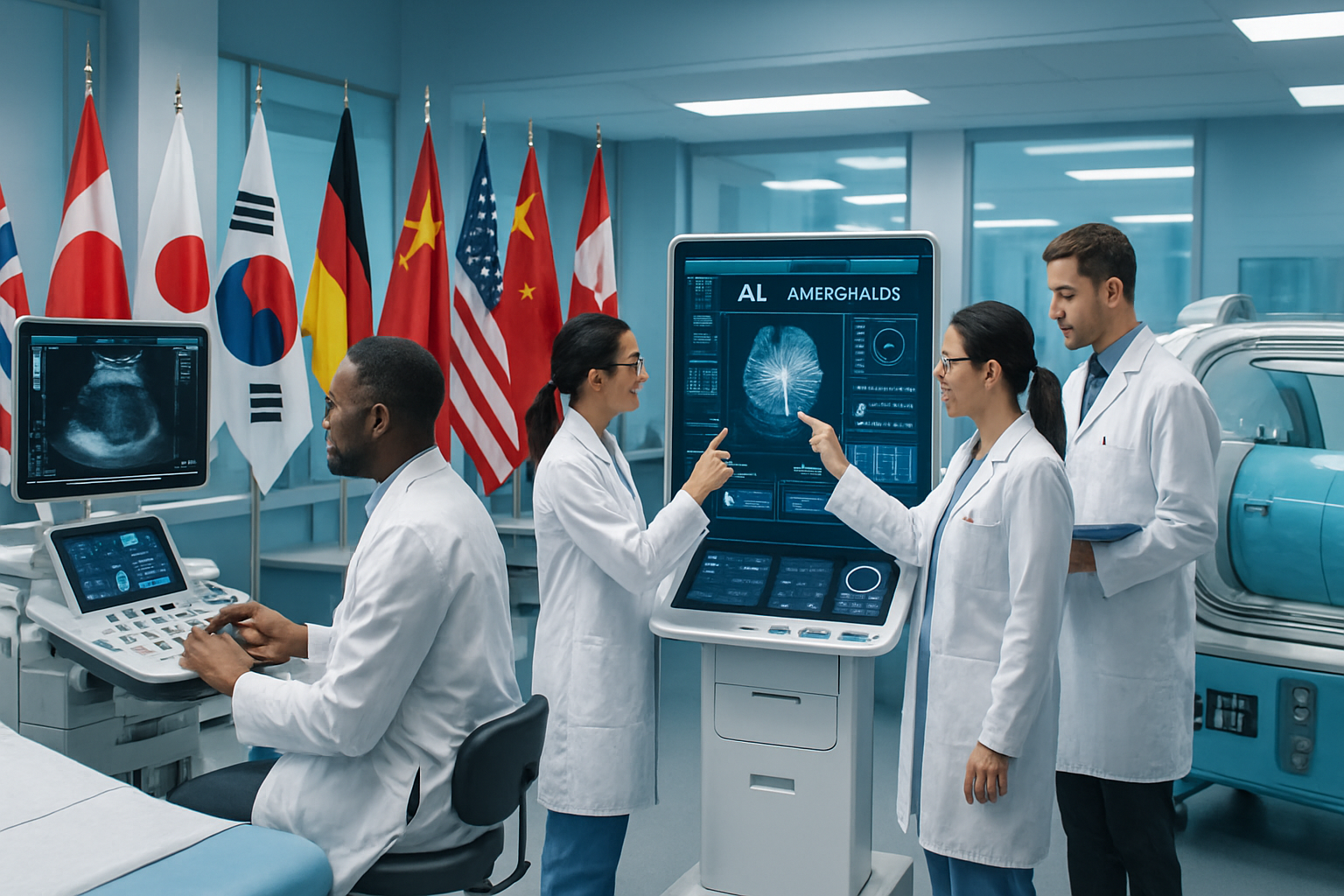
Medical professionals across eight countries are achieving unprecedented breakthroughs in cancer treatment, infectious disease prevention, and healthcare innovation, marking a pivotal moment in the ongoing "Therapeutic Revolution of 2026."
From Croatian hospitals pioneering world-first cancer therapy complications treatment to Finnish researchers receiving million-euro grants for advanced cancer research, the global medical community demonstrates remarkable progress in addressing humanity's most challenging health conditions through innovative international cooperation.
Croatian Medical Breakthrough: Hyperbaric Oxygen Cancer Therapy
Doctors at Clinical Hospital Centre Rijeka (KBC Rijeka) have achieved a world-first success in treating severe complications from cancer radiotherapy using hyperbaric oxygen therapy. This groundbreaking approach addresses a critical challenge where traditional cancer treatments often create additional medical complications requiring innovative solutions.
The Croatian medical team's success represents a paradigm shift in oncological care, demonstrating how advanced therapeutic techniques can address the complex side effects of life-saving cancer treatments. Hyperbaric oxygen therapy involves placing patients in pressurized chambers with pure oxygen, promoting healing at the cellular level and addressing radiation-induced tissue damage.
Finnish Cancer Research Investment
The University of Oulu has received over one million euros in research funding to develop new and more effective cancer treatments. This substantial investment reflects the international commitment to advancing cancer research and developing targeted therapeutic approaches that improve patient outcomes while reducing treatment-related complications.
Finnish researchers anticipate that their work will contribute to developing more effective cancer therapies and improving long-term outcomes for targeted treatments, building on the global momentum of precision medicine advances that characterize the current therapeutic revolution.
Burkina Faso Healthcare Infrastructure Enhancement
Médecins du Monde has donated five portable ultrasound machines to the Baskuy health district in Ouagadougou, significantly enhancing diagnostic capabilities in West Africa. Each device arrives with a comprehensive kit including three types of probes (convex, endovaginal, and linear), printers, ultrasound gel, paper rolls, and mobile carts.
According to Issouf Maïga, General Coordinator of Médecins du Monde, this donation is part of the RESPECT project funded by Global Affairs Canada, aimed at ensuring safe and quality care for every woman. The initiative demonstrates how international cooperation can deliver practical healthcare improvements directly to communities requiring enhanced medical capabilities.
Cyprus Advances National Cancer Institute
Cyprus has unanimously approved legislation establishing a National Cancer Institute to improve coordination and strategic planning in cancer care. The parliamentary vote reflects growing recognition that comprehensive cancer management requires dedicated institutional frameworks coordinating research, treatment, and prevention efforts.
This development aligns with global trends toward specialized cancer care institutions that can provide comprehensive services while contributing to international research networks advancing treatment protocols and patient outcomes.
Infectious Disease Prevention Success
Mauritius authorities are strengthening measures against chikungunya and leptospirosis outbreaks, with Ministers Anil Bachoo and Ranjiv Woochit conducting comprehensive situation assessments. Over 850 chikungunya cases have been recorded, with approximately 100 active cases, particularly affecting the Port-Louis and Rose-Hill regions.
This proactive approach demonstrates the evolution of infectious disease management from reactive treatment to comprehensive prevention strategies, involving enhanced surveillance, community education, and coordinated public health responses that address disease transmission at multiple levels.
South African Tuberculosis Challenges
While Africa shows progress in reducing tuberculosis cases, experts warn that missed diagnoses and drug-resistant infections continue complicating the fight against TB, particularly in South Africa and Mozambique. Undiagnosed tuberculosis poses significant challenges for regional health systems working to eliminate the disease.
The situation highlights the complex nature of infectious disease elimination, requiring sophisticated diagnostic capabilities, treatment adherence programs, and social support systems addressing the underlying conditions contributing to tuberculosis transmission and treatment resistance.
Vitamin D Research Breakthrough
New research published in the American Academy of Neurology journal "Neurology Open Access" indicates that high levels of vitamin D may reduce Alzheimer's disease risk. This discovery adds to growing evidence supporting prevention-first healthcare approaches that emphasize nutritional interventions and lifestyle modifications over purely pharmaceutical treatments.
The findings contribute to broader understanding of how accessible interventions can provide significant health benefits, aligning with the therapeutic revolution's emphasis on prevention strategies that demonstrate superior cost-effectiveness compared to reactive treatment models.
International Cooperation Evolution
These medical advances occur within a remarkable period of international healthcare cooperation despite funding challenges facing traditional multilateral health organizations. Countries are developing bilateral partnerships and regional collaboration networks driving medical innovation through peer-to-peer knowledge sharing.
The distributed cooperation model allows flexible, culturally responsive approaches while maintaining evidence-based medical standards. From Croatian cancer therapy innovations to Finnish research investments and Burkina Faso infrastructure improvements, the diversity of approaches provides complementary models strengthening the global healthcare ecosystem.
Prevention-First Healthcare Revolution
The developments reflect a fundamental shift toward prevention-focused healthcare strategies emphasizing early intervention over reactive treatment. Countries implementing comprehensive prevention programs consistently report superior cost-effectiveness through decreased crisis interventions while achieving improved population health outcomes.
Economic analyses demonstrate that prevention-focused strategies offer substantial long-term cost reductions through reduced emergency care demands, decreased hospitalization rates, and improved workforce productivity. These benefits extend beyond healthcare costs to educational achievement, workplace stability, and enhanced community resilience.
Technology and Human-Centered Integration
Successful healthcare innovations demonstrate sophisticated integration of advanced technology with human-centered care approaches. The Croatian hyperbaric oxygen therapy, Finnish precision research methods, and Burkina Faso diagnostic equipment all represent technology enhancing rather than replacing clinical judgment and personal medical relationships.
This balanced approach avoids the "wellness paradox" where technological solutions create healthcare inequality rather than improving access and outcomes for diverse populations. Medical advances are designed to benefit communities regardless of geographic or economic constraints through approaches that maintain fundamental human connections essential to effective healthcare delivery.
Climate Change and Healthcare Resilience
These healthcare transformations occur during unprecedented environmental challenges, with recent months marking consecutive temperature records exceeding pre-industrial levels. Healthcare systems must address immediate medical needs while building long-term resilience for changing disease patterns and environmental pressures.
Prevention-first approaches prove particularly valuable for managing climate-related health challenges through proactive intervention rather than reactive crisis management, positioning healthcare systems to serve communities facing evolving environmental conditions more effectively.
Future Implications
April 2026 represents a critical juncture in global healthcare evolution, with evidence-based innovations successfully translating into accessible effective treatments. The convergence of precision medicine advances, international cooperation models, and prevention-focused strategies provides a foundation for resilient healthcare systems addressing 21st-century challenges.
Success in scaling these innovations globally depends on sustained political commitment, adequate resource allocation, comprehensive professional training, and continued international cooperation. The integration of technological innovation with enduring healthcare principles offers unprecedented opportunities for effective, equitable, and sustainable medical care delivery serving all populations worldwide.
The therapeutic revolution of 2026 continues demonstrating that coordinated international action can achieve transformative healthcare improvements even under resource constraints, providing hope and practical guidance for addressing global health challenges through scientific excellence balanced with human-centered care delivery.