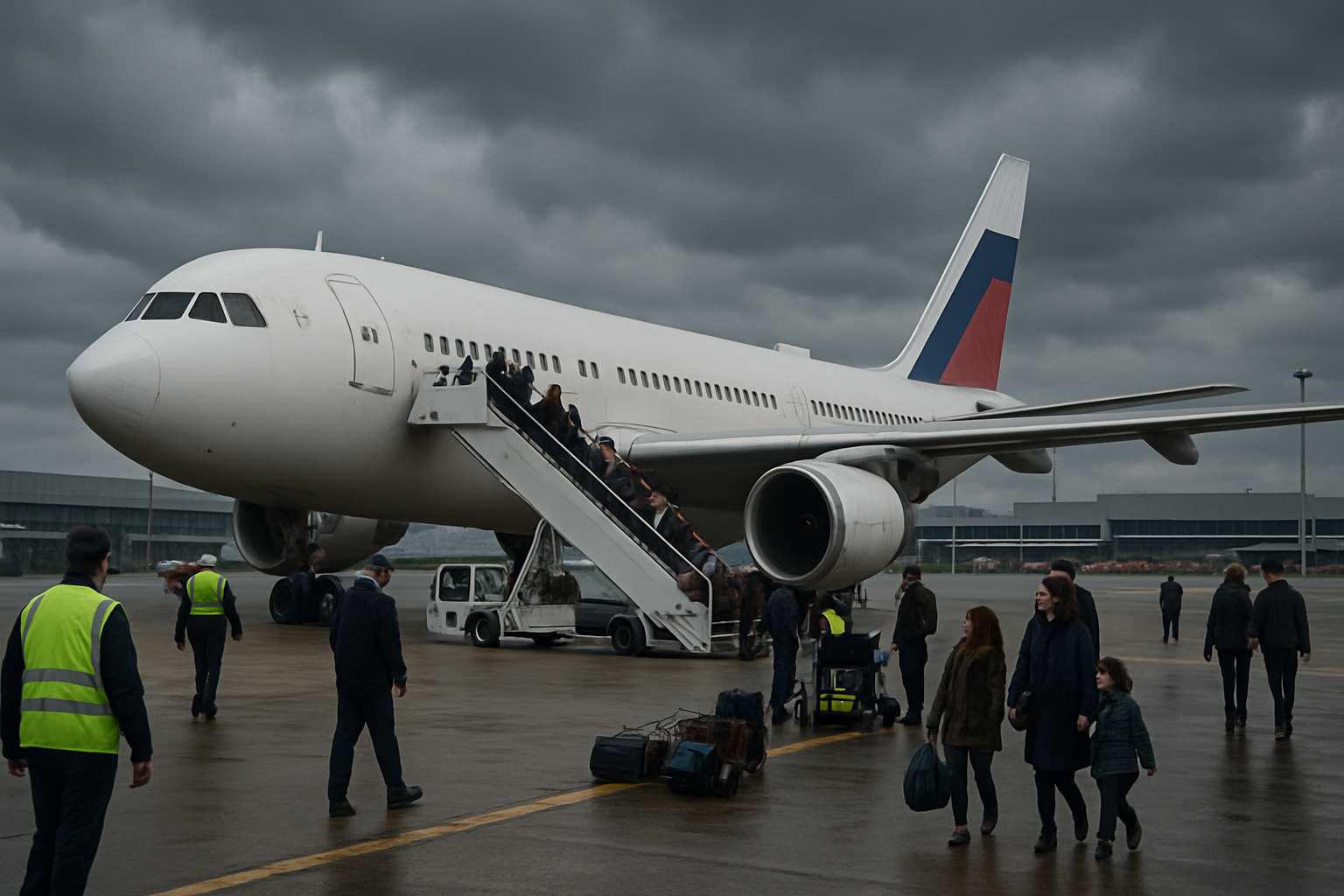
The largest coordinated international evacuation since the Arab Spring is underway as governments worldwide rush to extract an estimated 500,000 citizens from the Middle East conflict zone following the escalation that began March 1, 2026.
What began as diplomatic tensions has rapidly evolved into the most complex humanitarian crisis of the decade, forcing dozens of nations to implement emergency protocols amid airspace closures, ongoing military operations, and unprecedented aviation disruptions affecting global travel networks.
Massive Scale of International Response
The evacuation numbers paint a staggering picture of global citizens caught in the crossfire. Australia leads with 115,000 nationals requiring assistance, followed by Germany with 30,000 tourists stranded across the region. Austria has registered 18,000 citizens seeking help, while Italy reports 30,000 nationals in the UAE alone.
Cyprus has activated its ESTIA national evacuation plan for the first time since its establishment, coordinating the safe return of over 2,000 nationals from UAE territories. Malta is managing the evacuation of 1,619 citizens spread across the region, while Luxembourg reports 300 travelers, including 200 in the UAE.
"This is a historic moment that tests our international cooperation frameworks like never before. We're witnessing the successful multilateral coordination of resources, flight schedules, and mutual assistance on an unprecedented scale."
— European Crisis Management Official
Kazakhstan has emerged as one of the most successful evacuation operations, having safely repatriated over 3,300 citizens through 12 flights operated by both Kazakh and foreign airlines since operations began. The Central Asian nation's foreign ministry continues coordinating efforts for remaining citizens in affected areas.
European Coordination Sets New Standards
The European Union's response has been unprecedented in its scope and coordination. Cyprus's activation of the ESTIA plan represents a watershed moment for EU crisis management capabilities, demonstrating how member states can effectively coordinate resources during regional emergencies.
Finland has been grappling with overwhelming demand for evacuation flights from Oman, with 600 people registering for flights that can accommodate only 160 passengers. The Nordic nation faces difficult decisions about prioritizing vulnerable citizens while ensuring fair access to evacuation opportunities.
Germany has positioned itself at the forefront of evacuation efforts, coordinating specialized charter flights and working closely with Emirates to facilitate the return of its 30,000 stranded tourists. German officials have emphasized the extraordinary diplomatic efforts required to maintain safe corridors during active conflict.
Latvia has arranged emergency repatriation flights, with airBaltic providing additional capacity as demand far exceeds initial projections. The Baltic nation's foreign ministry has activated emergency contingency funds to cover unexpected evacuation costs.
Aviation Crisis Compounds Challenges
The evacuation operations take place against the backdrop of the most severe aviation crisis since COVID-19, with over 18,000 flights cancelled worldwide. Eight countries have simultaneously closed their airspace - Iran, Iraq, Israel, UAE, Qatar, Syria, Kuwait, and Bahrain - creating unprecedented logistical challenges.
Dubai International Airport, the world's busiest with over 86 million passengers annually, remains completely shut down following missile damage. This closure has eliminated the critical Europe-Asia hub that many evacuation operations had planned to utilize.
Emirates, Etihad, Air France-KLM, Wizz Air, and Bulgaria Air have suspended operations indefinitely, forcing governments to seek alternative routing through secondary airports and partner airlines. The complex rerouting requirements have dramatically increased costs and extended travel times for evacuation flights.
Individual Stories of Resilience
Behind the statistics are human stories of resilience and international solidarity. A Congolese tourist stranded in Dubai since February 28 describes his ordeal after Qatar Airways cancelled his return flight, highlighting how sudden airspace closures can trap ordinary travelers far from home.
Namibia's embassy in Cairo reports coordinating voluntary evacuations for over 100 nationals, while the Netherlands has received more than 9,000 completed contact forms from citizens seeking government assistance in leaving the region.
Slovakia has successfully completed initial repatriation flights from Jordan and is now planning additional operations from Oman, demonstrating how smaller nations can effectively coordinate with regional partners to ensure citizen safety.
Economic and Energy Implications
The evacuation crisis coincides with severe economic disruption as oil prices have surged 10% past $80 per barrel following Iran's closure of the Strait of Hormuz, which handles 40% of global oil transit. Natural gas prices have increased by 24% in Europe and 78% in the United States, adding economic pressure to evacuation funding.
Major shipping companies Maersk and MSC have suspended operations, leaving over 150 tankers stranded in the Persian Gulf with billions of dollars worth of cargo. Qatar has halted LNG production, affecting approximately 20% of global exports and further complicating the energy crisis.
Diplomatic Breakdown Context
The massive evacuation operations became necessary following the complete breakdown of nuclear diplomacy between Iran and the United States, despite earlier Geneva talks achieving what officials described as "broad agreement on guiding principles" - the most progress since the JCPOA collapse in 2018.
The fundamental disagreement proved insurmountable: Iran excluded ballistic missiles and regional proxies as "red lines" while maintaining nuclear-only discussions, whereas the US demanded comprehensive negotiations including missiles, armed groups, and human rights issues.
This diplomatic collapse led to "Operation Epic Fury," described by military officials as the largest coordinated operation in the Middle East since 2003, triggering Iran's massive retaliation dubbed "Operation True Promise 4" with the declaration that "no red lines remain."
Regional Coalition Under Strain
The crisis has severely strained the unprecedented Saudi Arabia-UAE-Qatar-Egypt coalition that had supported diplomatic solutions. Egyptian President Sisi condemned Iranian attacks on "sisterly Arab countries," warning of potential "comprehensive chaos" if the situation continues to escalate.
The UAE has reported one civilian death from missile debris in Abu Dhabi, while Kuwait Airport suffered drone strikes that injured 32 foreign nationals. Qatar successfully intercepted 65 missiles and 12 drones using Patriot defense systems, though fragments still wounded 8 civilians.
Successful Operations Amid Chaos
Despite the challenging circumstances, several nations have reported successful evacuation milestones. Australia's first repatriation flight, Emirates EK414, safely arrived in Sydney with over 200 passengers. Cyprus Airways flight CYP107 successfully transported 180 citizens from Dubai to Larnaca.
Portugal has arranged multiple flights through alternative routing, while Singapore is coordinating weekend repatriation flights through Muscat, Oman. These successes demonstrate that international cooperation can overcome even the most complex logistical challenges.
South Korea has already evacuated 140 nationals from both Iran and Israel, showcasing rapid response capabilities. Malta's government has announced it will cover all evacuation costs for its citizens, removing financial barriers that might prevent safe return.
Historical Significance and Future Implications
Crisis management experts describe the current operations as template-setting for 21st-century humanitarian responses. Unlike natural disasters with predictable timelines, this crisis depends entirely on military and political resolution, making recovery planning extraordinarily complex.
The aviation industry faces weeks of backlog clearing once operations resume, with fundamental questions about route planning and risk assessment in an increasingly volatile geopolitical environment. The over-dependence on Middle Eastern hubs for Europe-Asia connections has been starkly exposed, accelerating discussions about route diversification.
"This crisis demonstrates how regional conflicts can instantly become global humanitarian challenges affecting hundreds of thousands of civilians worldwide. It's a watershed moment for international cooperation mechanisms."
— International Crisis Management Expert
Nuclear Governance Crisis Context
The evacuation operations unfold against a broader nuclear governance crisis, with the New START treaty having expired on February 5 - marking the first time in over 50 years that the United States and Russia lack nuclear constraints. Combined with China's nuclear expansion, UN Secretary-General Guterres has described nuclear risks as being at their "highest in decades."
This context makes the diplomatic breakdown between Iran and the United States particularly significant for global security architecture, with implications extending far beyond the immediate evacuation needs.
Recovery Timeline Uncertain
Unlike weather-related disruptions with predictable recovery patterns, the current crisis's resolution depends entirely on political and military developments. Airlines are conducting daily operational reviews but cannot make long-term scheduling decisions in the current environment.
Government officials emphasize that the success of these evacuation operations provides a framework for future international crises, while failure could fundamentally reshape approaches to civilian protection in conflict zones.
As this historic evacuation continues, it represents not just a humanitarian response to immediate crisis, but a test of the international community's ability to protect citizens in an era of rapid geopolitical change. The coordination demonstrated by dozens of nations offers hope that multilateral cooperation can address even the most complex global challenges, setting precedents for crisis management that may define international relations for decades to come.