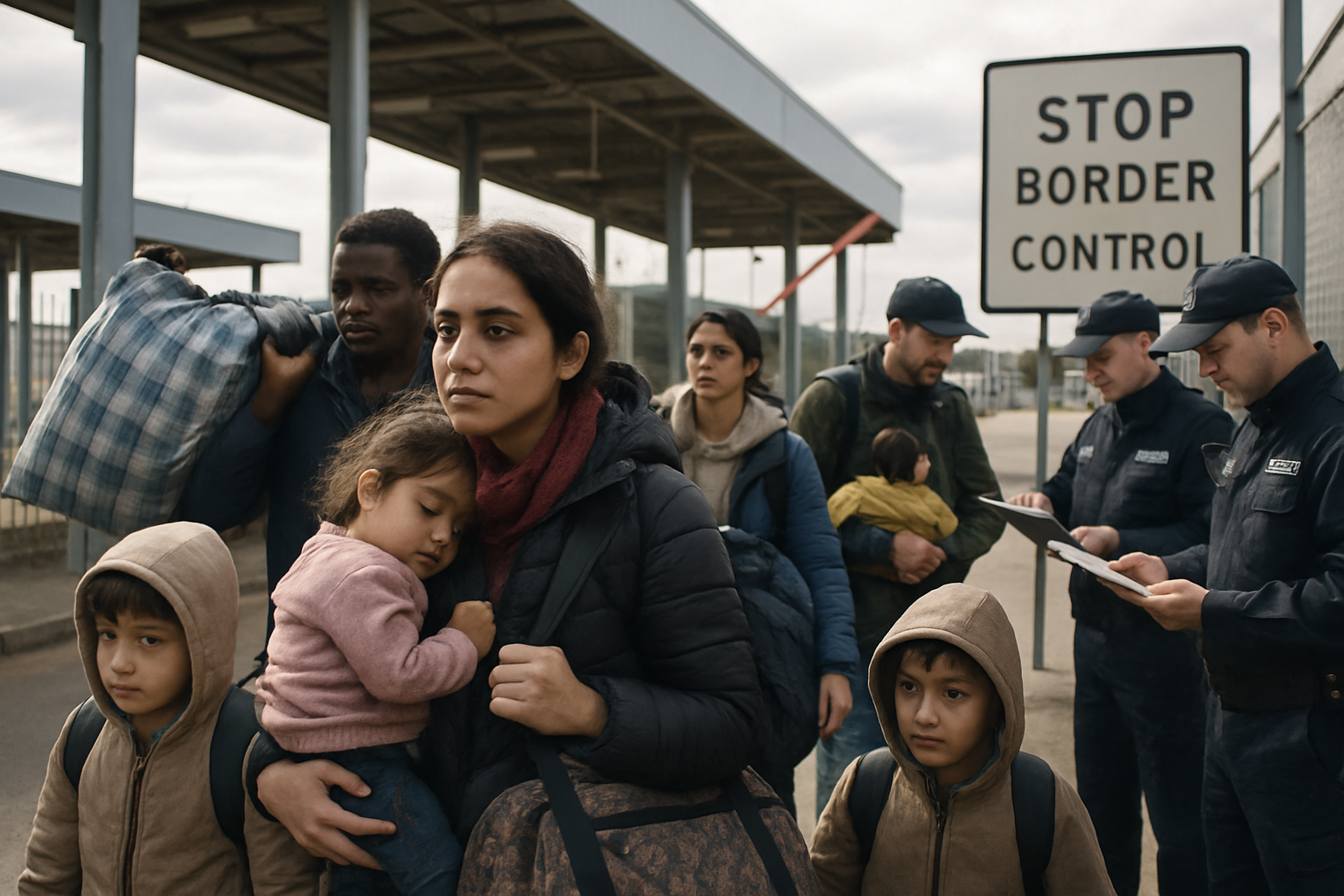
Countries across six continents are implementing dramatically different approaches to migration challenges, ranging from controversial deportation schemes to innovative reintegration programs, as the global movement of people reaches critical new dimensions in early 2026.
EU Prepares Afghanistan Deportation Operations
The European Commission has begun conducting technical missions in Afghanistan to prepare for the return of migrants residing illegally within the European Union, according to European Commission spokesperson for internal affairs Markus Lammert. The announcement represents a significant escalation in EU immigration enforcement, despite acknowledging the "challenges" such operations present.
Lammert confirmed that asylum applications from Afghan nationals increased by 11% in 2025, adding pressure on European systems already strained by multiple migration crises. The technical missions mark the first formal preparation for large-scale deportations to Afghanistan since the Taliban's return to power, raising complex diplomatic and humanitarian questions.
"The return of third-country nationals who are staying illegally in the European Union presents particular challenges," Lammert acknowledged, without providing specific details on how the EU plans to navigate the absence of formal diplomatic relations with the Taliban authorities.
US Courts Challenge Federal Enforcement Tactics
In the United States, federal immigration enforcement faces mounting judicial scrutiny following a series of controversial operations. A federal judge in Oregon issued a landmark ruling on February 5, 2026, requiring U.S. Immigration and Customs Enforcement (ICE) agents to obtain warrants before making arrests unless there is a demonstrated likelihood of escape.
The decision comes amid ongoing national controversy over ICE tactics, particularly following fatal shootings in Minneapolis earlier this year that resulted in the deaths of two U.S. citizens. The incidents sparked nationwide protests and contributed to a four-day federal government shutdown in early February.
Simultaneously, grassroots resistance is emerging across the country. In Minneapolis, the organization Singing Resistance has mobilized hundreds of performers in musical protests, calling on ICE agents to quit their jobs and pressuring corporate partners to cease supporting federal enforcement actions. The group's activism represents a novel form of civil disobedience targeting immigration enforcement through cultural expression.
"Following the fatal shootings of two US citizens in Minneapolis earlier this year, Singing Resistance has mobilised hundreds to perform songs calling on ICE agents to quit their jobs and for corporate partners to stop supporting federal enforcement actions."
— Singing Resistance Spokesperson
Cyprus Tackles Overcrowding and Safety Violations
In Cyprus, authorities have closed four buildings in old Nicosia after discovering serious health deficiencies, overcrowding, and fire safety violations. Over the past year, coordinated operations resulted in 131 arrests for illegal residence while inspecting 318 premises.
The closures highlight the intersection of migration challenges with urban housing crises, as people were found "crammed into rooms lacking basic safety measures." The operations were intensified in preparation for the arrival of two universities in the old city, demonstrating how migration intersects with urban development and educational expansion.
Nicosia Municipality issued closure orders due to infrastructure inadequacy, with Mayor Charalambos Prountzos coordinating between multiple services to ensure operations continue despite recent ministry transitions.
Positive Models: Guyana's Diaspora Success
While many countries struggle with immigration challenges, Guyana presents a contrasting success story through proactive diaspora reintegration. Foreign Affairs and International Cooperation Minister Hugh Todd revealed that the government has facilitated the successful remigration of more than 2,000 overseas-based Guyanese citizens over the last five years.
"As part of efforts to tap into the vast expertise and resources within the Guyanese diaspora, the Government has facilitated the successful remigration of more than 2,000 overseas-based Guyanese citizens over the last five years," Todd announced during budget debates in the National Assembly.
The program demonstrates how countries can transform migration from a challenge into an opportunity by actively courting skilled diaspora populations to return and contribute to national development.
Regional Prison Releases and Repatriations
Adding complexity to global migration patterns, the United Arab Emirates released approximately 108 Afghan nationals from its prisons to commemorate its National Day, according to Afghanistan's Ministry of Foreign Affairs. The releases highlight how immigration intersects with criminal justice systems and diplomatic relations.
Afghanistan's ministry confirmed that several of those released have already returned to the country, while remaining individuals await repatriation pending administrative procedures. Such releases often reflect broader diplomatic relationships and humanitarian considerations that transcend strict immigration enforcement.
Policy Implications and International Responses
The diverse approaches to migration challenges across these six countries reflect the absence of global consensus on how to manage human movement in an interconnected world. While the EU pursues technical preparations for controversial deportations and the US faces judicial pushback against enforcement overreach, smaller nations like Guyana demonstrate innovative approaches to diaspora engagement.
Human rights organizations continue to monitor developments closely, particularly regarding the EU's Afghanistan missions and US enforcement tactics. The judicial intervention in Oregon may serve as a precedent for other states seeking to limit federal immigration enforcement within their borders.
Emerging Trends in Migration Policy
Several key trends emerge from these recent developments:
- Increasing judicial oversight of executive immigration enforcement
- Growing tensions between federal and local authorities on immigration matters
- Creative civil resistance movements challenging traditional enforcement
- Proactive diaspora engagement as an alternative to restrictionist policies
- Complex intersections between immigration status and urban planning
These developments occur against the backdrop of continued global displacement due to conflict, climate change, and economic disparities. Recent memory includes the comprehensive enforcement shifts following the Minneapolis shootings, where the Trump administration was forced to withdraw 700 federal agents and implement body camera requirements for remaining personnel.
Looking Ahead: Sustainable Migration Solutions
As countries continue to grapple with migration challenges throughout 2026, the stark differences in approach between nations highlight both the complexity of the issue and the potential for innovative solutions. While enforcement-heavy approaches face increasing legal and social resistance, programs that view migration as an opportunity rather than solely a challenge appear to yield more positive outcomes.
The international community will be watching closely as these various approaches develop, particularly the EU's controversial Afghanistan operations and the ongoing evolution of US federal immigration enforcement in response to judicial and civil society pressure.
The success of Guyana's diaspora reintegration program may offer lessons for other nations seeking to harness the positive potential of human movement, while the safety violations uncovered in Cyprus underscore the urgent need for adequate housing and infrastructure to support migration flows.
As February 2026 continues, these migration challenges remain at the forefront of domestic and international policy debates, with outcomes likely to influence global approaches to human movement for years to come.