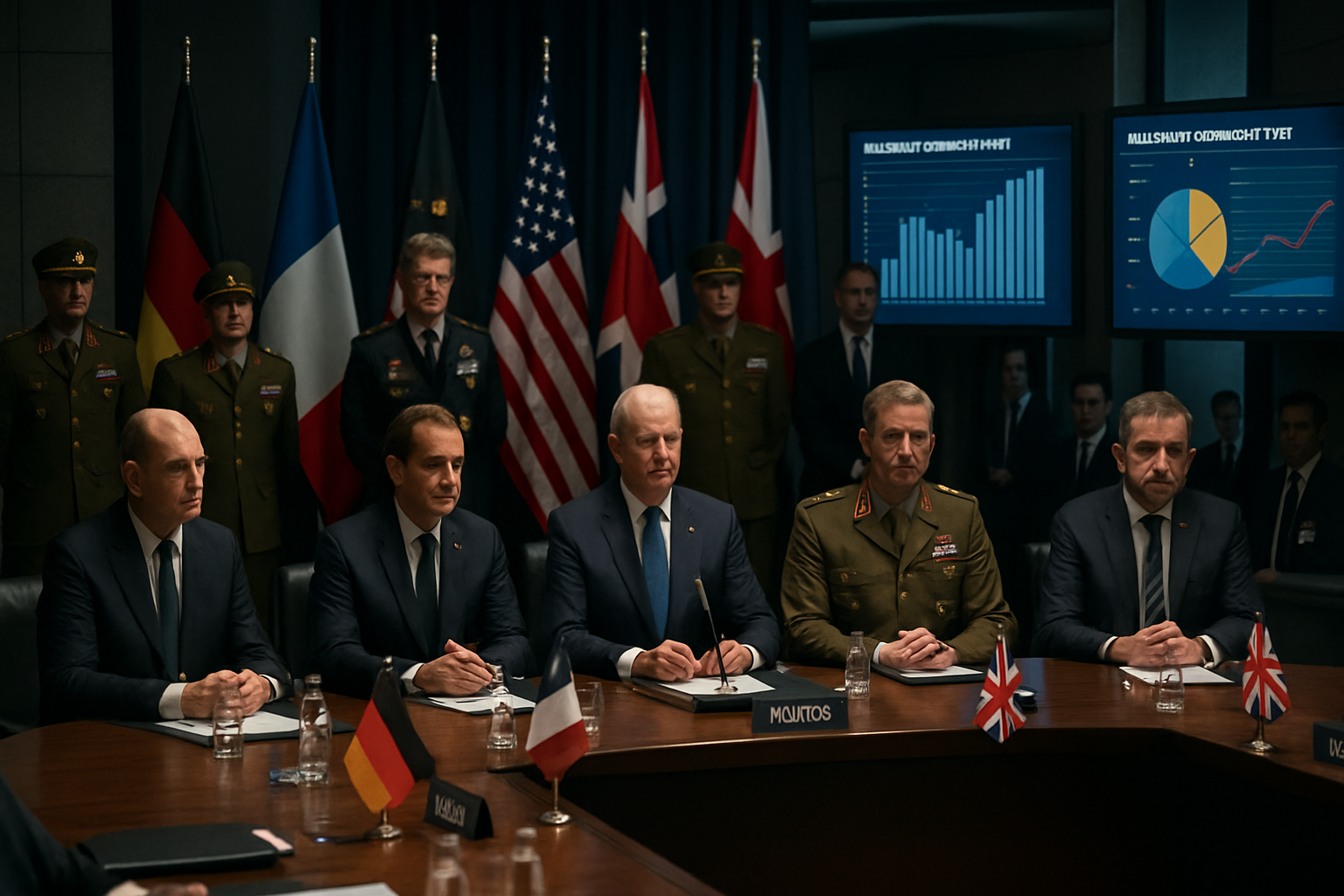
Global military spending surged to a record $2.89 trillion in 2025, marking the 11th consecutive year of increases and representing a 2.9% rise from 2024, according to the Stockholm International Peace Research Institute (SIPRI) annual report released Monday.
The unprecedented spending levels reflect mounting security concerns across multiple regions, with the United States, China, and Russia accounting for $1.48 trillion—more than half of total global expenditures. The Asia-Pacific region experienced the fastest military spending growth in 16 years, driven by what SIPRI researchers describe as "growing uncertainty" over American security commitments.
Regional Variations Drive Global Trends
The most dramatic increases occurred in Europe and the Asia-Pacific, where different security challenges produced varying spending patterns. Spain emerged as a standout case, entering the top 15 global military spenders with a remarkable 50% increase to $40.2 billion, representing the largest percentage increase among major military powers.
This surge in Spanish defense spending reflects broader European trends following Russia's continued aggression in Ukraine and evolving NATO commitments. All 32 NATO members achieved the historic milestone of reaching the 2% GDP defense spending target for the first time in the alliance's 75-year history, with combined spending reaching $1.4 trillion.
"The sustained growth in military expenditure reflects the deteriorating global security environment and the increased prioritization of military strength in national security strategies,"
— SIPRI Senior Researcher
Asia-Pacific Acceleration
The Asia-Pacific region's military spending acceleration represents the fastest pace since 2009, largely attributed to concerns over American reliability following political changes in Washington. Regional powers are investing heavily in defense capabilities amid rising tensions, particularly around Taiwan where Chinese military activity increased 23% in 2025.
China announced a 7% defense budget increase to 1.91 trillion yuan ($277 billion) for 2026, despite setting conservative GDP growth targets of 4.5-5%—the first time below 5% in three decades. This demonstrates Beijing's prioritization of military modernization even amid economic constraints.
The Chinese military buildup includes advanced combat capabilities, hypersonic weapons development, and AI integration across military systems. Japan, under Prime Minister Sanae Takaichi's historic electoral mandate, is responding with its own defense modernization, including potential constitutional reforms to enable enhanced military capabilities.
European Strategic Transformation
European defense spending patterns reflect the continent's strategic autonomy initiatives following NATO alliance strains. France and Germany have begun unprecedented nuclear deterrence discussions, with talks to expand French nuclear capabilities beyond national scope—the first such conversations since the Cold War ended.
The European approach represents a shift from traditional supplier-recipient relationships to comprehensive defense cooperation. Germany has emerged as the fourth-largest global arms exporter, surpassing China, while establishing joint production facilities with Ukraine leveraging battlefield experience.

Nuclear Governance Crisis
The military spending increases occur against the backdrop of a nuclear governance crisis following the New START treaty's expiration in February 2026—the first time in over 50 years without US-Russia nuclear constraints. This development has prompted European nations to reconsider their nuclear policies, with Finland lifting its comprehensive nuclear weapons ban and Sweden indicating willingness to host nuclear weapons during wartime.
Technology and Defense Innovation
Modern military spending increasingly focuses on emerging technologies rather than traditional equipment. Countries are investing heavily in AI-enhanced systems, space-based defense capabilities, and autonomous weapons platforms. China's breakthrough in hybrid propulsion systems for military drones exemplifies this technological arms race.
The integration of artificial intelligence into military systems has accelerated dramatically, with over 800 million users now having access to military-grade AI systems. However, this rapid advancement has prompted concern from the scientific community, with over 300 quantum physicists signing a manifesto opposing the militarization of quantum research.
Economic and Strategic Implications
The record spending levels raise questions about long-term sustainability and economic impacts. Critics argue that the massive resource allocation to defense spending could undermine other national priorities, including healthcare, education, and climate adaptation measures.
The military-climate nexus has become particularly concerning, with defense operations generating substantial carbon emissions that systematically undermine global energy transition efforts. Climate activists warn that the Iran conflict alone generated 5 million tonnes of greenhouse gas emissions in its first 14 days—equivalent to the combined annual output of 84 countries.
"The challenge facing nations is balancing legitimate security needs with sustainable development goals and fiscal responsibility,"
— International Security Analyst
Middle East Impact
The ongoing Iran crisis has significantly influenced global military spending patterns, with Operation Epic Fury costing over $27 billion in its first month and running at approximately $1 billion daily. This level of expenditure demonstrates how regional conflicts can rapidly escalate defense costs beyond initial projections.
The conflict has also highlighted alliance dynamics, with European nations demonstrating selective cooperation—rejecting participation in Gulf operations while rapidly coordinating to defend European territory when Iranian drones struck Cyprus.
Future Projections and Challenges
Military analysts expect spending to continue rising in 2026 and beyond, driven by several factors: ongoing regional conflicts, technological arms races, climate change impacts on security, and evolving threat landscapes including cyber warfare and space militarization.
The sustainability of these spending levels remains questionable, particularly for middle-income countries facing economic pressures. The challenge will be translating increased expenditures into effective deterrence and security outcomes rather than fueling wasteful arms races.
Democratic Oversight Concerns
The rapid increase in military spending has raised concerns about democratic oversight and accountability. With defense budgets growing faster than many parliamentary review processes can effectively monitor, there are calls for enhanced transparency and civilian control mechanisms.
Several European parliaments have demanded more detailed accounting of defense expenditures, particularly given the integration of dual-use technologies that blur the lines between military and civilian applications.
Looking Ahead
The record $2.9 trillion in global military spending for 2025 represents more than just increased defense budgets—it signals a fundamental shift in how nations perceive and respond to security challenges in the 21st century. As geopolitical tensions continue to escalate and new technological threats emerge, the trajectory suggests even higher spending levels ahead.
The key question facing policymakers worldwide is whether this unprecedented military investment will contribute to greater security and stability, or inadvertently fuel the very tensions it aims to deter. The answer will likely shape international relations and global security architecture for decades to come.
As nations grapple with competing priorities—from climate action to economic development—the allocation of such massive resources to military purposes reflects the perceived urgency of contemporary security challenges. Whether this approach proves sustainable and effective remains one of the defining questions of our time.