Countries worldwide are recognizing the strategic importance of critical minerals for economic development and supply chain security, with Australia, Mexico, and Uganda spearheading major initiatives that could reshape global mining cooperation and reduce dependency on concentrated supply chains.
Three distinct but interconnected developments across continents illustrate the accelerating transformation of global mining strategy. From Australia's breakthrough in antimony production to Mexico's strategic positioning in Latin American mineral cooperation and Uganda's governance reform efforts, these initiatives reflect a coordinated response to mounting supply chain vulnerabilities.
Australia's Strategic Mining Breakthrough
Locksley Resources has achieved a significant milestone in critical mineral production, successfully producing 99.5% purity antimony trioxide from its Desert Antimony mine in the United States. This achievement represents a major step forward in the company's American mine-to-market strategy, positioning Australia as a key player in diversifying global antimony supply chains.
Antimony, classified as a critical mineral by multiple nations, is essential for flame retardants, semiconductors, and defense applications. China currently dominates global antimony production, making alternative suppliers strategically important for Western nations seeking supply chain independence.
The breakthrough comes as part of broader Australian efforts to strengthen critical minerals partnerships, particularly through participation in the US-EU-Japan Critical Minerals Partnership involving 55 countries. This initiative directly challenges China's dominance in critical materials, where the country controls 60% of global production and 90% of refining capacity.
Mexico's Regional Leadership in Critical Minerals
The Inter-American Development Bank (IDB) has positioned Mexico and Latin America at the forefront of global critical minerals strategy through its comprehensive report "Resilience and Growth Perspectives in a Changing Global Economy." The analysis identifies critical minerals as among the most strategic inputs in the global economy, particularly amid energy transition, transportation electrification, and digital technology expansion.
Mexico's strategic positioning reflects broader Latin American recognition of the region's mineral wealth and its potential role in global supply chain diversification. The country's participation in international partnerships demonstrates sophisticated diplomatic balancing between traditional relationships and emerging strategic alliances.
The IDB report emphasizes that critical minerals have become essential for economic resilience during a period marked by energy transition demands and technological advancement. For Mexico and the broader Latin American region, this represents both opportunity and responsibility in global economic stability.
Uganda's Mining Governance Reform Initiative
Uganda's mining sector faces growing scrutiny as stakeholders raise concerns over licensing delays, weak revenue tracking, and limited transparency in mineral royalty sharing. These challenges highlight the governance aspects of mining development that have become increasingly important for international investors and development partners.
The concerns reflect broader African mining sector transformation, where countries are balancing rapid development with sustainable governance frameworks. Uganda's experience illustrates the implementation challenges facing nations seeking to maximize benefits from mineral resources while maintaining transparent, accountable systems.
These governance issues come as seven African countries—Angola, Democratic Republic of Congo, Guinea, Kenya, Morocco, Sierra Leone, and Zambia—participate in the US-EU-Japan Critical Minerals Partnership as alternative suppliers to Chinese-dominated supply chains.
Strategic Context and Global Implications
The developments across Australia, Mexico, and Uganda occur within a broader transformation of global mining strategy driven by supply chain security concerns and technological demands. The African Finance Corporation reports that Africa holds $29.5 trillion in mineral reserves, representing 20% of the global total, with $8.6 trillion remaining untapped.
Recent major investments across the continent include Ivory Coast's $1.2 billion gold projects, South Africa's R325 million commitment to the Zandkopsdrift rare earth project, and Burkina Faso's record 94-ton gold production generating over $6 billion in revenue during 2025.
Infrastructure development supports this mining renaissance, with projects like Algeria's Gara Djebilet railway accessing the world's third-largest iron ore reserves, Angola's Lobito Corridor revival connecting Atlantic ports to DRC mineral regions, and Tanzania's completed feasibility study for the 1,000-kilometer Mtwara-Mbamba Bay railway.
Technology Integration and Modern Mining
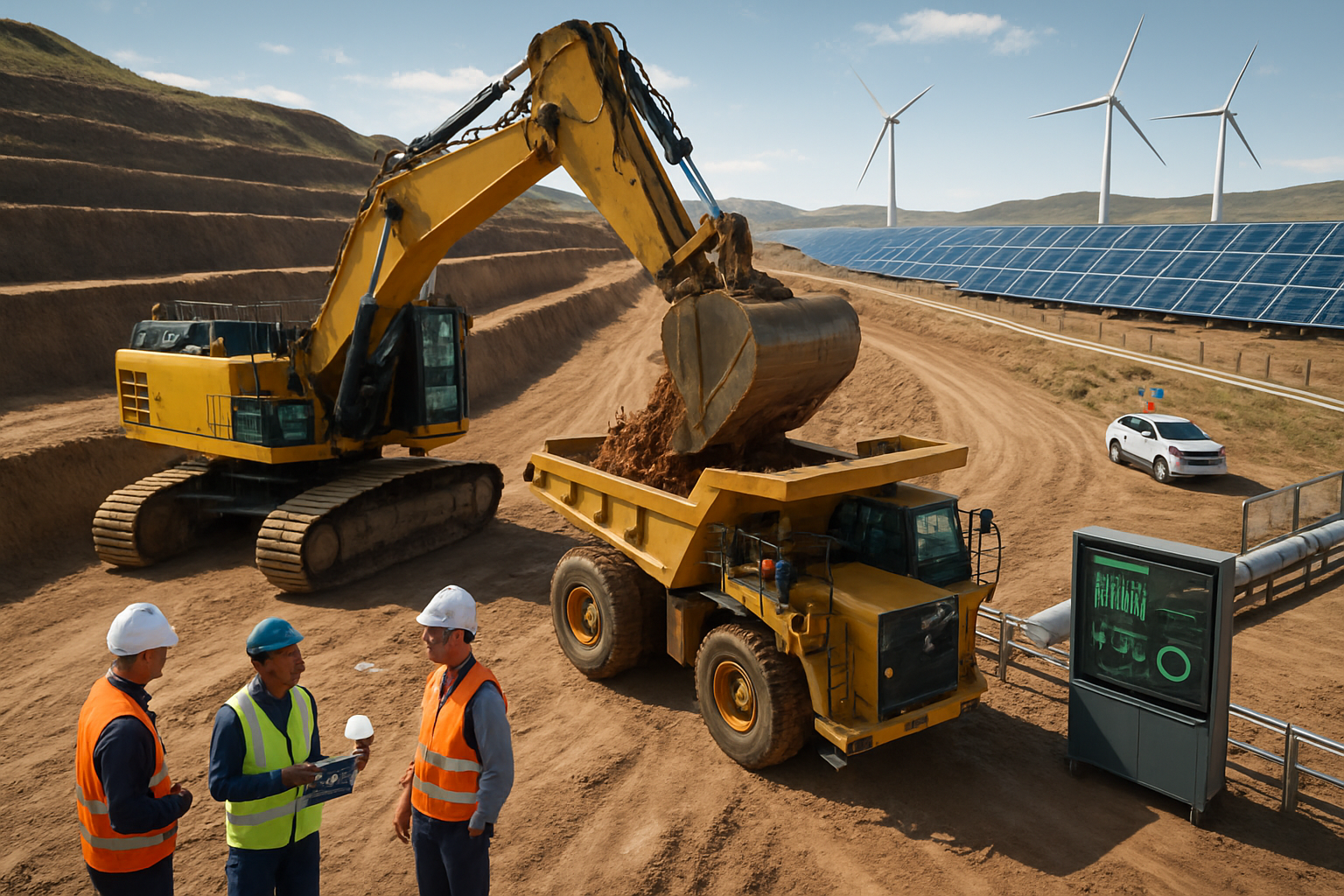
Modern mining operations increasingly incorporate advanced technologies including digital monitoring systems, renewable energy integration, and smart logistics management. These technological advances address infrastructure limitations while supporting environmental compliance requirements that have become prerequisites for international investment.
The Congo's recent suspension of Congo Dongfang Mining for environmental violations demonstrates how African governments are asserting regulatory oversight while maintaining investment attractiveness through transparent frameworks. This evolution from traditional extractive models toward sustainable development approaches benefits local populations while engaging global markets productively.
Environmental, Social, and Governance (ESG) compliance has become standard rather than optional for mining operations seeking international partnerships. Companies failing to meet these standards face regulatory action while responsible operators gain competitive advantages through enhanced reputation and access to capital.
Geopolitical Competition and Strategic Partnerships
The emergence of alternative partnerships challenges traditional supply chain structures dominated by Chinese production and processing. The US-EU-Japan Critical Minerals Partnership represents a shift from market-driven to security-based supply chain coordination, treating critical materials as national security infrastructure comparable to energy and defense capabilities.
China's announcement of zero-tariff access for 53 African countries starting May 1, 2026, demonstrates competitive response to Western partnership initiatives. This creates complex diplomatic dynamics where African and Latin American nations can leverage geopolitical competition for better terms while maintaining resource sovereignty.
The success of these strategic partnerships depends on balancing responsible development with economic competitiveness, requiring sustained political commitment across electoral cycles and massive capital investment in new mining and processing infrastructure.
Regional Integration and Economic Development
The African Continental Free Trade Agreement (AfCFTA) enables cross-border mining ventures, regional value chains, and coordinated development strategies. This framework allows countries to maximize investment impact through shared infrastructure and processing facilities.
Mining development catalyzes broader economic transformation through manufacturing capabilities, technology transfer, and regional integration. The creation of mining corridors and integrated development approaches demonstrates evolution from simple resource extraction toward comprehensive economic strategies.
Success factors for these initiatives include sustained political commitment, transparent governance frameworks, community engagement, and international cooperation that respects national sovereignty while building genuine partnership capabilities.
Implementation Challenges and Future Outlook
Despite promising developments, significant challenges remain including financing sustainability for developing nations, technical capacity building requirements, and climate change disruptions affecting project timelines. The diversity of approaches across different regions provides resilience against single-solution dependencies while offering multiple adaptation pathways.
The global memory chip shortage, with prices increasing sixfold affecting mining equipment control systems, illustrates supply chain vulnerabilities that extend beyond raw materials. These interconnected challenges require sophisticated management approaches combining technological innovation with traditional knowledge systems.
Environmental compliance costs create disadvantages compared to operations with lower standards, but countries implementing comprehensive environmental protection demonstrate economic resilience and attract sustainable investment over the long term.
Strategic Significance for Global Development
The March 2026 developments represent a potential turning point for global mining strategy, demonstrating capacity for sophisticated international investment management while maintaining development control. This evolution from aid-dependent models to strategic partnership approaches positions resource-rich nations as essential contributors to global prosperity and supply chain security.
The success of current initiatives will influence mining development approaches throughout the world, establishing templates for sustainable resource development that benefits local populations while engaging global markets effectively. The convergence of climate urgency, technological advancement, and geopolitical competition creates both challenges and opportunities for comprehensive mining transformation.
As countries navigate these complex dynamics, the fundamental question remains whether the international community can build resilient, equitable mining systems that address immediate security needs while supporting long-term sustainability goals. The experiences of Australia, Mexico, Uganda, and their international partners will provide crucial lessons for scaling effective mining strategies globally during this critical decade of climate action and economic transformation.