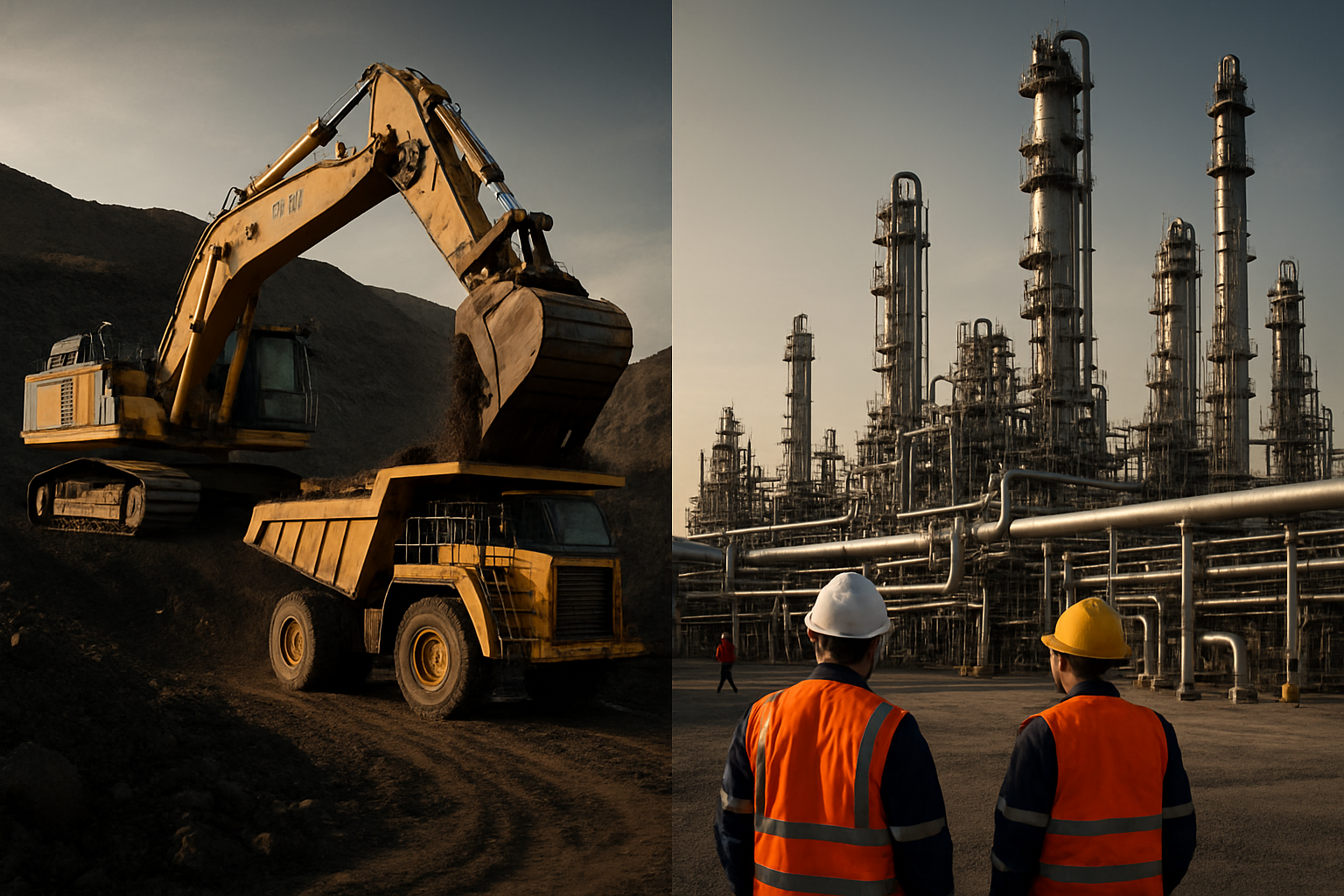
The global mining and energy sector presents a tale of two extremes in February 2026, as South Africa grapples with billions in losses from illegal mining operations while Kazakhstan secures a massive $7 billion investment from Chinese partners for cutting-edge gas field development.
South African Minister of Mineral and Petroleum Resources Gwede Mantashe delivered a stark warning about the escalating crisis facing his nation's mining industry, describing illegal mining as "one of the most pressing challenges" that is "costing the economy billions in lost revenue." This announcement comes as the sector continues to struggle with unauthorized operations that undermine legitimate mining activities and state revenue collection.
Kazakhstan Attracts Historic Energy Investment
In stark contrast to South Africa's challenges, Kazakhstan announced a transformative partnership that could reshape its energy landscape. Kazakh Invest and Chinese oil and gas company Geo-Jade Petroleum Corporation signed a cooperation and project-support agreement on February 3 to advance development of the Sozak gas field in Kazakhstan's Kyzylorda Region.
The project, valued at over $7 billion, represents a potential breakthrough in Kazakhstan's gas industry by focusing on the production of hard-to-recover, unconventional gas resources. This marks the possible launch of a new subsector within Kazakhstan's energy portfolio, demonstrating the country's commitment to diversifying its hydrocarbon production capabilities.
The Sozak gas field development comes at a crucial time as global energy markets continue to experience volatility and nations seek to develop domestic energy resources. The technical challenges involved in extracting hard-to-recover gas require sophisticated technology and substantial capital investment, making this Chinese partnership particularly significant.
Regional Context of Energy Development
These developments occur against the backdrop of broader regional energy initiatives. Kazakhstan's new partnership builds upon recent diplomatic and economic agreements, including a historic February 4 partnership with Pakistan that encompassed petroleum, mining, and maritime sectors. The Pakistan-Kazakhstan agreements included provisions for energy cooperation, with Kazakhstan's substantial hydrocarbon reserves positioned to help address Pakistan's energy import needs of 1.5 million barrels per day.
The Central Asian nation has been actively pursuing international partnerships to maximize its energy potential, with President Kassym-Jomart Tokayev's administration emphasizing economic diversification and foreign investment attraction as key strategic priorities.
South Africa's Mounting Mining Challenges
Minister Mantashe's concerns about illegal mining highlight a persistent problem that extends beyond immediate revenue losses. Illegal mining operations often operate without safety regulations, environmental protections, or proper taxation, creating unfair competition for legitimate mining companies while depriving the government of crucial mineral revenues.
The South African mining sector has historically been a cornerstone of the nation's economy, contributing significantly to GDP and employment. However, the proliferation of unauthorized mining operations threatens to undermine this foundation, creating security concerns and environmental damage alongside the economic losses.
Global Mining Investment Trends
The contrasting fortunes of South Africa and Kazakhstan reflect broader trends in global mining and energy investment. Nations that can provide stable regulatory environments, clear investment frameworks, and strategic partnerships are increasingly attracting major capital commitments, while those struggling with governance challenges face declining investment and illegal activity.
Recent developments across Africa have shown mixed results in mining sector development. While Burkina Faso achieved record 94-ton gold production in 2025 worth over $6 billion under sovereignty reforms, and Algeria launched its western mining railway connecting the Gara Djebilet iron ore deposits, other regions continue to face challenges from illegal operations and security concerns.
Technology and Innovation Drive Sector Evolution
Kazakhstan's focus on hard-to-recover gas extraction represents the cutting edge of energy technology development. These unconventional resources require advanced extraction techniques and substantial technological expertise, positioning the partnership with Geo-Jade Petroleum Corporation as more than just a financial arrangement – it represents a technology transfer opportunity that could enhance Kazakhstan's domestic capabilities.
The emphasis on hard-to-recover resources also reflects global energy market realities, where easily accessible conventional resources are becoming increasingly scarce, driving innovation and investment toward more challenging extraction projects.
Economic Implications and Future Outlook
The $7 billion investment in Kazakhstan's Sozak gas field could create thousands of jobs and establish new technical capabilities within the country's energy sector. The project timeline spans multiple years, providing sustained economic activity and the potential for additional related investments in infrastructure and support services.
For South Africa, addressing illegal mining requires coordinated efforts involving law enforcement, regulatory reform, and potentially increased investment in monitoring and security systems. The billions in lost revenue represent not just immediate economic damage but also reduced capacity for infrastructure development and social programs.
Industry analysts suggest that the global mining and energy sector will increasingly differentiate between markets based on regulatory clarity, investment security, and operational stability. Countries that can provide these conditions are likely to attract larger investment commitments, while those facing persistent challenges may see continued capital flight.
Regional Security and Strategic Considerations
The mining and energy sector developments occur within broader regional security contexts. Kazakhstan's partnership with Chinese investors reflects the nation's balanced approach to international relations, maintaining partnerships with both Eastern and Western entities while maximizing economic opportunities.
South Africa's illegal mining challenges intersect with broader security and governance issues that affect investor confidence across multiple sectors. Addressing these challenges requires comprehensive approaches that combine enforcement with legitimate economic opportunities for affected communities.
The contrast between these two situations demonstrates how mining and energy sector success increasingly depends on stable governance, clear regulatory frameworks, and the ability to attract and maintain international partnerships. As global demand for energy and minerals continues to grow, nations that can provide secure, transparent investment environments are positioned to benefit significantly from available capital.
Looking ahead, the mining and energy sector's evolution will likely be shaped by technological advancement, environmental considerations, and geopolitical stability. Kazakhstan's success in attracting substantial investment for challenging extraction projects could serve as a model for other nations seeking to develop their resource potential, while South Africa's ongoing struggles highlight the importance of addressing governance challenges to unlock economic potential.