Museums across the globe are experiencing an unprecedented cultural renaissance, with institutions from New Zealand to Estonia unveiling innovative exhibitions that bridge ancient heritage and contemporary artistic expression, demonstrating how cultural preservation can thrive in the modern era.
The momentum of cultural innovation continues to accelerate in March 2026, building upon the documented "February 2026 Cultural Renaissance" that has seen coordinated international cooperation in heritage preservation and artistic programming. Two significant exhibitions opening this week exemplify this global transformation: New Zealand's historic Maori waka display and Estonia's provocative contemporary art installation.
New Zealand's Living Heritage: Kurahaupō Waka Returns to Public View
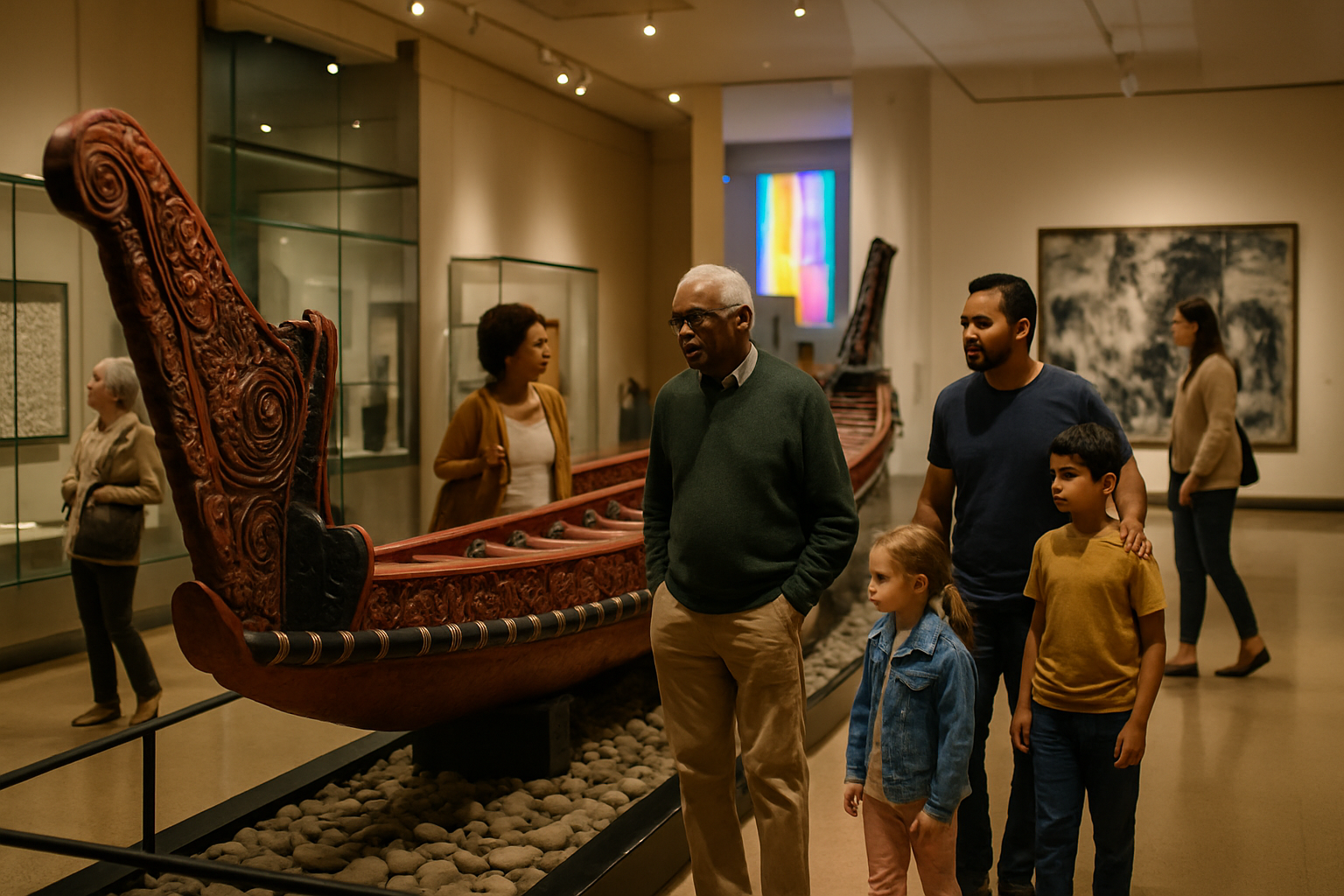
At Masterton's Aratoi Museum, visitors can now witness the majestic Kurahaupō waka, a ceremonial vessel that embodies New Zealand's cultural identity and the enduring connection between past and present. This extraordinary waka was built and launched in 1990 to commemorate 150 years of the Treaty of Waitangi, and its current exhibition represents far more than a simple museum display.
The waka serves as a powerful symbol of continuity, bringing together descendants of those who first rode similar vessels to Aotearoa centuries ago. This exhibition demonstrates how modern museums are evolving beyond static preservation toward dynamic community engagement, where cultural artifacts maintain their spiritual and social significance while educating broader audiences about indigenous heritage.
The timing of this exhibition aligns with global trends in museum practice that prioritize community ownership and authentic cultural representation. Rather than presenting the waka as merely a historical object, the Aratoi Museum has created an immersive experience that honors Maori traditions while making this heritage accessible to international visitors and local communities alike.
Estonia's Contemporary Vision: "Temporary Solution" Challenges Convention
In stark contrast to New Zealand's traditional focus, Estonia's ARS Showcase Gallery has opened "Temporary Solution," an exhibition by artist Katriin Mudist that exemplifies the innovative spirit characterizing contemporary European cultural programming. The installation features 24 doorstops collected primarily from Estonian cultural institutions, transforming mundane objects into a meditation on the overlooked elements of daily institutional life.
Mudist's work reflects the sophisticated approach to contemporary art that has emerged during the 2026 cultural renaissance. Rather than merely showcasing art for art's sake, her installation explores the intersection between function and aesthetic, institutional space and personal experience, temporary fixes and permanent solutions. This conceptual depth demonstrates how smaller European nations are competing effectively in the global cultural marketplace through authentic artistic expression and intellectual rigor.
The exhibition's focus on objects from cultural institutions creates a meta-commentary on the museum experience itself, questioning what deserves preservation and attention. This self-reflexive approach represents the maturation of contemporary art practice, where institutions increasingly embrace critical examination of their own role in society.
Global Context: February 2026 Cultural Renaissance Continues
These exhibitions occur within the broader context of what cultural analysts have termed the "February 2026 Cultural Renaissance," characterized by unprecedented international coordination in heritage preservation and artistic innovation. From Rembrandt authentication breakthroughs at Amsterdam's Rijksmuseum to the launch of digital heritage platforms in Greece, cultural institutions worldwide are demonstrating remarkable creativity in balancing tradition with innovation.
The success factors identified across this renaissance include technology serving as enhancement rather than replacement of human cultural connections, international cooperation that respects local authenticity while fostering global understanding, and economic models that create sustainable funding through cultural tourism and educational partnerships.
Museums in countries as diverse as Malta, Qatar, Rwanda, and Kazakhstan have demonstrated that authentic cultural programming can achieve international recognition while maintaining deep community roots. The template emerging from these successes emphasizes community engagement over elite consumption, international cooperation over competitive nationalism, and innovative presentation methods that honor rather than compromise cultural integrity.
Technology and Tradition: A Mature Synthesis
Both the New Zealand waka exhibition and Estonia's contemporary installation demonstrate sophisticated integration of traditional cultural values with modern presentation techniques. The Aratoi Museum likely employs climate control systems and advanced lighting to preserve the waka while ensuring optimal viewing conditions. Similarly, the ARS Showcase Gallery uses contemporary exhibition design to present Mudist's conceptual work in ways that maximize visitor engagement and artistic impact.
This represents a mature evolution in museum practice, where technology serves cultural goals rather than driving them. Digital documentation preserves knowledge while physical artifacts maintain their primacy in the visitor experience. Interactive elements enhance rather than replace contemplative engagement with cultural objects and ideas.
The broader global pattern shows cultural institutions using technology to extend their reach and impact while maintaining authentic connections to source communities. Virtual reality, augmented reality, and sophisticated digital archiving enable museums to serve global audiences while respecting local ownership and cultural protocols.
Economic and Social Impact
These exhibitions generate significant economic multiplier effects beyond immediate ticket sales. The Kurahaupō waka display positions New Zealand as a premier destination for cultural heritage tourism, while Estonia's contemporary art programming enhances the nation's reputation as a cultural innovator. Both contribute to the creative economy through employment in curatorial, conservation, educational, and hospitality sectors.
More importantly, these exhibitions serve essential social functions by creating spaces for meaningful human connection, cross-cultural understanding, and intergenerational dialogue. The Maori waka connects contemporary descendants with ancestral traditions, while Mudist's installation invites viewers to reconsider their relationship with institutional spaces and everyday objects.
Cultural institutions worldwide are recognizing their role as community infrastructure equivalent to transportation, communication, and healthcare systems. Success requires adaptive management approaches that honor historical authenticity while addressing contemporary challenges including climate change, economic pressures, and evolving audience expectations.
International Cooperation Models
The success of both exhibitions reflects broader trends in international cultural cooperation that transcend traditional competitive relationships. Museums are increasingly sharing expertise, coordinating marketing efforts, and developing joint programming that creates efficiency gains while expanding global reach.
New Zealand's indigenous heritage presentation benefits from international best practices in community engagement and cultural protocols developed through cooperation with other indigenous communities worldwide. Estonia's contemporary art scene flourishes through European Union cultural programs, academic partnerships, and artist exchange initiatives that enable sophisticated programming despite the nation's relatively small size.
These cooperation models provide practical templates for other cultural institutions seeking to balance local authenticity with international competitiveness. Success depends on maintaining distinctive cultural identity while embracing helpful innovations and partnership opportunities.
Future Implications
The exhibitions opening this week establish important precedents for 21st-century cultural stewardship. They demonstrate that preservation and innovation can be mutually reinforcing rather than competitive, that authentic cultural expression can achieve international recognition without compromise, and that community engagement enhances rather than diminishes artistic and scholarly integrity.
As these exhibitions continue through 2026, they will serve as laboratories for testing new approaches to museum programming, visitor engagement, and international cooperation. Their success or failure will influence cultural policy decisions worldwide and help determine whether the current cultural renaissance can be sustained through changing economic and political circumstances.
The stakes extend beyond individual institutions to fundamental questions about culture's role in democratic societies, international understanding, and human flourishing. Museums that successfully navigate this transition will establish templates for institutions worldwide seeking to serve their communities while contributing to global cultural dialogue.
The exhibitions at New Zealand's Aratoi Museum and Estonia's ARS Showcase Gallery represent more than individual programming decisions—they embody humanity's capacity for cultural resilience, international cooperation, and creative adaptation to contemporary challenges while honoring the wisdom of traditional practices and authentic artistic expression.