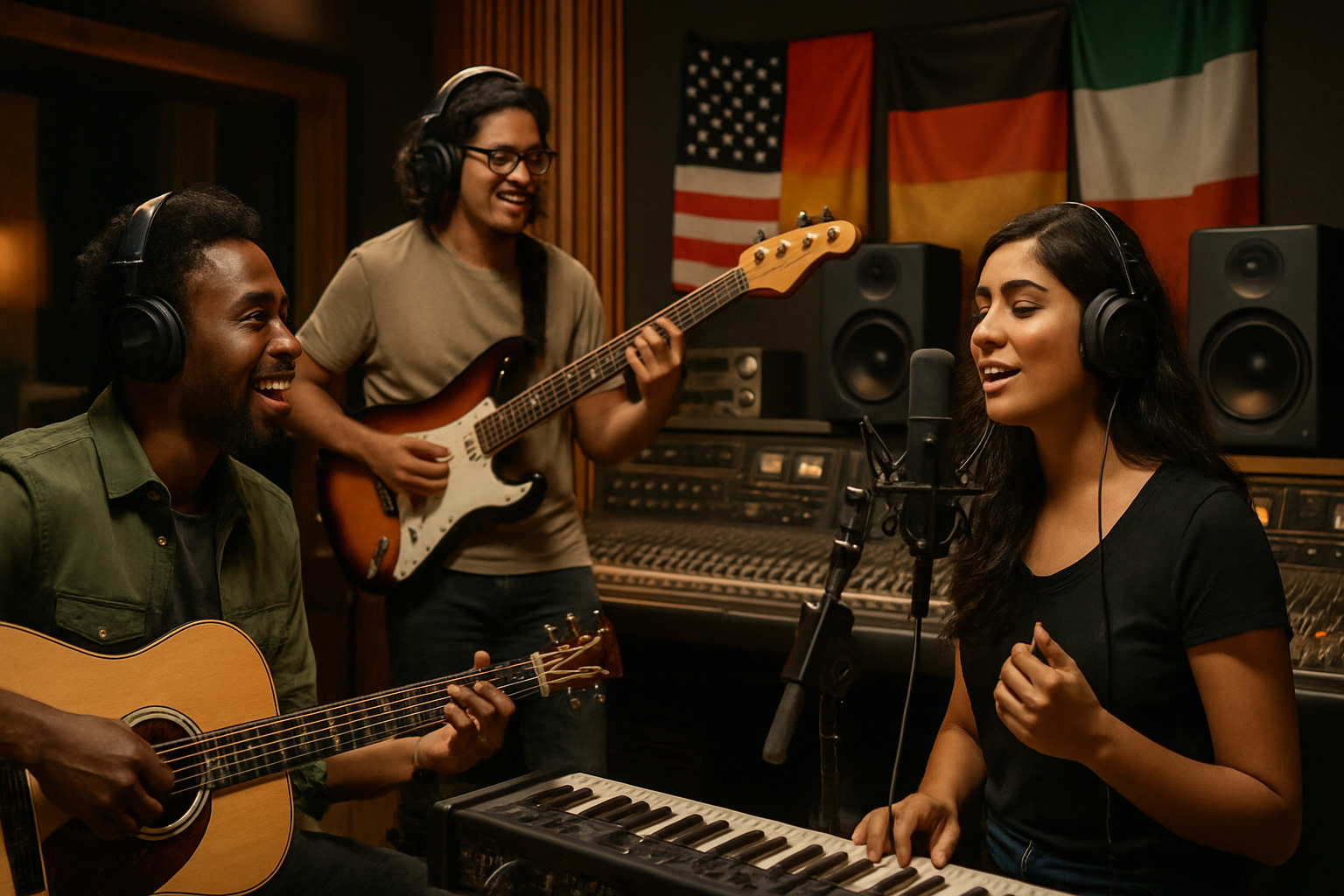
The global music industry is experiencing a renaissance of cross-cultural collaboration as artists from Ireland to Peru, Venezuela to the UK forge creative partnerships that transcend geographical boundaries and redefine contemporary sound.
February 2026 has witnessed an extraordinary surge in international musical collaborations, with artists leveraging shared cultural connections and digital platforms to create groundbreaking content that resonates across continents. From intimate folk-electronic fusions to major festival announcements, the month has demonstrated how modern musicians are breaking down traditional barriers to reach broader, more diverse audiences.
Irish Innovation: Bridging Music and Cinema
Leading this collaborative wave is Irish trio Kingfishr, whose latest release "The Blade" exemplifies the sophisticated intersection of music and visual storytelling. The Limerick-based band has partnered with acclaimed Belfast actor Anthony Boyle, creating a music video that transforms their atmospheric sound into a powerful cinematic experience.
The collaboration extends beyond typical artist-actor partnerships. Filmed across the stunning landscapes of Donegal and Derry, including the Grianán of Aileach hilltop in Inishowen and Grianan Stables, the project brings together regional creative talent in an unprecedented way. Behind the camera stands Culdaff-based filmmaker Seán Mullan, whose newly established Studio Cloncha made its debut with this ambitious project.
"The collaboration traces beyond simple artistic partnership to become a celebration of Irish regional creativity,"
— Industry observers on the Kingfishr project
The success of "The Blade" demonstrates how artists are using collaboration not just as a creative tool, but as a means of cultural preservation and regional promotion, combining traditional Irish landscapes with contemporary musical innovation.
Latin American Cross-Continental Partnerships
South America is emerging as a hotbed of international musical collaboration, with Venezuelan band Rawayana joining forces with Colombian superstar Juanes for "Timelapse de Sol." This partnership represents more than a simple duet—it's part of Juanes's broader collaborative album "JuanesTeban," which features artists from across Latin America including Bomba Estéreo, Mon Laferte, Vivir Quintana, and Conociendo Rusia.
The strategic approach to these collaborations reflects a maturing Latin music industry that recognizes the power of regional unity. By bringing together artists from different countries and musical styles, these projects create content that appeals to pan-Latin American audiences while introducing each artist to new markets.
Global Expansion Through Local Partnerships
Perhaps most significantly, international acts are recognizing Latin America as a crucial market for global expansion. The announcement of Gorillaz's first-ever concert in Lima, Peru, scheduled for November 23, 2026, at Arena 1 Park, represents a historic milestone for both the British virtual band and the Peruvian music scene.
This concert, promoting Gorillaz's new album "The Mountain," demonstrates how established international acts are investing in previously underexplored markets, creating opportunities for local artists and production crews while expanding their own global reach.
The Digital Revolution in Music Collaboration
The current wave of musical collaboration is being facilitated by sophisticated digital platforms that enable artists to work together regardless of geographical constraints. This technological democratization has created new possibilities for creative partnerships that would have been logistically impossible just a decade ago.
Streaming platforms have become crucial facilitators of these collaborations, providing global distribution networks that ensure cross-cultural musical projects can reach audiences worldwide. The success of these partnerships is increasingly measured not just in traditional metrics like album sales, but in global streaming numbers and social media engagement across different cultural markets.
Cultural Exchange and Authenticity
What distinguishes the current wave of musical collaboration from previous eras is the emphasis on authentic cultural exchange rather than simple commercial exploitation. Artists are taking time to understand and respectfully incorporate elements from their collaborators' cultural backgrounds, creating music that celebrates diversity while maintaining artistic integrity.
This approach has proven particularly successful in Latin America, where artists are finding common ground in shared colonial histories, similar rhythmic traditions, and parallel experiences of cultural globalization. The result is music that feels both internationally accessible and culturally authentic.
Breaking Down Genre Barriers
Contemporary musical collaborations are also notable for their willingness to cross genre boundaries. Electronic artists are working with folk musicians, pop stars are collaborating with traditional ensembles, and established rock acts are incorporating influences from completely different musical traditions.
This genre-crossing approach reflects both the musical sophistication of contemporary audiences and the global nature of modern music consumption. Listeners today are more likely to appreciate complex musical fusions that draw from multiple traditions, creating opportunities for artists to experiment with innovative collaborative approaches.
Economic Impact of Musical Collaboration
The financial benefits of international musical collaboration extend far beyond individual artist revenues. These partnerships create economic opportunities for entire creative ecosystems, from production crews and venues to local tourism industries.
The Gorillaz announcement in Peru, for example, represents not just a concert but a significant economic event that will generate revenue for venues, hotels, restaurants, and local businesses. Similarly, the Irish collaboration between Kingfishr and local filmmakers creates employment opportunities for regional creative professionals while promoting tourism to the filming locations.
Music festivals and concert promoters are increasingly recognizing the commercial value of cross-cultural collaborations, which can attract more diverse audiences and generate higher attendance figures than traditional single-artist events.
Challenges and Future Outlook
Despite the creative and commercial success of contemporary musical collaboration, artists face significant challenges in navigating different cultural contexts, legal frameworks, and market expectations. Language barriers, varying copyright laws, and different promotional strategies can complicate international partnerships.
However, the music industry is developing increasingly sophisticated support systems to facilitate these collaborations. International music organizations, streaming platforms, and cultural exchange programs are creating frameworks that help artists navigate these challenges while maintaining creative control over their work.
The Role of Cultural Institutions
Governments and cultural institutions are increasingly recognizing music collaboration as a form of soft diplomacy that can strengthen international relationships while promoting their countries' creative industries. Investment in collaborative projects, festival partnerships, and cultural exchange programs is becoming a strategic priority for many nations seeking to enhance their global cultural presence.
This institutional support is creating a more sustainable foundation for international musical collaboration, ensuring that these partnerships can develop over time rather than remaining one-off commercial ventures.
Looking Forward: The Future of Global Music Collaboration
As February 2026 demonstrates, the future of music lies in authentic collaboration that respects cultural differences while creating innovative artistic expressions. The success of projects ranging from intimate folk collaborations to major international concert announcements suggests that audiences are hungry for music that transcends traditional boundaries.
The trend toward collaborative music creation is likely to accelerate as digital technologies continue to evolve and as artists become more sophisticated in their approach to cross-cultural partnership. Rather than diminishing local musical traditions, these collaborations appear to be strengthening them by providing new platforms for cultural expression and exchange.
The global music industry's embrace of collaboration represents more than just a commercial strategy—it reflects a fundamental shift toward recognizing music as a universal language that can bridge cultural divides while celebrating the unique contributions of different artistic traditions. As artists continue to cross borders in search of creative inspiration, audiences worldwide benefit from an increasingly rich and diverse musical landscape that reflects the interconnected nature of contemporary global culture.
The collaborations emerging in February 2026 suggest that the music industry has found a sustainable model for international partnership that benefits artists, audiences, and cultural communities alike. As this trend continues to evolve, it promises to reshape not only how music is created and consumed, but how different cultures understand and appreciate each other's artistic contributions.