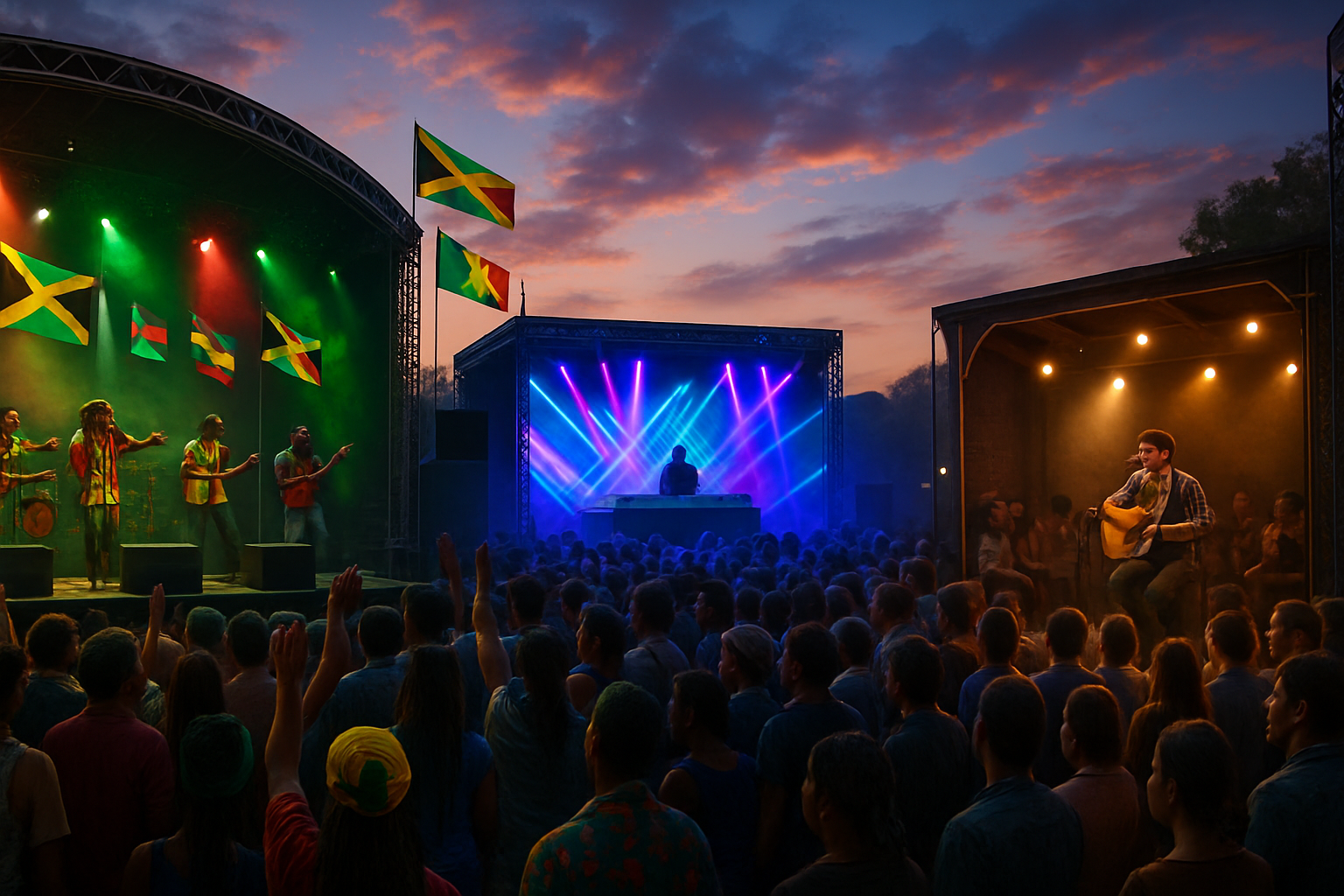
A remarkable convergence of musical innovation is sweeping across three nations this March, as artists from Haiti to Slovakia demonstrate the power of authentic cultural expression in an increasingly connected world.
The latest developments spanning Haiti, Slovakia, and Luxembourg reveal a sophisticated global music ecosystem where traditional sounds meet contemporary innovation, and where artists are successfully balancing local authenticity with international appeal. This cultural renaissance represents far more than individual artistic achievements—it signals a fundamental shift toward valuing genuine cultural expression over manufactured global homogeneity.
Caribbean Innovation: Marco Volcy's Introspective Journey
Haitian-Canadian musician Marco Volcy has unveiled his latest single "Without You," a deeply introspective composition that explores the essential value of human relationships and the irreplaceable role of significant others in our life journeys. Released through Rezo Nòdwès, the track represents a mature artistic evolution for the bilingual artist who has spent years crafting a distinctive voice bridging Caribbean heritage with North American sensibilities.
"Without You" addresses a universal theme through Volcy's personal lens—despite life's ambitions, detours, and inevitable mistakes, certain people remain constant anchors to which we inevitably return. The song features sincere songwriting that positions the artist as a man conscious of his imperfections while deeply appreciating the woman who shares his path. This authentic vulnerability represents a growing trend in contemporary music where artists prioritize emotional honesty over commercial formulas.
The release timing proves significant, arriving during what cultural analysts have documented as the "February 2026 Cultural Renaissance"—a period of unprecedented international artistic collaboration and authentic cultural expression. Volcy's approach exemplifies how Caribbean artists are increasingly finding global platforms while maintaining their distinctive cultural identities.
European Festival Innovation: Slovakia's Reggae Revolution
Slovakia's music festival landscape is experiencing a transformative moment with the announcement of the 19th annual Uprising Festival lineup. The Bratislava event, set for late summer at the iconic Zlaté Piesky venue, promises what organizers describe as "an earthquake" of international reggae talent converging on Central Europe.
Following successful bookings of gypsy-punk pioneers Gogol Bordello and drum & bass legend Andy C, festival programmers have shifted focus to "pure reggae and dub" programming. The confirmed lineup features Jamaican excellence through Protoje, French sensation Dub Inc, and unstoppable hitmaker Skarra Mucci, representing a carefully curated blend of authentic Caribbean sounds and European reggae innovation.
This programming philosophy reflects a broader European trend toward embracing authentic musical traditions while creating platforms for cultural exchange. The Uprising Festival's success demonstrates how smaller European nations can compete effectively in the global festival circuit through strategic programming that honors musical heritage while appealing to international audiences.
The economic impact extends beyond ticket sales, generating substantial tourism revenue for Bratislava and creating year-round employment for local creative professionals. Hotel bookings and restaurant reservations spike during festival periods, while the international media attention positions Slovakia as a culturally sophisticated destination for music lovers worldwide.
Electronic Innovation: Luxembourg's Cutting-Edge Curation
Luxembourg's Le Quotidien has spotlighted the week's most compelling musical releases, featuring a diverse array that exemplifies contemporary music's global reach. The coverage includes Joshua Idehen's "benevolent electro," Gus Englehorn's "contagious madness," and the "indestructible" And Also the Trees, demonstrating sophisticated curation that spans genres and generations.
Joshua Idehen's featured track "I Know You're Hurting" represents the evolution of electronic music toward more emotionally resonant content. Those unfamiliar with Idehen's work are encouraged to explore his "Mum Does the Washing" video, which showcases his ability to blend electronic innovation with deeply personal storytelling—a combination that's becoming increasingly valuable in the global music marketplace.
The Luxembourg music scene's international recognition reflects broader trends in European cultural programming. Smaller nations are successfully leveraging sophisticated curation and international networking to punch above their weight in global cultural conversations. This approach creates sustainable models for cultural development that honor local artistic communities while engaging international audiences.
Technology and Tradition: A Symbiotic Evolution
The developments across these three nations illustrate how contemporary artists are successfully integrating technological innovation with traditional cultural elements. Streaming platforms and social media enable global distribution while preserving cultural authenticity. Artists can maintain deep connections to their heritage while reaching audiences they could never access through traditional distribution channels.
This technological democratization is particularly evident in how Caribbean artists like Marco Volcy can release music simultaneously in Haiti and Canada, reaching diaspora communities worldwide. Similarly, Slovakia's Uprising Festival leverages digital marketing to attract international attendees while maintaining its commitment to authentic reggae programming.
Economic and Cultural Impact
The economic multiplier effects of these cultural initiatives extend far beyond immediate sales figures. Music festivals create lasting infrastructure including sound engineering expertise, hospitality industry growth, and international business relationships. Artists like Marco Volcy build cultural bridges that facilitate broader commercial and cultural exchanges between regions.
Luxembourg's music journalism demonstrates how sophisticated cultural commentary creates value for local media while contributing to global cultural conversations. These seemingly modest investments in cultural programming generate outsized returns through enhanced international recognition, tourism appeal, and creative industry development.
The Global Context: February 2026 Cultural Renaissance
These developments occur within a documented global cultural renaissance that began in February 2026. From Iceland's Winter Festival to Tanzania's Sauti za Busara, communities worldwide have demonstrated unprecedented coordination in cultural programming. Success factors consistently include community engagement, authentic cultural expression, strategic technology integration, and economic viability through cultural tourism.
The Haiti-Slovakia-Luxembourg axis exemplifies this global trend while maintaining distinct cultural identities. Each nation contributes unique elements to the broader cultural conversation while benefiting from increased international exposure and creative collaboration opportunities.
Future Implications
The sustainability of this cultural renaissance depends on continued investment in authentic artistic expression over manufactured commercial appeal. Artists who maintain cultural roots while embracing contemporary distribution methods are finding both critical acclaim and commercial success. This template suggests a bright future for cultural development that celebrates diversity while building bridges between communities.
Festivals like Slovakia's Uprising demonstrate how strategic programming can create economically viable cultural events that serve multiple functions: preserving musical traditions, providing platforms for emerging artists, generating tourism revenue, and fostering international understanding. This multifunctional approach represents the future of sustainable cultural development.
The convergence of Haitian introspection, Slovak festival innovation, and Luxembourg's electronic curation reveals a sophisticated global music ecosystem that values authenticity, embraces technology, and creates meaningful economic opportunities. As these trends continue developing throughout 2026, they provide a roadmap for cultural development that honors heritage while embracing contemporary possibilities.
This March 2026 snapshot suggests we are witnessing not merely individual artistic achievements, but the emergence of a new paradigm for global cultural exchange—one that celebrates diversity while building bridges between communities through the universal language of music.