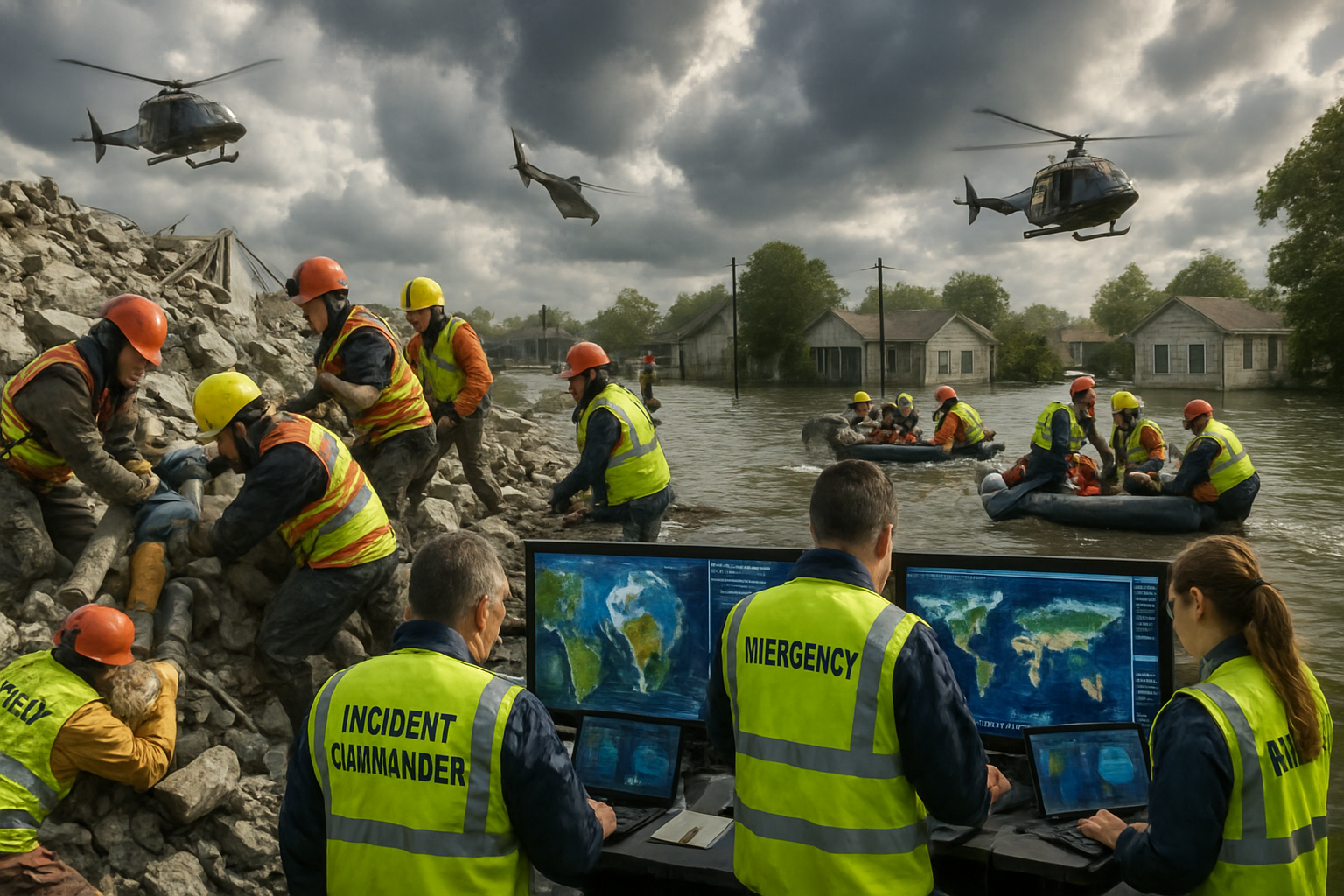
A 3.2 magnitude earthquake in Algeria, landslides blocking Bolivia's pre-Columbian trails, and an aviation emergency in Panama represent just three of the multiple natural disasters that struck simultaneously across nine countries in late March 2026, exposing critical weaknesses in emergency response systems designed for sequential rather than concurrent global crises.
The convergence of disasters comes during what scientists now recognize as the 22nd consecutive month of global temperatures exceeding 1.5°C above pre-industrial levels—the longest sustained extreme warming period in recorded human history. This unprecedented climate milestone is fundamentally altering the nature of natural disasters, creating what emergency management experts term "compound disasters" that overwhelm traditional response capabilities.
Earthquake Strikes Algeria During Complex Weather Emergency
Algeria faced a particularly dangerous combination of natural hazards when a 3.2 magnitude earthquake struck Ain Témouchent province at 23:08 local time on Tuesday. The earthquake's epicenter was located 39 kilometers northeast of Beni Saf, according to the Research Center for Astronomy, Astrophysics and Geophysics.
The seismic event occurred simultaneously with severe weather conditions affecting the region, including thunderstorms producing over 50mm of rainfall across 14 provinces, mountain snowfall above 1,100 meters, and dangerous winds exceeding 100 km/h. This triple threat demonstrates the increasing complexity of modern emergency response challenges.
"The convergence of multiple disaster types simultaneously is fundamentally challenging our traditional resource allocation and mutual aid mechanisms,"
— Emergency Management Expert, reviewing compound disaster trends
Bolivia's Cultural Heritage Under Threat
In Bolivia, the National Service of Protected Areas (SERNAP) was forced to temporarily close the pre-Columbian trail Sillutinkara in Cotapata National Park due to dangerous landslides threatening visitor safety. The closure followed technical inspections in the Bellavista sector, where landslides triggered by natural causes were identified over the Racachani and El Carmen rivers.
The decision reflects growing challenges in maintaining access to cultural and natural heritage sites as climate change intensifies extreme weather patterns. Authorities specifically warned tourists and pilgrims to avoid the affected section, highlighting how climate volatility is disrupting traditional pilgrimage routes and cultural practices that have existed for centuries.
Aviation Emergency Highlights Infrastructure Vulnerabilities
Panama's emergency response capabilities were tested when a Beechcraft B100 King Air private aircraft (registration N980VC) made an emergency landing at Panama Pacific International Airport after reporting electrical problems and landing gear issues. The aircraft had departed from Marcos Gelabert Airport in Albrook en route to Cartagena, Colombia, when technical difficulties forced the emergency landing.
The incident triggered comprehensive security protocols and temporary suspension of airport operations, demonstrating how individual emergencies can cascade into broader infrastructure disruptions. Both passengers aboard the aircraft escaped unharmed, but the event illustrates the increasing pressure on aviation safety systems during a period of intensifying weather volatility.
International Cooperation Efforts Intensify
Against this backdrop of multiple simultaneous crises, Algeria's Civil Protection Directorate launched a strategic mission to Romania to strengthen international cooperation in disaster management. The visit aims to enhance collaboration in crisis and disaster management, focusing on prevention, rapid response, and coordination between different agencies during emergencies.
This initiative represents growing recognition that traditional mutual aid mechanisms—designed for sequential regional disasters—are inadequate when multiple continents face simultaneous emergencies. The Romanian exchange specifically targets learning from European experiences in disaster prevention and inter-agency coordination during crisis situations.
Maritime Rescue Operations Demonstrate System Strain
Algeria's maritime emergency response capabilities were also tested when two tugboats from Bejaia Port Authority intervened to assist a foreign commercial vessel at risk of deviation and grounding due to strong winds and high seas. The successful operation allowed the vessel to regain stability and return safely to the docking area.
The Governor of Bejaia province personally supervised the maritime rescue operations, establishing a monitoring cell including various port services and coast guard personnel. This hands-on coordination reflects the elevated state of alert required when emergency services face multiple simultaneous challenges rather than isolated incidents.
Fire Emergency in West Africa Tests Response Capacity
In Burkina Faso, the Second Fire and Rescue Company of Bobo-Dioulasso responded promptly to contain and extinguish a fire at a gas bottle sales store adjacent to a computer and office equipment shop in Farakan district. The rapid intervention prevented what could have been a catastrophic explosion, with no loss of life reported.
The incident demonstrates both the effectiveness of quick emergency response and the increasing risks to urban infrastructure during periods of extreme weather. Gas storage facilities and similar infrastructure face elevated risks during heat waves and electrical storms, requiring enhanced monitoring and preparation.
Global Climate Context Creates New Emergency Paradigm
These simultaneous disasters occur against unprecedented global climate conditions. January 2026 was confirmed as the hottest month in recorded history, while the World Meteorological Organization indicates a 50-60% probability of El Niño development between July and September 2026, potentially driving temperatures into unprecedented territory.
The sustained warming is creating what climate scientists call a "climate volatility paradox"—global heat records coinciding with devastating regional extremes through disrupted atmospheric circulation and polar vortex patterns. This phenomenon enables both extreme heat and severe storms to occur simultaneously across different regions, overwhelming traditional emergency response frameworks.
Economic and Social Devastation Mounting
The economic toll of these concurrent disasters extends far beyond immediate response costs. Agricultural sectors face billions in losses from crop damage and supply chain disruption during critical growing seasons. Tourism industries confront extended cancellations and infrastructure damage during peak revenue periods.
Recovery timelines have fundamentally shifted from weeks to months or years, representing a permanent change in disaster response planning. Mental health services report increased demand for support addressing climate anxiety and repeated trauma, particularly affecting vulnerable populations including families losing generational homes and small businesses facing extinction.
Infrastructure Adaptation Becomes Critical Priority
Emergency management experts emphasize that current conditions provide a preview of routine 2030s circumstances without comprehensive climate adaptation investment. The choice between reactive crisis management and transformative infrastructure adaptation is becoming increasingly critical as the window for effective climate action narrows.
"Building back better" with climate-resilient infrastructure has evolved from an optional enhancement to an essential survival strategy. Traditional seasonal patterns that guided infrastructure design, agricultural planning, and emergency preparedness for centuries are no longer reliable frameworks in this new era of permanent climate volatility.
International Cooperation at Breaking Point
Environmental challenges transcend national boundaries through atmospheric systems, ocean currents, and species migrations that connect ecosystems globally. The simultaneity of disasters is testing international cooperation mechanisms originally designed to help stable regions assist others during isolated emergencies.
The European Union's Civil Protection Mechanism has been repeatedly activated throughout 2026, with Sweden and Denmark providing €246 million in assistance—the largest coordinated European weather response on record. However, even this unprecedented cooperation proves insufficient when multiple continents face disasters simultaneously rather than sequentially.
Strategic Significance of March 2026
The convergence of extreme weather events, infrastructure vulnerabilities, and emergency response limitations in March 2026 underscores the urgent need for coordinated international action. Current events represent a watershed moment in global climate preparedness, forcing fundamental reconsideration of how humanity responds to permanent climate volatility.
Tools, knowledge, and cooperation frameworks exist for comprehensive environmental protection, but success depends on unprecedented speed and coordination through sustained international cooperation and political commitment to environmental protection as essential infrastructure for human prosperity and planetary sustainability.
Additional weather systems are developing across the Atlantic and Pacific regions, with authorities maintaining high alert status globally. The persistence of crisis conditions may establish a "new normal" characterized by extreme weather frequency and intensity that permanently challenges traditional emergency response frameworks.
The fundamental question facing global society is whether humanity can organize and implement solutions rapidly enough to maintain planetary habitability during what may be Earth's most environmentally challenging period in recorded history. The events of March 2026 suggest that traditional approaches to disaster management must evolve quickly to meet the scale and complexity of this unprecedented era.