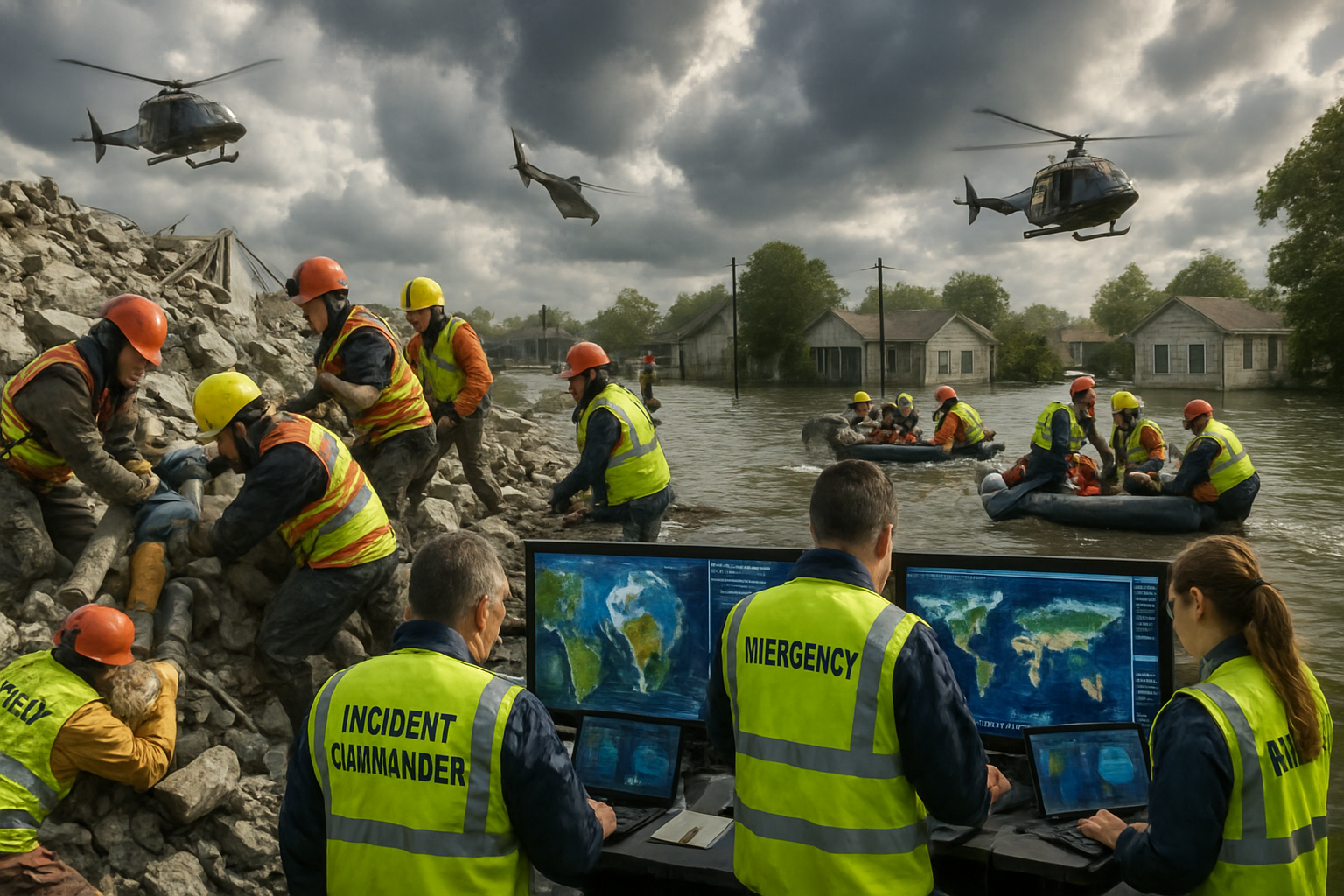
A devastating cascade of natural disasters struck multiple countries simultaneously on March 1, 2026, overwhelming emergency response systems as Brazil's death toll from catastrophic floods reached 72, Japan faced deadly avalanche incidents, and Norway dealt with massive rockslides blocking critical transportation routes.
The latest crisis represents a stark escalation of global extreme weather patterns that have plagued the planet for 18 consecutive months, with January 2026 marking the hottest month ever recorded in human history. Emergency services across multiple continents are reporting capacity limits as traditional mutual aid mechanisms break down under the sheer volume of simultaneous disasters.
Brazil's Flood Catastrophe Deepens
Italian news agency ANSA reported that Brazil's Minas Gerais state flooding disaster has claimed at least 72 lives, including 13 children, with President Luiz Inácio Lula da Silva visiting the devastated region to assess the unprecedented scale of destruction. The catastrophe, which began February 23rd in the cities of Juiz de Fora and Ubá, has become the worst natural disaster in the region for decades.
Over 700 residents have been evacuated from their homes, with 440 people remaining in temporary emergency shelters as search and rescue operations continue. The flooding was triggered by what meteorologists describe as the "wettest February on record," with rainfall intensity overwhelming traditional flood defense systems designed for historical rather than current climate patterns.
"This represents an unprecedented challenge to our emergency response capabilities. The scale and intensity of these rainfall events exceed anything we've prepared for."
— Mayor Margarida Salomão, Juiz de Fora
At least 20 landslides have been documented across the region, with the Parque Burnier neighborhood particularly devastated after 12 houses were completely engulfed by a massive landslide. The disaster has exposed critical gaps in emergency preparedness systems, with infrastructure designed for historical climate conditions proving inadequate against current extreme weather intensity.
Japan's Mountain Rescue Emergencies
Japan faced multiple mountain-related emergencies over the weekend, highlighting the dangers of extreme winter conditions even as the country approaches spring. At the Madarao Kogen Ski Resort, spanning Niigata and Nagano prefectures, an avalanche struck an advanced-level course on February 28th, injuring four people including two family members.
In a separate tragedy, a man in his 50s died after falling during ice climbing in Gero, Gifu Prefecture, on March 2nd. The victim became trapped beneath collapsed ice after falling along with a sheet of ice during his climbing attempt, according to reports made to emergency services around 9 a.m.
These incidents underscore Japan's ongoing struggle with severe winter weather that has already claimed 46+ lives since late January, making this one of the deadliest winter seasons in recent decades. The extreme weather has coincided with critical infrastructure challenges as the country continues to recover from what meteorologists describe as unprecedented heavy snowfall.
Norway's Infrastructure Crisis
Norway faced its own natural disaster emergency as a massive rockslide blocked the E134 highway in Fjæra, Etne municipality in Vestland county on Sunday morning. The landslide, described by authorities as involving "massive boulders," has forced evacuations in the area, with officials stating that evacuated residents cannot return to their homes.
The E134 remains closed as emergency crews work to assess the stability of the area and clear the massive stones blocking this critical transportation route. The incident highlights Norway's vulnerability to geological hazards, particularly during periods of extreme weather that can destabilize mountain slopes.
Global Climate Context and System Failures
These simultaneous disasters occur against the backdrop of unprecedented global climate volatility. January 2026 marked the 18th consecutive month of global temperatures exceeding 1.5°C above pre-industrial levels, demonstrating how human-induced climate change is overriding natural cooling cycles and enabling extreme weather events across multiple regions simultaneously.
Historical precedent from February 2026 shows the devastating impact of such simultaneous disasters. The European storm succession of Kristin-Leonardo-Marta-Nils-Pedro claimed over 30 lives across Portugal, Spain, and France, requiring Portugal's largest peacetime rescue operation involving 26,500 personnel and prompting the EU Civil Protection Mechanism to activate its largest coordinated response in history with €246 million in assistance.
Emergency Response System Breakdown
Emergency management experts report that traditional mutual aid mechanisms are breaking down as multiple countries face disasters simultaneously. The assumption that neighboring regions would be available to provide assistance during localized emergencies has proven false when extreme weather affects entire continents at once.
Infrastructure vulnerabilities are being exposed across transportation networks, power grids, and communication systems that were designed for historical rather than current climate conditions. Emergency services are operating beyond their design parameters, with recovery timelines shifting from weeks to months or years in some cases.
"We're seeing a fundamental breakdown in our traditional approach to disaster response. When multiple countries need help simultaneously, the old frameworks simply don't work."
— International Emergency Management Expert
Economic and Social Impact
The economic toll of these simultaneous disasters extends far beyond immediate emergency costs. Agricultural sectors face massive losses as extreme weather destroys crops and disrupts supply chains. Transportation networks suffer major disruptions affecting global commerce, while tourism industries grapple with safety concerns and infrastructure damage.
Communities are experiencing what researchers describe as "climate trauma" from repeated exposure to extreme weather events. Mental health services report increased demand as families lose generational homes and businesses face extinction. The social fabric of affected communities is being tested as traditional support systems become overwhelmed.
Infrastructure Adaptation Imperatives
The current crisis highlights the urgent need for what experts call "transformative adaptation" - moving beyond reactive emergency response to proactive infrastructure design that anticipates rather than merely responds to extreme weather conditions.
The concept of "building back better" is being emphasized across all affected regions, with climate-resilient infrastructure becoming essential rather than optional. This approach requires fundamental changes in how societies plan for and respond to natural disasters in an era of permanent climate volatility.
International Cooperation Challenges
The simultaneous nature of current disasters is straining international cooperation frameworks designed for sequential rather than concurrent emergencies. Traditional aid mechanisms assume some regions will be available to assist others, but this assumption breaks down when disasters strike multiple continents simultaneously.
Emergency management officials stress the need for fundamental restructuring of international response systems to handle the "new normal" of extreme weather frequency and intensity. Enhanced coordination between governments, international organizations, and emergency services is becoming critical for effective response.
Looking Forward: Climate Volatility Era
Scientists warn that current conditions provide a preview of routine circumstances expected in the 2030s without significant climate adaptation investment. The window for effective climate action continues to narrow while the costs of both adaptation and inaction escalate rapidly.
The choice between reactive crisis management and transformative infrastructure adaptation is becoming increasingly urgent. February and March 2026 may represent a watershed moment in global climate preparedness, forcing a fundamental reconsideration of how societies protect themselves in an increasingly volatile natural world.
As additional weather systems develop across multiple ocean basins, authorities maintain high alert levels globally. The persistence of these crisis conditions over weeks rather than days suggests that extreme weather volatility may be establishing itself as the new baseline rather than exceptional circumstances.
The convergence of natural disasters, infrastructure failures, and emergency response limitations demonstrates both the vulnerability of current systems and the urgent need for comprehensive adaptation strategies that can protect lives and maintain essential services in an era of increasing climate volatility.