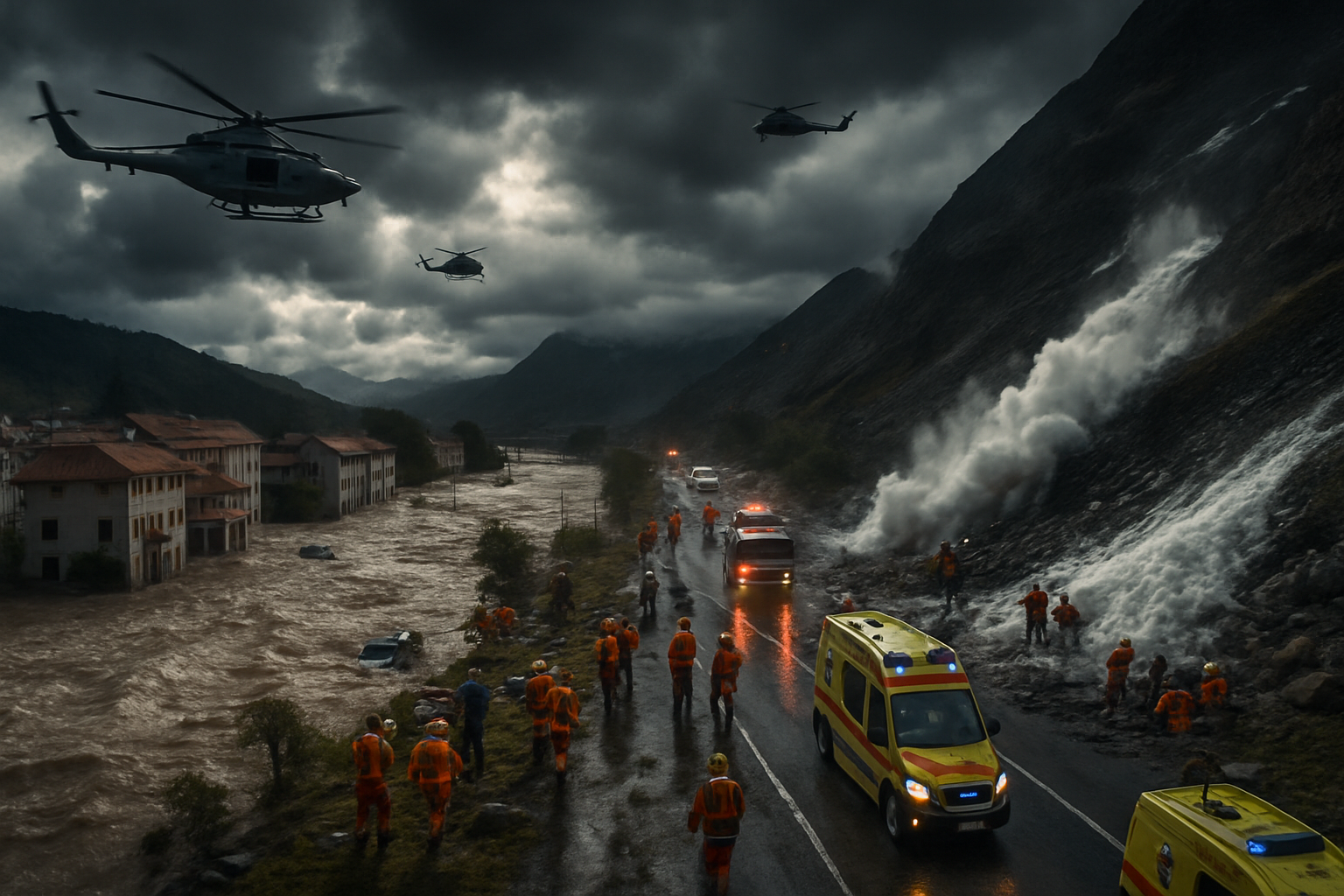
A devastating convergence of natural disasters across multiple continents has exposed critical weaknesses in global emergency response systems, as Hawaii battles its worst flooding crisis in over two decades while deadly avalanches in Italy's South Tyrol region claim multiple lives, marking the 21st consecutive month of global temperatures exceeding 1.5°C above pre-industrial levels.
Hawaii's Historic Flooding Crisis
The Hawaiian Islands are experiencing their most severe flooding in more than 20 years, with emergency officials issuing urgent "LEAVE NOW" warnings to thousands of residents as catastrophic conditions continue to deteriorate. The crisis began when heavy rains fell on soil already saturated by downpours from a winter storm just one week prior, creating a perfect storm of meteorological conditions.
Muddy floodwaters have smothered vast stretches of Oahu's North Shore, the globally renowned big-wave surfing destination, with raging waters lifting homes and cars off their foundations. Emergency authorities have issued evacuation orders for 5,500 people north of Honolulu, while warning of potential catastrophic failure of a 120-year-old dam infrastructure that could exacerbate an already dire situation.
"The warning early Saturday came after heavy rains fell on soil already saturated by downpours from a winter storm a week ago. Still more rain was expected during the weekend."
— Hawaii Emergency Officials
Oahu's emergency management office has specifically ordered residents in the Waialua area to evacuate immediately amid growing risks of road failures and infrastructure collapse. The unprecedented nature of this flooding has overwhelmed traditional flood defense systems designed for historical weather patterns that no longer reflect current climate realities.
Italian Alps Avalanche Tragedy
Simultaneously, the Italian Alps are experiencing a deadly avalanche crisis that has claimed at least two lives in South Tyrol's Racines region. The devastating avalanche struck the Tallone Grande area of Val Ridanna, involving a total of 25 ski mountaineers in what emergency responders describe as one of the most significant alpine rescue operations in recent memory.
The tragedy has resulted in two confirmed fatalities and seven injuries, with comprehensive rescue operations involving helicopter units, mountain rescue teams, and specialized avalanche search equipment. The scale and severity of the incident have prompted authorities to maintain the highest avalanche warning levels across the region.
Nordic countries are also reporting similar tragedies, with Finland confirming that at least two of its nationals died in an avalanche incident in the region, contributing to what has become one of the deadliest avalanche seasons in European alpine history with over 25 fatalities recorded across the continent this winter season alone.
Emergency Response System Breakdown
The simultaneous nature of these disasters has exposed critical vulnerabilities in global emergency response coordination. Traditional mutual aid mechanisms, designed for sequential rather than concurrent disasters, are failing as multiple regions face emergencies simultaneously, preventing the typical resource-sharing that has historically supported disaster response efforts.
Emergency services across both affected regions report operating at or beyond capacity limits, with infrastructure systems designed for historical climate patterns repeatedly failing when confronted with conditions that exceed their operational parameters. This represents a fundamental shift from isolated regional disasters to what experts term "compound disasters" - multiple emergency types occurring concurrently across vast geographic areas.

Climate Change Context
These disasters occur during what scientists confirm as the 21st consecutive month of global temperatures exceeding 1.5°C above pre-industrial levels - the longest sustained warming period in recorded human history. This unprecedented warming streak is fundamentally altering atmospheric circulation patterns and enabling extreme weather events that overwhelm infrastructure designed for more stable climate conditions.
The World Meteorological Organization indicates a 50-60% probability of El Niño conditions developing by July-September 2026, which could drive global temperatures into uncharted territory by combining baseline warming with natural cycle amplification. This climate volatility paradox enables simultaneous global heat records and devastating regional extremes through disrupted atmospheric circulation and polar vortex patterns.
Infrastructure and Economic Impact
The economic consequences of these simultaneous disasters are mounting rapidly. In Hawaii, the flooding threatens the state's tourism infrastructure during peak season, while agricultural operations face devastating crop losses. The potential dam failure could result in damages reaching into the billions of dollars, affecting not only immediate recovery but long-term economic stability.
In the Italian Alps, the avalanche crisis has disrupted the crucial winter tourism season, with several ski resorts implementing enhanced safety protocols and restricting off-piste access. The broader European alpine region faces similar challenges as extreme weather conditions continue to threaten both tourist safety and economic viability.
Transportation networks in both regions have suffered severe disruptions. Hawaiian authorities warn that continued flooding could cut major population centers in half, while European transportation systems struggle with repeated closures due to avalanche risks and extreme weather conditions.
International Coordination Challenges
The scale and simultaneity of these disasters have tested international cooperation frameworks to their limits. Traditional disaster response assumes that unaffected regions can assist those in crisis, but the global nature of current emergencies means that resources are stretched thin across multiple continents simultaneously.
European Union Civil Protection mechanisms have been activated repeatedly, with Sweden and Denmark providing €246 million in assistance - the largest coordinated European weather response on record. However, experts warn that even these unprecedented coordination efforts may be insufficient for the scale of simultaneous global disasters now occurring regularly.
Community Resilience and Adaptation
Despite system-level failures, remarkable community resilience has emerged in both disaster zones. In Hawaii, local communities have organized evacuation assistance and shelter coordination, while social media platforms have become crucial for emergency communications when traditional systems become overwhelmed.
Similarly, in the Italian Alps, mountain rescue communities have demonstrated extraordinary coordination and expertise, with local knowledge proving essential for navigation in dangerous avalanche conditions. These community responses provide templates for future disaster preparedness that combine traditional knowledge with modern emergency management approaches.
Looking Forward: Transformation or Crisis
The current crisis represents a watershed moment for global disaster preparedness, forcing a fundamental choice between reactive crisis management and transformative adaptation approaches. Emergency management experts emphasize that "building back better" with climate-resilient infrastructure has evolved from an optional enhancement to an essential survival strategy.
Recovery timelines for both disasters are expected to extend from weeks to months or years, representing a fundamental change in disaster response planning. Traditional seasonal patterns that guided infrastructure design and emergency preparedness for centuries are no longer reliable frameworks for planning in an era of permanent climate volatility.
"Current conditions provide a preview of routine 2030s circumstances without significant climate adaptation investment."
— Climate Scientists
The simultaneous nature of these disasters demonstrates that environmental challenges transcend political boundaries, with atmospheric systems and climate effects operating regardless of national borders. Success in addressing these challenges requires unprecedented international cooperation, enhanced multi-sector coordination, and financial commitments that recognize environmental protection as essential infrastructure for human prosperity and planetary sustainability.
As rescue operations continue in both Hawaii and Italy, the global community faces urgent questions about its capacity to protect essential systems during what may be Earth's most environmentally challenging period in recorded history. The window for effective climate action continues to narrow as ecological systems approach critical thresholds that could trigger irreversible changes affecting global food security, climate stability, and human settlements worldwide.