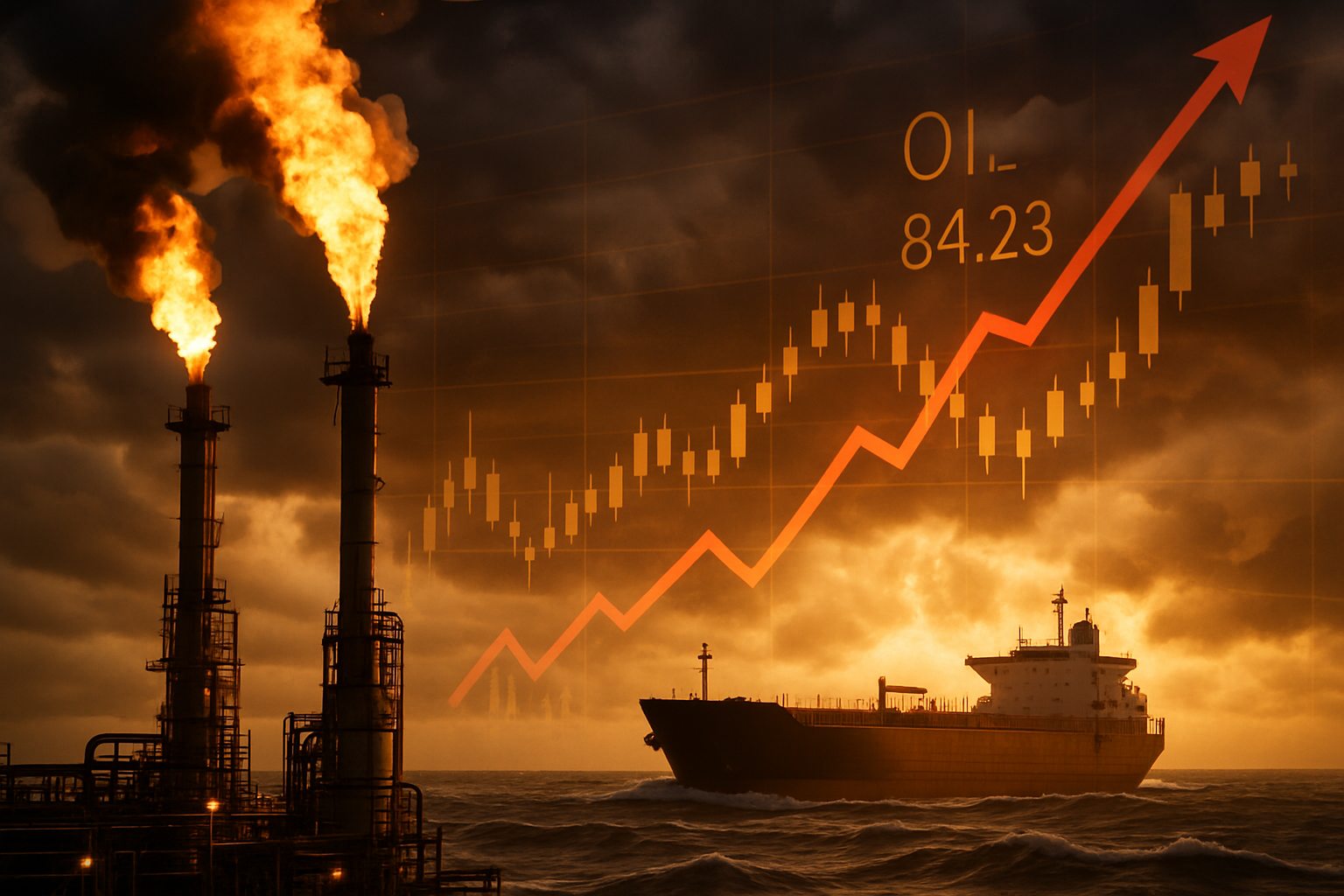
Global energy markets are experiencing their most severe disruption in decades as oil prices surge past $80 per barrel and natural gas costs explode across Europe and the United States, driven by escalating Middle East conflicts that have effectively closed the world's most critical energy chokepoint.
The crisis intensified dramatically on March 4, 2026, as Iran's Revolutionary Guard declared the Strait of Hormuz "unsafe" for international shipping, effectively blocking 40% of the world's seaborne oil transit through the narrow 21-mile waterway. Brent crude has jumped 10% to over $80 per barrel from approximately $73, while natural gas prices have surged an unprecedented 24% in Europe and 78% in the United States.
Unprecedented Supply Chain Disruption
Major shipping giants Maersk and Mediterranean Shipping Company (MSC) have suspended all operations in the Persian Gulf, leaving more than 150 oil and LNG tankers stranded and anchored in Gulf waters, representing billions of dollars in trapped cargo. The shipping bottleneck has exposed the dangerous vulnerability of global energy systems to single chokepoint disruptions.
"The situation has reached the most critical point we've seen since the 1970s oil crisis," warned Samuel Ciszuk, a leading energy analyst. "The exposed situation in Europe is particularly concerning, with continued volatile oil prices and risk of runaway electricity prices if this Iran conflict extends."
"Electricity zone 4 is most sensitive to continental prices due to European market integration."
— Patrik Södersten, Fortum Energy
European Energy Crisis Deepens
European natural gas prices have rocketed nearly 50% to €47.32 per MWh, the highest levels since February 2025, following Qatar's forced halt of LNG production. QatarEnergy, the world's largest LNG producer, ceased operations at its critical Ras Laffan and Mesaid facilities after sustaining damage from Iranian drone attacks, threatening to declare force majeure on global LNG supplies affecting approximately 20% of worldwide exports.
Sweden is experiencing particularly acute price pressures, with energy officials predicting electricity cost increases of 10-20 öre and gasoline price rises of 1-2 kronor per liter. The southern Swedish region, including Malmö's electricity zone 4, faces the highest exposure due to its integration with continental European energy markets.
OPEC's Insufficient Response
The Organization of the Petroleum Exporting Countries (OPEC) convened an emergency meeting and approved a production increase of 206,000 barrels per day for April. However, analysts confirm this increase is woefully inadequate to offset the massive shipping disruption in the Persian Gulf. Alternative shipping routes around the Arabian Peninsula add significant transit time and costs, making them poor substitutes for the geographically irreplaceable Strait of Hormuz.
The crisis has highlighted the fundamental challenge facing global energy markets: increased production becomes meaningless when the world's primary oil transit route is effectively blocked. Strategic petroleum reserves can only provide temporary relief during sustained disruptions of this magnitude.
Aviation Industry Paralyzed
The energy crisis is running parallel to an unprecedented global aviation disruption, with over 18,000 flights cancelled worldwide as eight Middle Eastern countries simultaneously closed their airspace. Dubai International Airport, the world's busiest with over 86 million passengers annually, remains completely shut down due to missile damage, creating cascading effects throughout the global aviation network.
Emirates, Etihad Airways, Air France-KLM, Wizz Air, and Bulgaria Air have suspended all Middle East operations indefinitely, affecting hundreds of thousands of passengers globally in what aviation experts are calling the most comprehensive regional disruption since the COVID-19 pandemic.
Financial Markets in Turmoil
Global financial markets are experiencing severe volatility as investors grapple with the energy supply crisis. Pakistan's KSE-100 index crashed by 8.97% in its largest single-day decline in history, while U.S. Dow futures dropped 400-570 points. European markets have suffered significant losses, with Germany's DAX continuing its steep decline.
South Korea's markets have been particularly hard hit, with the KOSPI plunging 8% and circuit breakers activated to halt trading for 20 minutes. The Korean won hit a 17-year low as investors fled previously strong AI and memory chip positions, demonstrating how geopolitical risks can overwhelm market fundamentals.
"The conflict is going to go a little longer than what people initially thought, and markets are repricing the duration and severity of this crisis."
— Damien Boey, Portfolio Strategist
Global Supply Chain Implications
The Persian Gulf serves as far more than just an energy hub—it's a critical node for global trade affecting everything from consumer goods to industrial materials. The current crisis has exposed the dangerous over-dependence on strategic chokepoints with limited alternatives for energy infrastructure.
Mexico is warning of potential "gasolinazo" fuel price increases, while Australia has issued fuel price warnings to consumers. The disruption extends to manufacturing supply chains, with technology companies reassessing international expansion plans and major corporations like PayPay postponing their $1.1 billion U.S. IPO due to market volatility.
Regional Coalition Under Strain
An unprecedented coalition of Saudi Arabia, UAE, Qatar, and Egypt that had been supporting diplomatic solutions is now severely strained as Iranian retaliation operations have directly targeted member territories. Egyptian President Abdel Fattah el-Sisi condemned attacks on "sisterly Arab countries" and warned of "comprehensive chaos" if the situation continues to escalate.
The UAE reported one civilian death in Abu Dhabi from missile debris, while Kuwait Airport suffered drone strikes that injured 32 foreign nationals. Qatar intercepted 65 missiles and 12 drones using Patriot defense systems, though eight people were injured by falling fragments.
Nuclear Diplomacy Collapse Context
The current energy crisis stems from the catastrophic breakdown of U.S.-Iran nuclear negotiations, despite achieving what diplomats called "broad agreement on guiding principles"—the most significant progress since the 2018 JCPOA collapse. However, fundamental disagreements proved insurmountable, with Iran excluding ballistic missiles and regional proxies as "red lines" while demanding nuclear-only talks, versus U.S. insistence on comprehensive agreements addressing missiles, armed groups, and human rights.
Iran continues enriching uranium to 60% purity—approaching the 90% weapons-grade threshold—with over 400kg of enriched material that experts say makes nuclear weapons capability "easily achievable." The collapse of diplomatic engagement has led to the largest U.S.-Israeli military operation in the Middle East since the 2003 Iraq invasion.
Long-Term Energy Security Implications
This crisis represents a watershed moment for global energy security architecture, forcing a fundamental rethinking of single chokepoint vulnerabilities. The 21-mile-wide Strait of Hormuz has proven geographically irreplaceable for regional oil exports, handling more seaborne oil traffic than any other waterway globally.
While the crisis accelerates discussions about supply chain diversification and alternative energy sources, meaningful transitions require years or even decades to implement. The current situation serves as a stark reminder that despite globalization and renewable energy advances, traditional energy security remains fundamental to global economic stability.
International Response and Recovery Outlook
The United Nations Security Council has held emergency sessions, with Secretary-General António Guterres warning of "serious threats to international peace and security." The crisis occurs against the backdrop of broader nuclear governance challenges, including the February expiration of the New START treaty—leaving the world without U.S.-Russia nuclear constraints for the first time in over 50 years.
Central banks including the European Central Bank and Bank of Japan have coordinated emergency liquidity provisions to prevent broader financial contagion. However, traditional monetary policy tools have limited effectiveness against structural infrastructure and geopolitical disruptions of this magnitude.
Unlike weather-related or technical energy disruptions, recovery timelines remain highly uncertain and depend entirely on military operations resolution and diplomatic tension normalization. The aviation industry faces particular challenges, unable to make long-term scheduling decisions with critical airspace remaining closed indefinitely.
Template-Setting Crisis for the 21st Century
March 2026 is emerging as a defining moment for international crisis management in the multipolar era. The rapid transition from diplomatic breakthrough to military escalation demonstrates the fragility of modern conflict resolution mechanisms when dealing with complex regional security challenges.
Success in containing this crisis could provide a valuable framework for future nuclear and territorial disputes, strengthening diplomatic precedents for peaceful resolution. However, failure to de-escalate may accelerate military solutions over diplomatic engagement globally, potentially reshaping Middle Eastern geopolitics for decades while encouraging nuclear proliferation elsewhere and undermining the credibility of international law enforcement mechanisms.
The stakes extend far beyond immediate energy prices and supply disruptions. This crisis tests fundamental post-World War II international order principles, affecting everything from regional war prevention and global energy security to nuclear governance credibility and international law enforcement—all simultaneously in what experts are calling the most dangerous international moment since the end of the Cold War.