Global energy markets are experiencing unprecedented volatility as oil prices surge 10% to $80 per barrel and natural gas prices rocket 24% in Europe following Iran's effective closure of the Strait of Hormuz amid escalating Middle East conflicts.
The energy crisis, triggered by the ongoing "Operation Epic Fury" - the largest US-Israeli coordinated military operation since 2003 - has created what analysts are calling the most serious threat to global energy security in decades. Iran's Revolutionary Guard has declared the strategic Strait of Hormuz "unsafe," effectively halting shipping through the critical waterway that handles 40% of the world's seaborne oil transit.
Energy Markets in Crisis
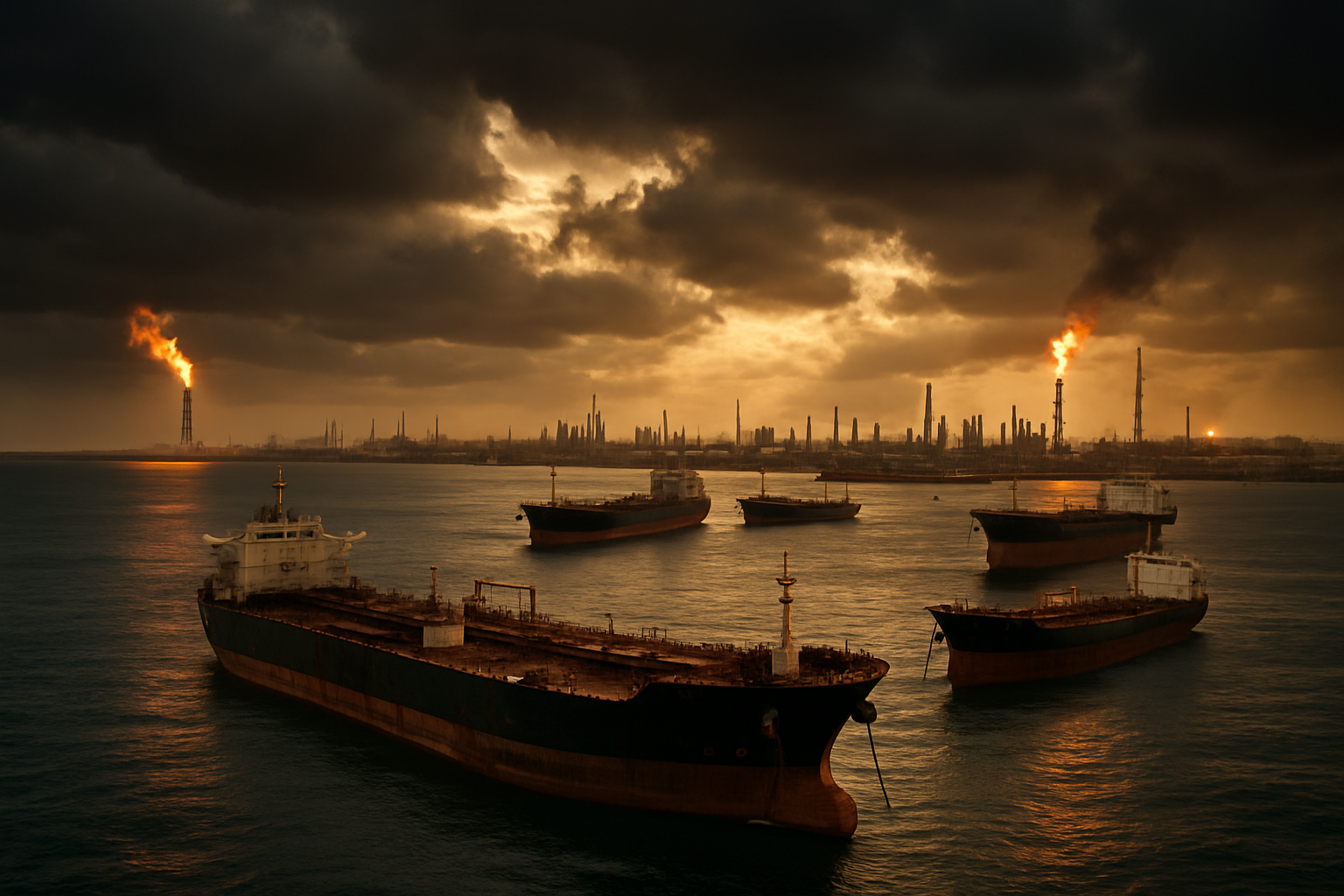
Brent crude oil has jumped from $73 to over $80 per barrel, representing a 10% surge as major shipping companies including Maersk and MSC have suspended operations in the Persian Gulf. More than 150 oil and LNG tankers, worth billions in cargo, remain anchored in Gulf waters as the shipping crisis unfolds.
Natural gas markets have experienced even more dramatic volatility, with European prices surging 24% and US markets climbing 78%. European gas prices have rocketed nearly 50% to €47.32 per MWh, reaching the highest levels since February 2025. The crisis deepened when Qatar - responsible for approximately 20% of global LNG exports - halted production at its Ras Laffan and Mesaid facilities following Iranian drone attacks.
"We're seeing the most comprehensive disruption to global energy supplies since the oil shocks of the 1970s. The closure of the Strait of Hormuz creates a chokepoint that cannot be easily bypassed."
— Samuel Ciszuk, Energy Analyst
Regional Impact and Coalition Strain
The energy crisis has placed enormous strain on the unprecedented regional coalition that had been supporting diplomatic efforts between the US and Iran. Saudi Arabia, UAE, Qatar, and Egypt - which had formed an extraordinary consensus backing negotiations - now find themselves targeted by Iranian retaliation strikes.
The situation deteriorated dramatically when Iranian forces launched "Operation True Promise 4," with the Islamic Revolutionary Guard Corps declaring "no red lines remain." Casualties have been reported across the Gulf region, including one civilian killed in Abu Dhabi, injuries at Kuwait International Airport from drone strikes, and eight wounded in Qatar despite successful Patriot missile interceptions.
Egyptian President Abdel Fattah el-Sisi condemned the attacks on "sisterly Arab countries," warning of "comprehensive chaos" in the region. The targeting of coalition member territories has fundamentally altered the diplomatic landscape that had shown promise just weeks earlier.
Global Economic Ripple Effects
The energy crisis has triggered severe market disruptions worldwide. Pakistan's KSE-100 index crashed 15,071 points in the largest single-day decline in the exchange's history, while US Dow futures dropped 400-570 points. European markets have also suffered significant losses, with Germany's DAX continuing steep declines.
Sweden is predicting electricity price increases of 10-20 öre and gasoline price rises of 1-2 kronor per liter. Australia has issued fuel price warnings, while Mexico faces concerns about a potential "gasolinazo" - significant fuel price increases that have historically triggered social unrest.
The crisis has also paralyzed global aviation, with over 18,000 flights cancelled worldwide as eight Middle Eastern countries simultaneously closed their airspace. Dubai International Airport, the world's busiest with 86 million passengers annually, remains completely shut down due to missile damage.
Supply Chain Vulnerabilities Exposed
The current crisis has exposed critical vulnerabilities in global energy supply chains that extend far beyond the Middle East. The 21-mile-wide Strait of Hormuz, while geographically small, serves as an irreplaceable chokepoint for regional oil exports. Alternative routes around the Arabian Peninsula would add significant time and costs, with insufficient capacity to offset the disruption.
Major companies are already feeling the impact. PayPay postponed its $1.1 billion US IPO due to market volatility, while technology companies are reassessing international expansion plans. Supply chain disruptions are expected to affect everything from consumer goods to industrial materials globally.

Nuclear Diplomacy Collapse
The energy crisis erupted following the complete collapse of what had been the most promising US-Iran diplomatic engagement in years. Geneva talks had achieved a "broad agreement on guiding principles" - representing the most significant progress since the collapse of the Joint Comprehensive Plan of Action (JCPOA) in 2018.
However, fundamental disagreements proved insurmountable. Iran excluded ballistic missiles and regional proxy groups as "red lines" from nuclear-only discussions, while the US insisted on comprehensive agreements addressing missiles, armed groups, and human rights issues. Iran continues enriching uranium to 60% purity, approaching the 90% weapons-grade threshold, with intelligence sources confirming sufficient material for multiple weapons if weaponized.
Strategic Petroleum Reserves Under Pressure
Countries worldwide are now considering tapping their strategic petroleum reserves to mitigate the crisis, but analysts warn these provide only temporary relief for sustained disruptions. The International Energy Agency has coordinated with member nations on potential emergency releases, though the scale required could quickly deplete reserves designed for shorter-term crises.
OPEC+ held an emergency meeting and approved a 206,000 barrels per day production increase for April, but analysts confirm this is insufficient to offset the shipping disruption affecting such a large portion of global oil transit. The organization faces the challenge that increased production means little if tankers cannot safely transit key shipping routes.
Aviation Industry in Crisis
The aviation industry faces its most comprehensive regional disruption since the COVID-19 pandemic. Eight countries - Iran, Iraq, Israel, UAE, Qatar, Syria, Kuwait, and Bahrain - have simultaneously closed their civilian airspace, forcing complex rerouting that has strained global flight networks.
Major carriers including Emirates, Air France-KLM, Wizz Air, and Bulgaria Air have suspended Middle East operations, affecting hundreds of thousands of passengers globally. The closure has eliminated critical Europe-Asia hub connections, with airlines implementing emergency protocols including enhanced fuel loading, alternative routing through the Caribbean for trans-Pacific flights, and dramatically increased operational costs.
Government Emergency Responses
Nations worldwide have activated emergency evacuation protocols for citizens in affected regions. The scale rivals the mass evacuations during the Arab Spring in 2011, with Germany planning to evacuate 30,000 tourists, the UK coordinating evacuations for 76,000 nationals, and Kenya managing the evacuation of over 66,000 nationals from Qatar alone.
Cyprus activated its "ESTIA" evacuation plan for the first time since its establishment, coordinating European and third-country national evacuations. Multiple countries, including Sweden and Serbia, have ordered immediate evacuations from Iran citing "extremely uncertain" security conditions.
Nuclear Governance Crisis Context
The energy crisis occurs amid a broader nuclear governance breakdown that adds urgency to the situation. The New START treaty between the US and Russia expired on February 5, marking the first time in over 50 years without nuclear constraints between the superpowers. Combined with China's nuclear expansion, UN Secretary-General António Guterres has warned that nuclear risks are at their "highest in decades."
This context makes the Iran crisis a template-setting moment for 21st-century international relations, testing whether diplomatic solutions can prevent military escalation in an era of multipolar nuclear competition.
Looking Ahead: Recovery Challenges
Unlike disruptions caused by natural disasters or technical failures, the timeline for recovery from this crisis depends entirely on military operations resolution and diplomatic tensions normalization. Energy markets face continued volatility as long as the Strait of Hormuz remains effectively closed.
The crisis is accelerating discussions about supply chain diversification and alternative energy sources, but such transitions require years or decades to implement meaningfully. In the immediate term, strategic petroleum reserves provide only a temporary buffer against sustained disruptions.
Aviation industry recovery faces similar uncertainties. Even when airspace reopens, clearing the backlog of cancelled flights and stranded passengers could take weeks. The crisis is forcing fundamental reconsiderations of route planning, risk assessment, and the aviation industry's dependence on Middle Eastern hubs for global connectivity.
Historical Significance
March 2026 may be remembered as a watershed moment in global energy security, demonstrating the fragility of systems dependent on strategic chokepoints controlled by geopolitically volatile regions. The crisis highlights the vulnerability of modern supply chains and the interconnected nature of global energy, transportation, and financial systems.
The stakes extend far beyond immediate energy prices. Success in containing the escalation could provide a framework for future nuclear crisis resolution and demonstrate the continued relevance of diplomatic solutions. Failure, however, may accelerate military approaches to international disputes, potentially reshaping Middle Eastern geopolitics for decades while encouraging nuclear proliferation globally and undermining diplomatic credibility worldwide.
As the situation continues to evolve, the international community faces its greatest test of multilateral cooperation and crisis management in the modern era, with implications that will reverberate through energy markets, supply chains, and international relations for years to come.