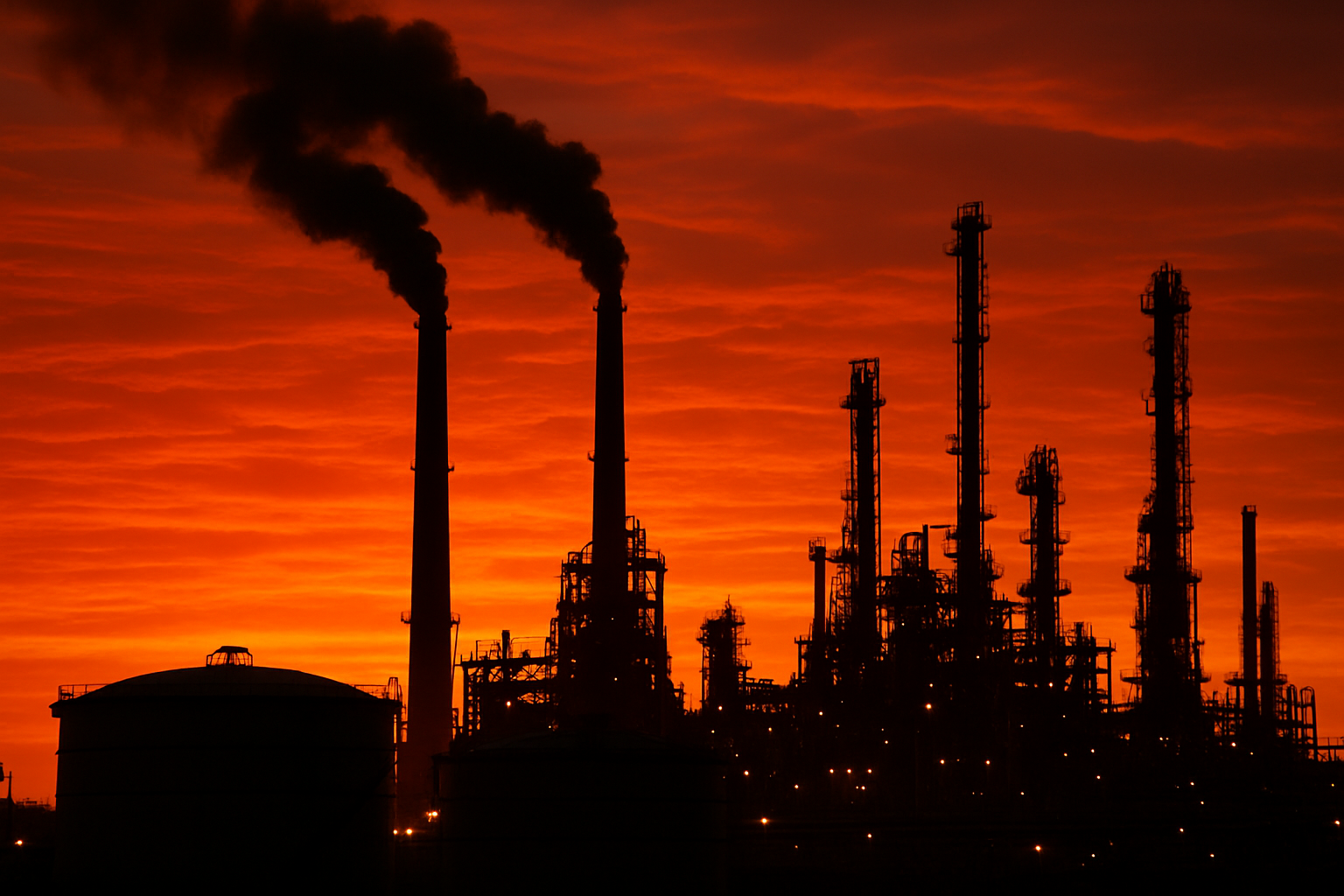
Global oil prices have surged to historic levels, surpassing $80 per barrel for the first time since 2014, as the escalating Middle East conflict threatens the world's most critical energy chokepoint and forces nations to confront the fragility of global supply chains.
The dramatic price spike, representing a more than 10% increase from the previous week's $73 benchmark, stems from Iran's Revolutionary Guard declaring the Strait of Hormuz "unsafe for shipping," effectively closing the narrow waterway through which 40% of the world's seaborne oil transits daily.
Critical Infrastructure Under Threat
The 21-mile-wide Strait of Hormuz has become the epicenter of a global energy crisis that analysts describe as the most severe in decades. With over 14 million barrels of crude oil and significant portions of liquefied natural gas passing through this chokepoint daily, its closure has sent shockwaves through international markets.
Major shipping companies Maersk and MSC have suspended operations in the Persian Gulf, leaving more than 150 oil and LNG tankers stranded with cargo worth billions of dollars. The Qatar Energy Minister's warning that Gulf states may be forced to declare force majeure "within weeks" has added to the mounting pressure on global energy supplies.
"The situation is unprecedented in modern energy markets. We're seeing the most severe energy security crisis in decades with single-chokepoint vulnerabilities exposed on a global scale."
— Samuel Ciszuk, Energy Security Analyst
Immediate Global Impact
The crisis has triggered immediate responses worldwide as governments scramble to protect their energy security. Japan, which depends on the Middle East for 95% of its oil supplies with 70% transiting through the now-closed Strait of Hormuz, is considering deployment of its national oil stockpile for the first time since the 2011 Fukushima disaster.
Natural gas prices have exploded alongside oil, surging 24% in Europe and 78% in the United States. European gas prices have rocketed to €47.32/MWh, the highest level since February 2025, as Qatar halted LNG production at its Ras Laffan and Mesaid facilities following infrastructure strikes.
The ripple effects extend far beyond energy markets. Pakistan's stock exchange crashed 8.97% in its largest single-day decline in history, while the Dow Jones futures fell 400-570 points. Even PayPal postponed its $1.1 billion IPO due to market volatility.
Consumer Price Surge Worldwide
Consumers across the globe are already feeling the impact of the energy crisis. In Sweden, electricity prices are predicted to increase by 10-20 öre, while gasoline prices are expected to rise by 1-2 kronor per liter. Southern Sweden, particularly the Malmö region, faces the highest increases due to its integration with continental European energy markets.
Ireland has seen heating oil prices surge 40% in a single week, with petrol and diesel approaching €2 per liter. Pakistan now has the highest fuel prices in South Asia at Rs321.17 per liter, while Canada's gasoline prices have reached 155.9 cents per liter.
Australia's government has issued warnings about impending fuel price increases, while Mexico faces concerns about a return of the "gasolinazo" fuel price surges that previously triggered social unrest.
Aviation Industry in Crisis
The energy crisis coincides with the most extensive aviation disruption since the COVID-19 pandemic. More than 18,000 flights have been cancelled worldwide as eight Middle Eastern countries simultaneously closed their civilian airspace. Dubai International Airport, the world's busiest with 86 million passengers annually, remains completely shut down due to missile damage.
Major carriers including Emirates, Air France-KLM, Wizz Air, and Bulgaria Air have suspended operations indefinitely, affecting hundreds of thousands of passengers globally and disrupting critical Europe-Asia travel connections.
Unexpected Catalyst for Energy Transition
The energy crisis has provided an unexpected acceleration to the electric vehicle revolution, particularly in Southeast Asia. In Bangkok, cash buyers have been streaming into car dealerships throughout the week, spooked by rising diesel prices and seeking alternatives to traditional fuel-powered vehicles.
"He was afraid he wouldn't be able to fill up his car any more. Cash buyers had been streaming in all week, spooked by rising diesel prices."
— Samart Prakotkancharna, Managing Director, Ratchapruek P Car Centre, Bangkok
This shift represents a dramatic acceleration of existing trends, as consumers who hadn't planned to purchase electric vehicles are now making immediate purchasing decisions based on fuel security concerns rather than environmental considerations.
Economic Implications Beyond Energy
The crisis has exposed vulnerabilities in global supply chains that extend far beyond energy. The Persian Gulf serves as a critical trade hub for consumer goods and industrial materials worldwide, and the disruption is affecting manufacturing sectors from automotive to electronics to textiles.
Central banks, including the European Central Bank and Bank of Japan, are coordinating emergency liquidity provisions to prevent broader financial contagion. However, traditional monetary policy tools are showing limited effectiveness against these structural geopolitical disruptions.
Strategic Response and Long-term Planning
Governments are implementing various emergency measures to address the crisis. The European Union is rapidly developing options including state aid programs for energy-intensive industries and direct energy price compensation mechanisms. Some heavy industries are already reporting factory closures due to unviable energy costs.
The United States is considering lifting additional sanctions on Russian oil to help stabilize global supply, following a 30-day waiver that allows Indian refiners to purchase Russian oil for market stabilization.
OPEC+ announced an emergency production increase of 206,000 barrels per day for April, but analysts confirm this is insufficient to offset the shipping disruption caused by the Strait of Hormuz closure. Alternative routes through the Arabian Peninsula lack adequate capacity and involve significant time and cost penalties.
Template-Setting Crisis for the 21st Century
The current crisis represents what experts describe as a template-setting moment for 21st-century energy security and crisis management. The rapid transformation from diplomatic breakthrough to military confrontation has demonstrated the fragility of modern crisis management mechanisms in an increasingly multipolar world.
The over-dependence on strategic chokepoints has been brutally exposed, highlighting the need for fundamental energy architecture restructuring to reduce vulnerability to geopolitical volatility. However, the transitions required for meaningful diversification and renewable energy alternatives require years or decades to implement effectively.
Uncertain Recovery Timeline
Unlike weather-related disruptions that have predictable timelines, recovery from this crisis depends entirely on military operations resolution and diplomatic normalization. Airlines are conducting daily reviews but cannot make long-term scheduling decisions with multiple airspaces closed indefinitely.
Energy markets remain volatile with critical transit routes blocked, and strategic petroleum reserves provide only a temporary buffer for sustained disruptions. The traditional approach to crisis management through monetary policy shows limited effectiveness when dealing with structural infrastructure and geopolitical disruptions.
"The situation is going on longer than initially thought. Financial markets are becoming the ultimate constraint on prolonged conflict."
— Damien Boey, Portfolio Strategist
Global Implications
The March 2026 energy crisis represents the most consequential international development since the end of the Cold War, with implications extending decades beyond current events. It affects regional war prevention, global energy security, nuclear governance credibility, and international law enforcement mechanisms simultaneously.
Success in containing the escalation could provide a framework for future nuclear crisis resolution and strengthen diplomatic precedents. However, failure may accelerate military solutions that reshape Middle Eastern geopolitics for decades while encouraging nuclear proliferation globally and undermining diplomatic credibility worldwide.
The crisis serves as the greatest test of multilateral cooperation and crisis management in the modern era, determining whether the international community can maintain stability in an increasingly interconnected yet volatile world. The decisions made in the coming days and weeks will influence international approaches to conflict resolution, energy market evolution, and supply chain resilience for generations to come.
As the world watches oil prices approach levels not seen in a decade, the fundamental question remains whether this crisis will catalyze the necessary changes to build more resilient energy systems, or whether it represents the beginning of a more fragmented and insecure global energy landscape.