Oil prices surged to their highest levels in nearly two years on Friday, with Brent crude breaking through $91 per barrel as the escalating Iran war crisis threatens to disrupt global energy supplies through the strategic Strait of Hormuz chokepoint.
The dramatic price spike, representing a jump of more than 10% from pre-crisis levels of $73 per barrel, comes as Iran's Revolutionary Guard declared the Strait of Hormuz "unsafe" for commercial shipping, effectively closing the critical waterway that handles approximately 40% of global seaborne oil transit.
Strait of Hormuz: The World's Most Critical Energy Chokepoint
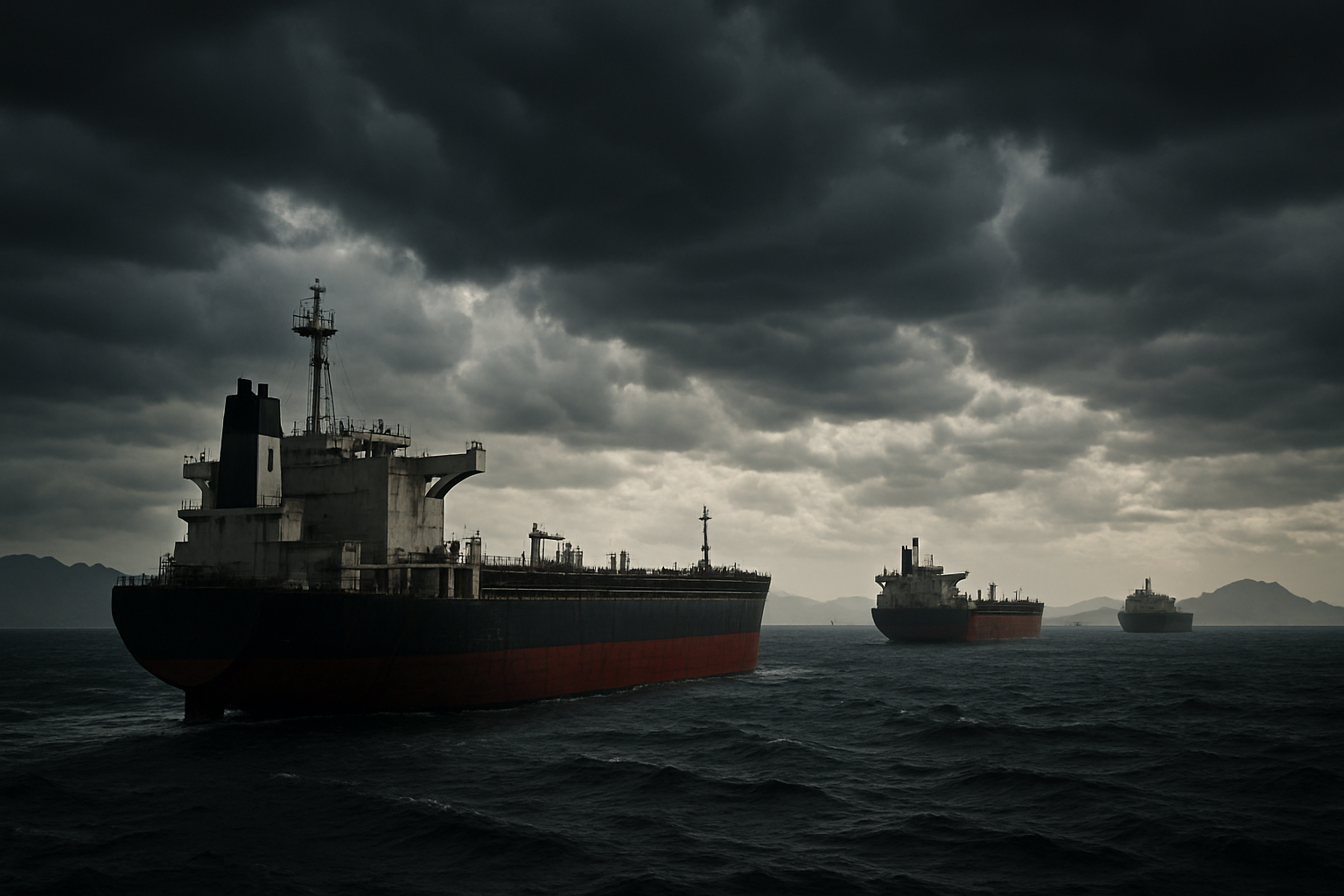
The 21-mile-wide Strait of Hormuz has become the epicenter of a global energy security crisis following Iran's decision to halt commercial shipping through the waterway. Major shipping companies including Maersk and MSC have suspended operations, leaving more than 150 oil and LNG tankers stranded in the Persian Gulf with cargo valued in the billions.
According to multiple sources, the West Texas Intermediate (WTI) crude futures jumped 9.96% to $89.09 per barrel during Friday trading, while European gas prices rocketed nearly 50% to €47.32 per MWh—the highest level since February 2025.
"This is a historic moment for the entire cryptocurrency market."
— Samuel Ciszuk, Energy Analyst
The crisis stems from the ongoing military conflict between U.S.-Israeli forces and Iran, dubbed "Operation Epic Fury," which has resulted in the death of Iran's Supreme Leader Ali Khamenei and triggered massive Iranian retaliation dubbed "Operation True Promise 4."
Global Market Disruption
The energy crisis has sent shockwaves through global markets, with Pakistan's KSE-100 index suffering its largest single-day decline in history, falling 8.97%. European markets have also taken significant hits, with Germany's DAX continuing its steep decline and Italy's Milan exchange dropping 4%.
Natural gas prices have exploded across regional markets, surging 24% in Europe and a staggering 78% in the United States. Qatar, which supplies approximately 20% of global LNG exports, has halted production at its Ras Laffan and Mesaid facilities following Iranian drone attacks, with a force majeure declaration expected.
Aviation Industry Paralyzed
The crisis has extended beyond energy markets to create the most extensive aviation disruption since the COVID-19 pandemic. Over 18,000 flights have been cancelled worldwide as eight Middle Eastern countries—Iran, Iraq, Israel, UAE, Qatar, Syria, Kuwait, and Bahrain—simultaneously closed their airspace.
Dubai International Airport, the world's busiest with over 86 million passengers annually, remains completely shut down due to missile damage. Major carriers including Emirates, Air France-KLM, Wizz Air, and Bulgaria Air have suspended operations indefinitely, affecting hundreds of thousands of passengers globally.
Consumer Impact Across Regions
The energy crisis is rapidly translating into higher costs for consumers worldwide. Sweden is predicting electricity price increases of 10-20 öre and gasoline price rises of 1-2 kronor per liter, with the southern Malmö region (electricity zone 4) most exposed due to continental European market integration.
In Ireland, politicians have slammed what they call "brazen rip-off" massive heating oil and motor fuel price increases. Austria has seen fuel costs surge 20%, drawing criticism from trade unions about profiteering. New Zealand petrol prices are expected to exceed $3 per liter, while Panama has implemented immediate fuel price increases across all variants.
OPEC+ Response Proves Insufficient
Despite an emergency OPEC+ meeting that approved a 206,000 barrel per day production increase for April, analysts confirm this measure is insufficient to offset the shipping disruption at the Strait of Hormuz. The organization faces the challenge that increased production is meaningless if tankers cannot transit safely through the Persian Gulf.
Alternative shipping routes around the Arabian Peninsula are inadequate in capacity and add significant time and cost penalties to global oil distribution networks. Strategic petroleum reserves are providing only a temporary buffer for what could become a sustained disruption.
Supply Chain Vulnerabilities Exposed
The crisis has exposed the dangerous over-dependence of global supply chains on strategic chokepoints with limited alternatives. The Persian Gulf serves as a critical trade hub beyond just energy, affecting the flow of consumer goods and industrial materials worldwide.
China has suspended refined fuel export contracts, cancelling committed shipments. Manufacturing sectors dependent on Gulf logistics networks—including automotive, electronics, and textiles—are experiencing severe disruptions. The 21-mile Strait of Hormuz demonstrates the single-point failure risks inherent in modern logistics systems.
Nuclear Diplomacy Breakdown Context
The current energy crisis follows the complete collapse of U.S.-Iran nuclear diplomacy, despite what had been described as a "broad agreement on guiding principles" breakthrough in Geneva talks—representing the most progress since the JCPOA collapse in 2018.
Iran had excluded ballistic missiles and regional proxies as "red lines," demanding nuclear-only talks, while the U.S. insisted on comprehensive agreements addressing missiles, armed groups, and human rights issues. Iran continues uranium enrichment at 60% purity with over 400kg of material, approaching weapons-grade capability.
Government Emergency Responses
Cyprus has activated its ESTIA national evacuation plan for the first time, while mass evacuations are underway on a scale not seen since the Arab Spring of 2011. Australia has 115,000 nationals trapped in the region, while Germany is dealing with 30,000 stranded tourists.
Central banks including the European Central Bank and Bank of Japan are coordinating emergency liquidity provision to prevent broader financial contagion. PayPay postponed its $1.1 billion IPO indefinitely due to market volatility, with technology companies reassessing expansion plans.
Nuclear Governance Crisis Context
The crisis is occurring against the backdrop of broader nuclear governance breakdown, with the New START treaty having expired on February 5—marking the first time in over 50 years without U.S.-Russia nuclear constraints. China's nuclear expansion and what UN Secretary-General António Guterres describes as nuclear risks at their "highest level in decades" compound the complexity.
Regional Coalition Under Strain
An unprecedented regional coalition of Saudi Arabia, UAE, Qatar, and Egypt that had been supporting diplomatic engagement is now severely strained as Iranian retaliation has targeted member territories. UAE reported 1 civilian killed in Abu Dhabi, Kuwait suffered 32 injuries from airport strikes, and Qatar had 8 wounded despite intercepting 65 missiles and 12 drones with Patriot systems.
Egyptian President Abdel Fattah el-Sisi condemned the attacks on "sisterly Arab countries," warning of "comprehensive chaos." This threatens what had been an extraordinary Middle Eastern consensus in favor of conflict prevention.
Long-term Energy Architecture Implications
Unlike weather-related disruptions, recovery from this crisis depends on military operations resolution and diplomatic normalization. Traditional monetary policy tools have limited effectiveness against structural infrastructure and geopolitical disruptions affecting fundamental supply relationships.
The crisis highlights the urgent need for fundamental energy security architecture restructuring to reduce dependence on volatile geopolitical regions. However, supply diversification transitions require years or decades of implementation, while the current situation demands immediate responses.
Historical Significance
March 2026 represents a watershed moment for global energy security, exposing strategic chokepoint vulnerabilities and interconnected supply chain fragility. This is being described as the most dangerous international crisis since the end of the Cold War, affecting regional war prevention, energy markets, nuclear governance credibility, and international law enforcement simultaneously.
The rapid transition from diplomatic breakthrough to military confrontation demonstrates the fragility of modern crisis management mechanisms in an increasingly multipolar world. Success in containing the escalation could provide a framework for future nuclear crisis resolution, while failure may accelerate military solutions over diplomatic engagement globally.
As oil analysts warn of potential prices reaching $100-150 per barrel if the conflict continues, the international community faces unprecedented decisions about immediate supply needs versus long-term energy security architecture that could reshape global energy markets for decades to come.