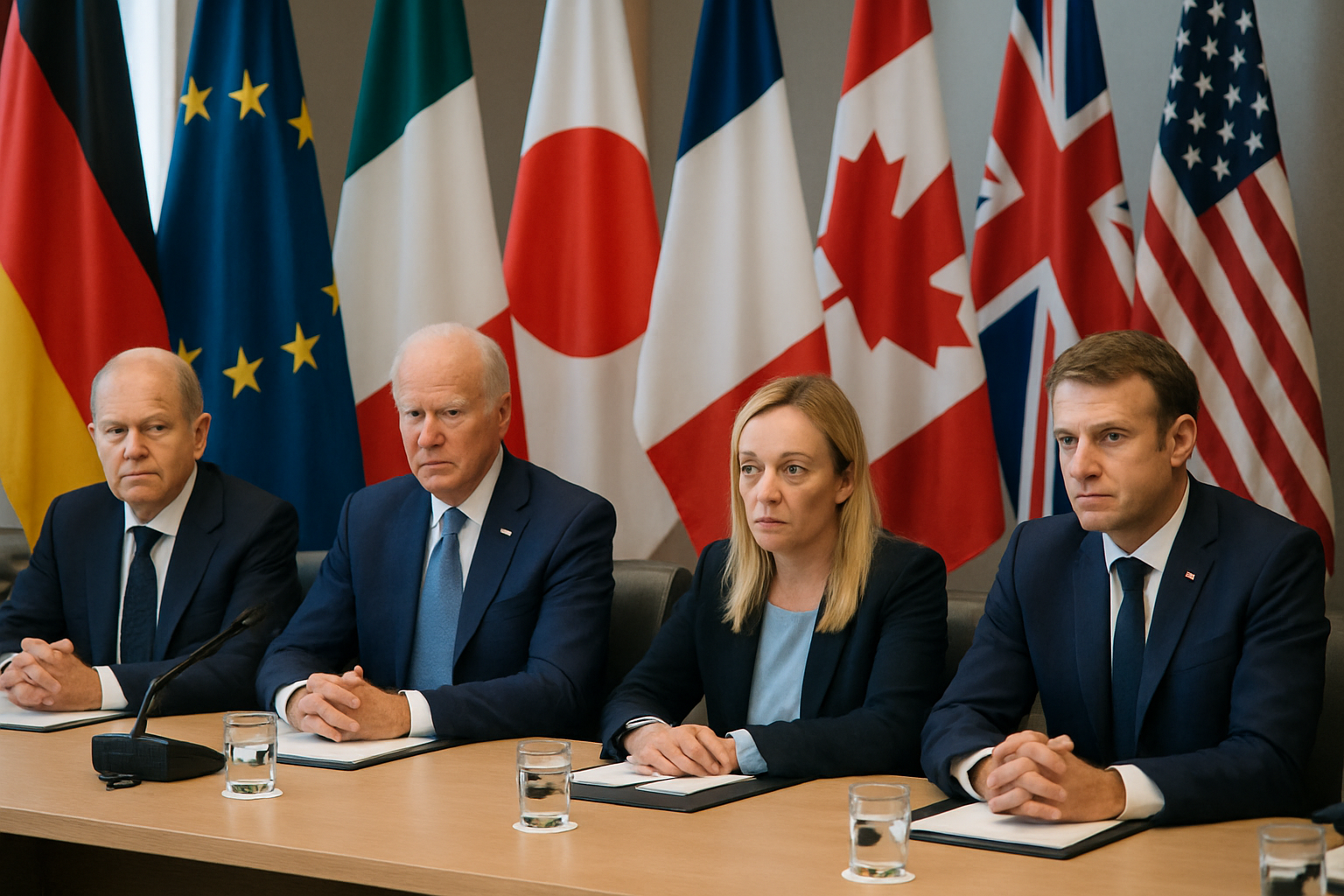
Political systems across continents face unprecedented strain as corruption trials, leadership transitions, and democratic challenges converge in what experts describe as the most significant test of institutional resilience since World War II.
From Madrid's Supreme Court to Budapest's parliament halls, and from Berlin's coalition chambers to Kuala Lumpur's administrative offices, April 2026 has witnessed a cascade of political developments that collectively signal a watershed moment for democratic governance worldwide.
Spain's Corruption Reckoning
Spain dominates headlines as the Supreme Court prepares to hear the most significant corruption case in recent memory. Former Transport Minister José Luis Ábalos and his advisor Koldo García face up to 30 years imprisonment in what prosecutors describe as a systematic exploitation of pandemic emergency contracts.
"The machinery of corruption extracted public money during the worst of the pandemic, when Spanish citizens needed their government most."
— Spanish Prosecution Service Statement
The "Koldo case" represents more than individual corruption—it exemplifies how criminal networks have evolved to exploit democratic institutions systematically. Evidence reveals sophisticated operations involving mask procurement contracts, with allegations extending to connections with Venezuelan financing schemes that prosecutors claim attempted to illegally fund PSOE operations.
Simultaneously, Spain's judicial system confronts the "Kitchen case," investigating whether Interior Ministry officials under the Popular Party systematically spied on former treasurer Luis Bárcenas to prevent damaging revelations. The central question—who ordered surveillance operations that potentially violated democratic norms—threatens to implicate the highest levels of conservative leadership.
Germany's Coalition Crisis Deepens
Germany's political stability faces serious challenges as Wolfgang Kubicki emerges as a potential savior for the collapsing Free Democratic Party (FDP). The party's deputy chairman announced his intention to seek leadership following devastating electoral performances that have left the FDP struggling to clear the 5% threshold needed for parliamentary representation.
Kubicki's leadership bid comes as the party faces what political analysts describe as an "inevitable downfall" without significant restructuring. His promise to "do everything to make the party successful again" reflects broader European liberal party struggles to maintain relevance amid rising populism and coalition politics complexity.
The crisis extends beyond party politics. Analysis reveals that the Alternative for Germany (AfD) has overtaken the conservative Christian Democratic Union in recent polling—the first time since World War II that a far-right party has led German preference surveys. This represents a seismic shift in European politics, challenging assumptions about democratic stability in the continent's economic powerhouse.
Eastern European Democratic Tests
Austria continues grappling with media freedom debates as former journalist Boris Kálnoky defends Viktor Orbán's media policies while criticizing what he terms the "urban-liberal" orientation of many newsrooms. His assertion that "Hungary has more media freedom than Germany" reflects broader tensions about press independence across Central Europe.
Romania faces its own institutional challenges following revelations about staged political meetings designed to influence electoral processes. Former presidential candidate Crin Antonescu's denial of involvement in manufactured political encounters highlights sophisticated disinformation campaigns that threaten electoral integrity.
Global Democratic Patterns
Beyond Europe, democratic institutions face varied challenges that collectively suggest systemic pressures on governance worldwide. Malaysia confronts accountability questions over the Madani Mart licensing system, where royalty payments to foundations connected to deputy ministers and prime ministerial aides raise transparency concerns.
Bolivia's post-electoral crisis demonstrates how democratic transitions can fracture along regional lines. Santa Cruz's political landscape has fundamentally shifted following March elections, with traditional party loyalties giving way to new political configurations that analysts describe as marking "the end of an era" in regional politics.
The Technology-Politics Interface
Political developments increasingly intersect with technological governance challenges. Malaysia's investigation into PKR leadership disputes involves questions about democratic processes in an era where social media and digital communications fundamentally alter political organization and citizen engagement.
The convergence of traditional corruption schemes with sophisticated digital networks—as evidenced in Spain's cases—demonstrates how criminal organizations have adapted to exploit both legacy institutional weaknesses and emerging technological vulnerabilities.
International Implications
These developments occur against a backdrop of what European officials describe as the "most challenging period for continental democracy since WWII." Despite 89% of Europeans demanding greater EU unity according to Eurobarometer polling, political reality demonstrates increasing fragmentation and sovereignty assertions that threaten institutional cohesion.
The stakes extend far beyond national boundaries. Hungary's continued blockade of EU aid to Ukraine, Germany's coalition instability affecting European decision-making capacity, and Spain's corruption trials potentially implicating major political parties all contribute to what observers characterize as a "template-setting moment for 21st-century crisis management."
Institutional Resilience Under Pressure
Yet amid these challenges, democratic institutions demonstrate remarkable resilience. Courts across multiple countries process high-profile cases involving powerful political figures while maintaining judicial independence. Electoral processes continue functioning despite foreign interference attempts and domestic polarization.
The willingness to prosecute former ministers, investigate systematic corruption, and maintain constitutional governance during crisis periods suggests that democratic norms retain fundamental strength even under unprecedented pressure.
"Europe is writing the template for 21st-century crisis management, with the world watching whether democratic institutions can adapt while preserving European values."
— Senior EU Official
Looking Forward
The convergence of corruption prosecutions, electoral volatility, and institutional stress creates a critical moment for democratic governance globally. Success in navigating these challenges while strengthening institutions could establish precedents for democratic resilience in an interconnected but politically fragmented world.
The coming months will prove decisive—not only for individual countries grappling with specific crises but for the broader question of whether democratic systems can adapt to 21st-century pressures while maintaining the institutional frameworks that have underpinned international stability and cooperation since 1945.
As political leaders, judicial authorities, and civil society organizations work to address these multifaceted challenges, their successes and failures will shape the trajectory of democratic governance for decades to come. The stakes could not be higher: the future of democratic governance in an increasingly complex global environment depends on getting this moment right.