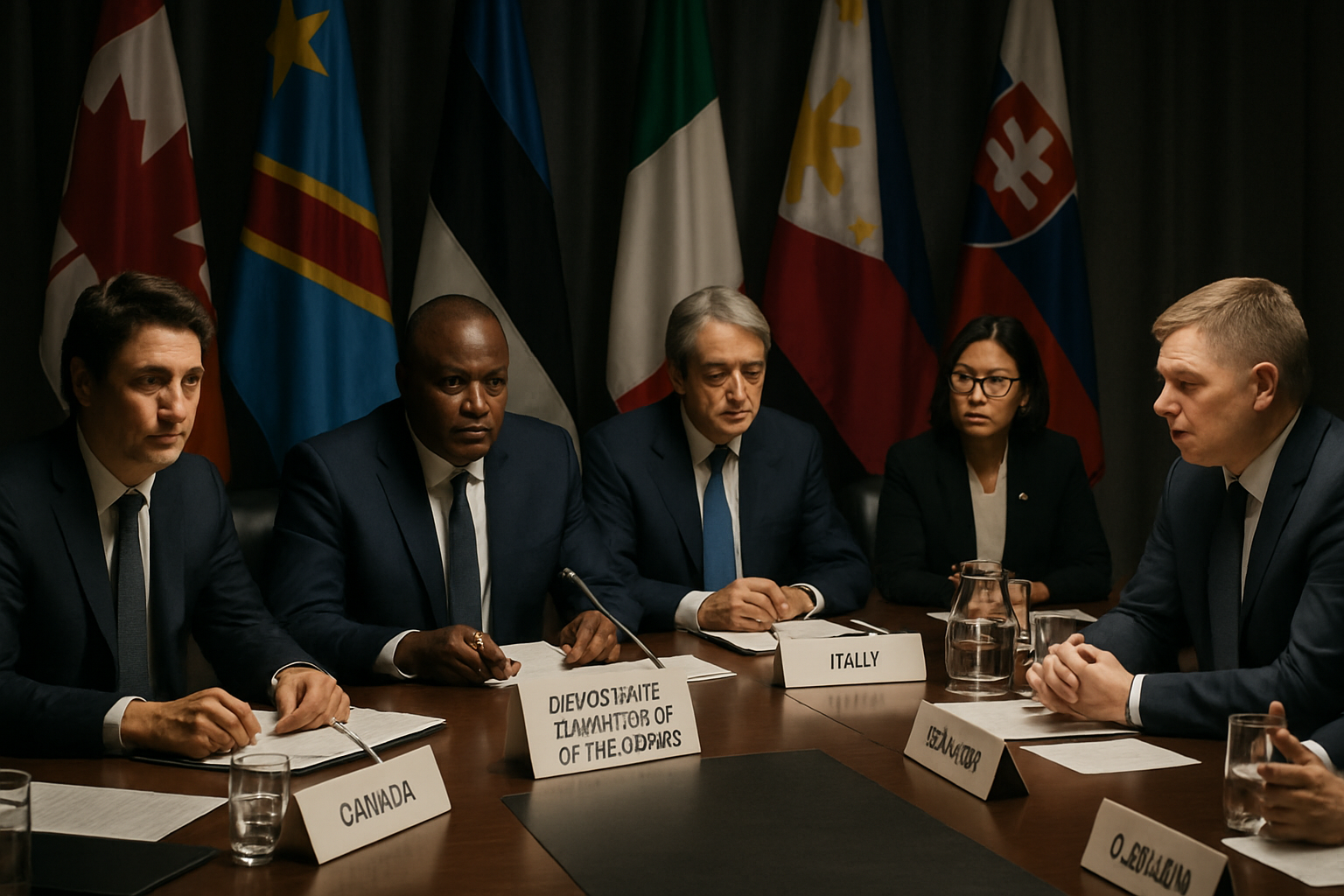
A wave of constitutional debates, electoral reforms, and governance challenges is sweeping across the globe, as seven nations grapple with fundamental questions about democratic representation and institutional authority in an increasingly complex political landscape.
Canada's Liberal Strategy for Parliamentary Control
In Ottawa, Prime Minister Mark Carney's Liberal government is making strategic moves to consolidate power through House committee reforms. House leader Steven MacKinnon announced via social media that the Liberals will seek changes to standing orders to reflect their majority position and secure dominant voting power on parliamentary committees.
This maneuver comes as Carney walks with Liberal MPs Tatiana Auguste, Danielle Martin, and Doly Begum, symbolizing the party's unity as they work to leverage their newly secured majority. The move represents a significant shift in parliamentary dynamics, as the Liberals aim to streamline legislative processes and advance their policy agenda with greater efficiency.
Alberta's Electoral Map Controversy
Meanwhile, in Alberta, Premier Danielle Smith has triggered accusations of gerrymandering by rejecting the recommendations of an independent redistricting commission. The United Conservative Party government voted to restart the process of overhauling the provincial electoral map, defying expert advice in a move that critics argue undermines democratic fairness.
"This decision represents a concerning precedent for electoral integrity in Canada," said one opposition critic. "When governments ignore independent commissions, they risk politicizing what should be an impartial process."
— Provincial Opposition Representative
Constitutional Tensions in the Democratic Republic of Congo
In Central Africa, the Democratic Republic of Congo faces its own constitutional crisis as President Felix Tshisekedi's ruling coalition, the Union sacrée de la Nation (USN), calls for constitutional reform proposals. The initiative, launched on April 20th, has met fierce resistance from opposition parties and civil society organizations.
Opposition leaders denounce the constitutional revision effort as both a "distraction" and a "rebellion" against democratic norms. The controversy centers on concerns that proposed changes could extend presidential terms or alter fundamental democratic protections enshrined in the 2006 Constitution.
Kinshasa newspapers are extensively covering the political debate, with Le Potentiel reporting on the USN's "new approach" of prioritizing constitutional revision before engaging in broader national dialogue. This sequencing has drawn criticism from opposition figures who argue that constitutional changes should emerge from, rather than precede, comprehensive national consultations.
Regional Implications
The constitutional debate in the DRC carries significant implications for Central African stability, as the country plays a crucial role in regional peace and economic development. International observers are closely monitoring the situation, particularly given the DRC's history of political instability and the importance of maintaining democratic institutions in Africa's second-largest country.
Estonia's Shifting Political Landscape
In the Baltic region, Estonia is experiencing notable changes in its political dynamics. According to the latest Norstat and Ühiskonnauuringute Instituut weekly poll, the conservative Isamaa party has seen its popularity decline by nearly 3 percentage points over the past month.
More significantly, the far-right EKRE (Conservative People's Party of Estonia) has overtaken the liberal Reform Party to become the fourth most popular party in the country. This shift reflects broader European trends where conservative and far-right parties are gaining ground amid economic uncertainties and social tensions.
Italy's Government Appointments
In Rome, Prime Minister Giorgia Meloni is reportedly preparing to announce new undersecretary appointments, aiming to fill remaining vacant positions in her government. The Italian media reports suggest ongoing negotiations over key regulatory positions, including disputes over the Consob (securities market regulator) leadership.
These appointments come as Meloni's government works to stabilize its administrative structure while managing various domestic and European Union challenges. The completion of government positions is seen as crucial for effective policy implementation across multiple ministries.
Philippines Budget Authority Controversy
In the Philippines, a significant constitutional question has emerged regarding presidential oversight of government spending. Solicitor General Darlene Berberabe argued before the Supreme Court that President Ferdinand Marcos Jr. need not approve the release of unprogrammed appropriations, stating that the General Appropriations Act grants this authority directly to the budget secretary.
During oral arguments on April 21st, Berberabe confirmed that the Department of Budget and Management (DBM) may issue Special Allotment Release Orders (SAROs) without presidential approval. This position has raised questions about executive accountability, particularly given past controversies involving former Budget Secretary Amenah Pangandaman, who resigned amid corruption allegations.
"The budget secretary reports to and is accountable to the President," observed Senior Associate Justice Marivic Leonen, highlighting the constitutional tensions at play.
— Supreme Court Justice Marivic Leonen
Implications for Democratic Accountability
The Philippine case illustrates broader questions about executive power and financial oversight that resonate across democratic systems worldwide. The Supreme Court's eventual ruling could set important precedents for presidential authority over government expenditures and the balance between executive efficiency and democratic accountability.
Slovakia's Complex Political Dynamics
In Slovakia, political developments reflect the complex relationships between domestic politics and international affairs. Recent polling shows French President Emmanuel Macron leading popularity surveys among Slovak citizens, while UK Prime Minister Keir Starmer registers minimal support.
This unusual dynamic highlights how international political figures can sometimes resonate more strongly with foreign populations than domestic leaders, particularly in smaller nations that are heavily influenced by broader European and global trends.
Meanwhile, Slovak politics continues to grapple with historical tensions and contemporary challenges, as Prime Minister Robert Fico navigates relationships with both European Union partners and regional neighbors amid ongoing environmental and diplomatic concerns.
Global Patterns and Democratic Challenges
These developments across seven nations reveal several critical patterns affecting democratic governance in 2026:
- Constitutional Pressures: Multiple countries are experiencing debates over fundamental governing documents, from the DRC's revision attempts to Canada's parliamentary rule changes.
- Electoral Integrity Concerns: Issues ranging from Alberta's redistricting controversy to Estonia's political realignment highlight ongoing challenges in maintaining fair electoral processes.
- Executive Power Questions: From the Philippines' budget authority dispute to Italy's appointment processes, nations are grappling with the appropriate scope of executive authority.
- International Influence: Slovakia's polling data on foreign leaders demonstrates how global political figures increasingly impact domestic political landscapes.
The Broader Context
These political developments occur against a backdrop of global democratic strain, where institutions face pressure from economic uncertainty, technological disruption, and shifting international relationships. The responses of these seven nations to their respective challenges will likely provide templates for other democracies facing similar pressures.
From North America to Africa, Europe to Southeast Asia, the fundamental questions remain consistent: How can democratic institutions adapt to contemporary challenges while preserving essential democratic principles? How should power be distributed between different branches and levels of government? And how can nations maintain democratic legitimacy in an era of rapid change and global interconnectedness?
Looking Forward
As these political developments continue to unfold, several key factors will determine their ultimate impact on global democratic governance:
- International Response: How regional organizations and international bodies respond to controversial constitutional changes and electoral reforms will influence their legitimacy and effectiveness.
- Public Engagement: The degree to which citizens in these nations engage with political processes will largely determine whether reforms strengthen or weaken democratic institutions.
- Institutional Resilience: The ability of courts, parliaments, and civil society organizations to maintain their independence and effectiveness will prove crucial for democratic continuity.
- Regional Spillover: Political developments in one nation increasingly influence neighboring countries, making regional stability a shared concern.
The political transformations underway in Canada, Alberta, the Democratic Republic of Congo, Estonia, Italy, the Philippines, and Slovakia represent more than isolated national developments—they reflect the global challenges facing democratic governance in the 21st century. As these nations navigate their respective political crossroads, their experiences will undoubtedly inform broader discussions about democracy's future in an interconnected world.
The outcomes of these various political processes will serve as crucial case studies for political scientists, policymakers, and citizens worldwide who are grappling with similar questions about representation, accountability, and effective governance in democratic systems. Whether these developments ultimately strengthen or weaken democratic institutions may well depend on how successfully each nation balances the competing demands of political effectiveness and democratic legitimacy.