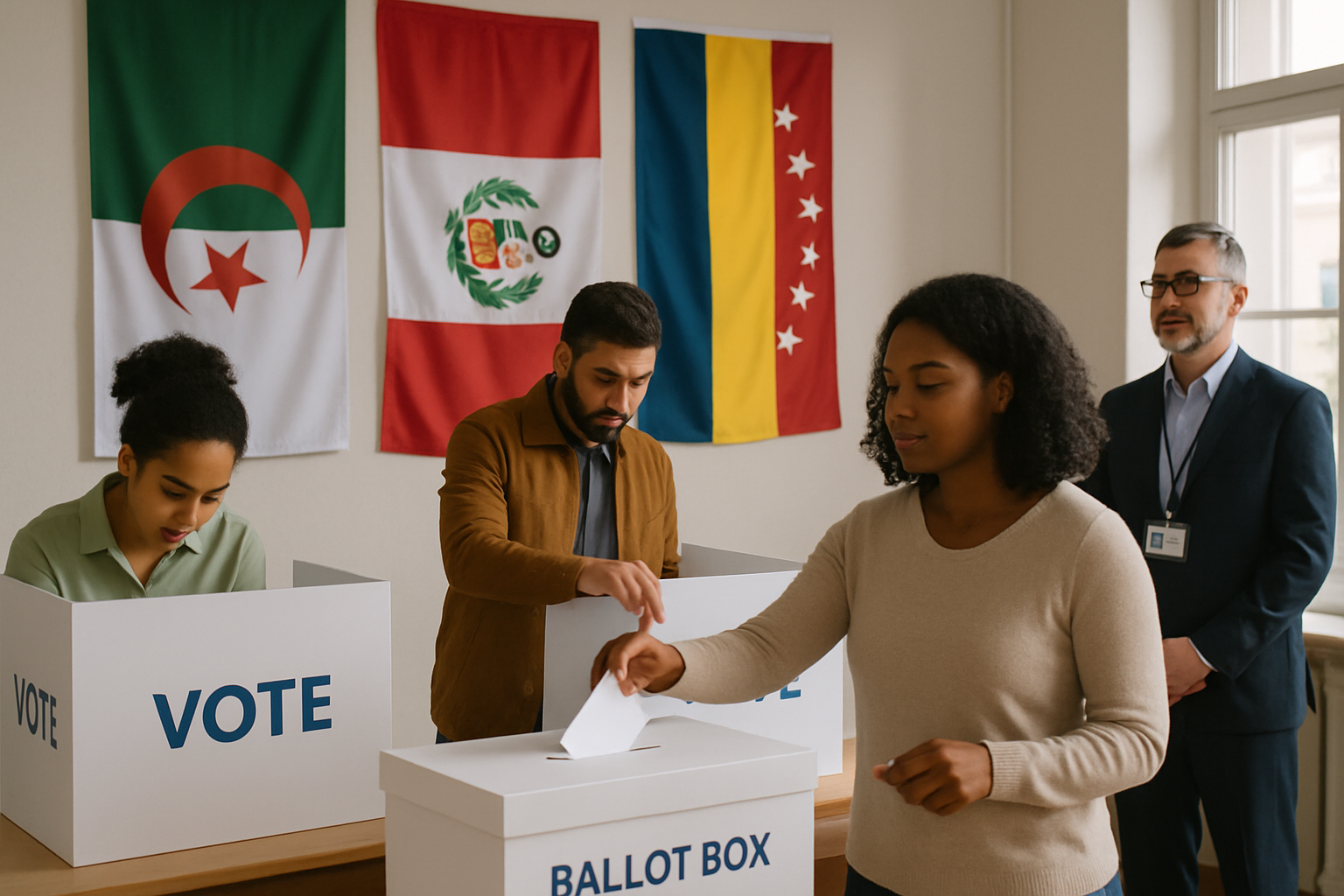
Three nations on different continents are experiencing pivotal electoral moments that could reshape their political landscapes, as Algeria prepares for July legislative elections, Peru approaches April general elections following unprecedented political instability, and Venezuela witnesses intensified presidential campaigning just one week before crucial voting.
Algeria Sets Course for Legislative Renewal
President Abdelmadjid Tebboune has formally called Algerian voters to the polls for legislative elections scheduled for Thursday, July 2, 2026, marking a critical juncture in the nation's democratic development. The presidential decree initiating the electoral process sets the stage for the selection of new National People's Assembly members, representing a significant opportunity for political renewal in North Africa's largest country.
The electoral timeline includes a crucial preparatory phase, with extraordinary electoral list revisions beginning Sunday, April 12, and continuing through April 26. This extensive review period reflects the comprehensive nature of Algeria's electoral preparation, ensuring broad citizen participation in the democratic process.
Algeria's legislative elections come amid a period of significant regional political transformation, with neighboring countries experiencing various forms of democratic transition and institutional reform. The July timeline provides ample opportunity for political parties to organize campaigns and present their visions for Algeria's future direction.
Peru Faces Electoral Test Amid Political Crisis
Peru's approaching April 12 general elections represent perhaps the most critical democratic test in the nation's recent history, following an unprecedented period of political instability that has seen eight presidential changes since 2016. The electoral process occurs against the backdrop of severe institutional crisis, with the most recent chapter involving the removal of President José Jerí over the "Chifagate" scandal involving undisclosed meetings with Chinese contractors.
The comprehensive elections will determine not only the next president but also senators, deputies, and Andean parliament representatives. A crucial element of Peru's electoral framework is the implementation of the electoral threshold system, designed to distribute parliamentary seats and maintain party registration. This mechanism aims to promote political stability by requiring parties to achieve minimum support levels to secure representation.
Peru's political landscape has been marked by chronic instability, with constitutional "vacancy" procedures repeatedly weaponized against successive presidents. The pattern includes the removal of Martín Vizcarra in 2020, Pedro Castillo's coup attempt in 2022, Dina Boluarte's removal in 2025, and most recently José Jerí in 2026. This cycle of political crisis has created governance paralysis, with the average presidential mandate duration decreasing by 70% since 2016.
"The electoral process represents a fundamental test of whether Peru can break the political crisis cycle and achieve the stability necessary for effective governance."
— Regional Democracy Expert
The business confederation CONFIEP has warned that Peru "cannot afford a new stage of uncertainty" so close to the elections, highlighting the economic stakes involved. Despite political turbulence, the Lima stock exchange and sol currency have maintained relative stability, demonstrating market adaptation to chronic volatility.
Venezuelan Campaign Intensifies
In Venezuela, presidential candidate Keiko Fujimori has expressed gratitude for polling support with just one week remaining before crucial elections. The Peruvian politician, making her fourth electoral attempt, is seeking to capitalize on her political stronghold in the Amazon region, where she maintains significant support.
Fujimori's campaign strategy focuses heavily on her established political base while attempting to expand appeal to undecided voters. Polling data from consultancy Datum indicates high electoral volatility, with significant vote dispersion creating uncertainty about which candidate might accompany the right-wing contender in a potential runoff scenario.
The Venezuelan electoral context reflects broader regional democratic dynamics, where traditional political alignments face challenges from new movements and shifting voter preferences. The high level of electoral dispersion suggests that Venezuelan voters are actively considering multiple options rather than defaulting to established political loyalties.
Regional Democratic Patterns
These three electoral processes illustrate broader patterns affecting democracy across Latin America and North Africa. Algeria's measured approach to legislative renewal contrasts sharply with Peru's crisis-driven electoral cycle and Venezuela's intensely competitive presidential race.
The timing of these elections reflects different democratic rhythms: Algeria's constitutional schedule providing stability, Peru's emergency response to institutional breakdown, and Venezuela's regular electoral cycle occurring amid significant political transformation.

International Implications
The outcomes of these three electoral processes will have significant implications for regional stability and international cooperation. Algeria's legislative elections could influence North African political dynamics and relationships with European partners. Peru's general elections are crucial for establishing governmental stability necessary for economic recovery and international engagement.
Venezuela's elections represent a test case for democratic transition in a country that has experienced significant political upheaval in recent years. The international community is closely monitoring these processes as indicators of democratic resilience and institutional capacity in the face of various pressures.
Economic and Social Stakes
Beyond political considerations, these elections carry substantial economic and social implications. Peru faces the challenge of restoring investor confidence after years of political instability, while maintaining essential public services during the transition period. The country's position as a regional economic hub makes governmental stability crucial for broader South American integration.
Algeria's legislative renewal occurs during a period of economic diversification efforts and social reform initiatives. The new parliament will play a crucial role in shaping policies addressing unemployment, particularly among youth, and economic modernization challenges.
In Venezuela, electoral outcomes could significantly influence the country's economic trajectory and international relationships, particularly regarding oil exports and regional trade partnerships.
Looking Forward
As these three nations navigate their respective electoral processes, they represent different models of democratic engagement under varying circumstances. Algeria's institutional approach, Peru's crisis management, and Venezuela's competitive dynamics each offer lessons for democratic governance in challenging environments.
The success of these electoral processes will be measured not only by their technical conduct but also by their capacity to produce legitimate governments capable of addressing citizen needs while maintaining democratic institutions and international cooperation frameworks.
The coming weeks will prove decisive for all three nations, with outcomes likely to influence regional political development and provide important precedents for democratic governance in an era of increasing global political complexity.