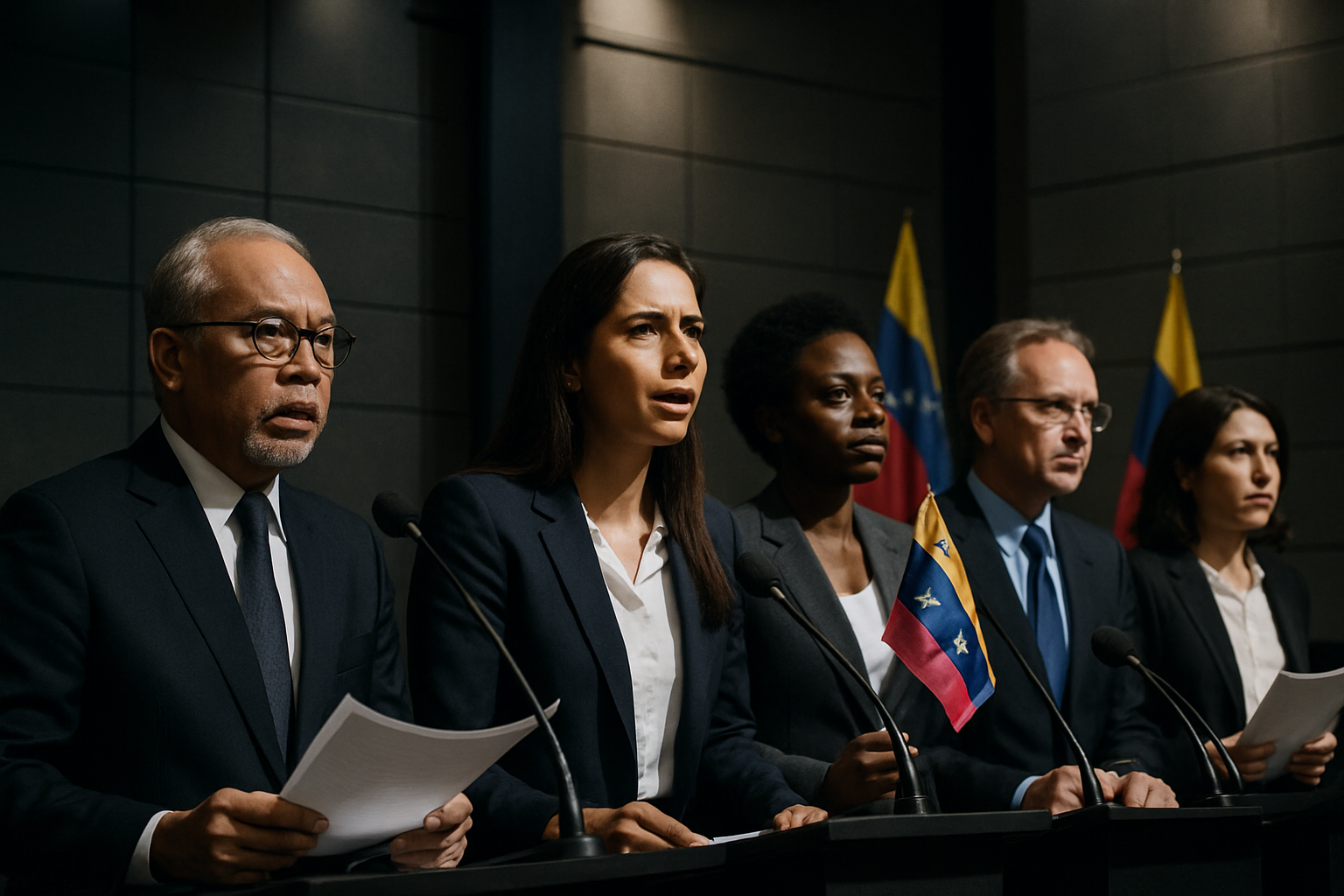
Political opposition movements across the globe are achieving unprecedented success in reshaping national leadership structures, with Malaysia's Perikatan Nasional coalition undergoing major reorganization while Venezuela experiences historic prisoner releases under interim government reforms.
Malaysia: Historic Opposition Leadership Restructuring
Malaysia's opposition coalition Perikatan Nasional (PN) has undergone its most significant leadership transformation since formation, with Datuk Seri Ahmad Samsuri Mokhtar unanimously appointed as new chairman, replacing Tan Sri Muhyiddin Yassin in a carefully orchestrated transition that signals major shifts within the country's political opposition.
The Terengganu Menteri Besar's elevation was formalized during an extraordinary supreme council meeting at PAS headquarters in Kuala Lumpur, with joint statements issued by coalition leaders including Muhyiddin from Bersatu, Abdul Hadi Awang from PAS, Dominic Lau from Gerakan, and P. Punithan from MIPP. This unanimous appointment suggests strong internal consensus despite underlying tensions within the multi-party alliance.
"The appointment demonstrates PN's commitment to democratic leadership transitions while maintaining unity across diverse political parties."
— Political Analyst, commenting on the historic restructuring
PAS Assumes Parliamentary Leadership Role
In a parallel development, PAS is positioned to assume the Opposition Leader role in the Dewan Rakyat from Bersatu, following Datuk Seri Hamzah Zainudin's expulsion over alleged attacks on Muhyiddin. This transition carries major parliamentary significance, as the Opposition Leader coordinates government responses, leads debates, and serves as the primary alternative voice in Malaysia's democratic system.
PN deputy secretary-general Takiyuddin Hassan confirmed that deliberations are ongoing regarding which PAS MP will take the parliamentary role. Meanwhile, Abdul Hadi Awang has stepped back from the PN supreme council, participating only in the presidential council, reflecting the strategic repositioning within the coalition.
Venezuela: Opposition Figures Released in Democratic Transition
Venezuela's political landscape has witnessed dramatic changes under Acting President Delcy Rodríguez's interim government, with the release of prominent opposition figures marking a significant shift from the authoritarian practices of the previous Maduro regime.
The release program, described as one of the most comprehensive political prisoner amnesties in recent Latin American history, has freed over 400 political prisoners since January 2026. These releases include opposition leaders, journalists, and activists who were detained under the previous government on charges ranging from terrorism to treason.
Comprehensive Amnesty Framework
Venezuela's National Assembly has advanced comprehensive amnesty legislation covering political offenses from 1999-2026, spanning nearly three decades of political conflict during the Chávez-Maduro era. The 13-article law passed its first reading unanimously, with Assembly President Jorge Rodríguez promising that all remaining prisoners would be freed following the final legislative approval.
However, the implementation has faced challenges over Article 7, which requires prisoners to "present themselves to justice." The Chavista party demands that prisoners acknowledge alleged crimes for release, while the opposition rejects this provision, arguing that detainees are persecution victims rather than criminals.
"These releases represent rights restitution, not State favor. The focus must be on genuine reconciliation rather than cosmetic reforms."
— Cofavic Human Rights Organization
International Implications and Regional Context
These opposition movements reflect broader global patterns of political realignment, where traditional power structures face challenges from evolving voter expectations and changing demographic pressures. The success of opposition forces in achieving structural changes demonstrates the dynamic nature of contemporary democratic politics.
In Malaysia's case, the PN restructuring represents the most significant realignment since the coalition's formation, with PAS gaining more prominent operational roles while maintaining ideological guidance. This shift may influence the coalition's electoral strategy and positioning with different voter segments, given PAS's distinct Islamic political identity.
Venezuela's transition under interim leadership has attracted significant international attention, with former Spanish PM Zapatero participating in peace discussions and high-level US-Venezuela diplomatic engagement resuming through meetings at Miraflores Palace. Oil exports have surged 60% to 800,000 barrels daily, with US companies displacing China as the top customer.
Democratic Accountability and Future Challenges
Both countries face critical tests in maintaining democratic norms while managing political transitions. Malaysia's opposition must present a united front in parliament while maintaining credibility as an alternative government, despite internal factional differences. The administrative experience from Samsuri's state leadership may strengthen the coalition's governance credentials.
Venezuela's interim government faces the challenge of ensuring that democratic reforms represent genuine change rather than cosmetic adjustments. The international community is closely monitoring the implementation of prisoner releases and amnesty laws as indicators of the country's commitment to democratic transition and human rights progress.
Broader Electoral Landscape Trends
These developments occur within a broader context of global political transformation, where opposition movements are successfully challenging established power structures through both electoral and institutional means. The ability of opposition forces to achieve significant leadership changes reflects the growing sophistication of political movements in adapting to contemporary challenges.
The success of these transitions will likely influence similar movements across Southeast Asia and Latin America, providing templates for how opposition forces can effectively challenge entrenched political systems while maintaining democratic legitimacy and international support.
As both Malaysia and Venezuela navigate these critical political transitions, the international community continues to monitor developments that could reshape regional political dynamics and demonstrate the resilience of democratic institutions under pressure from both internal and external challenges.