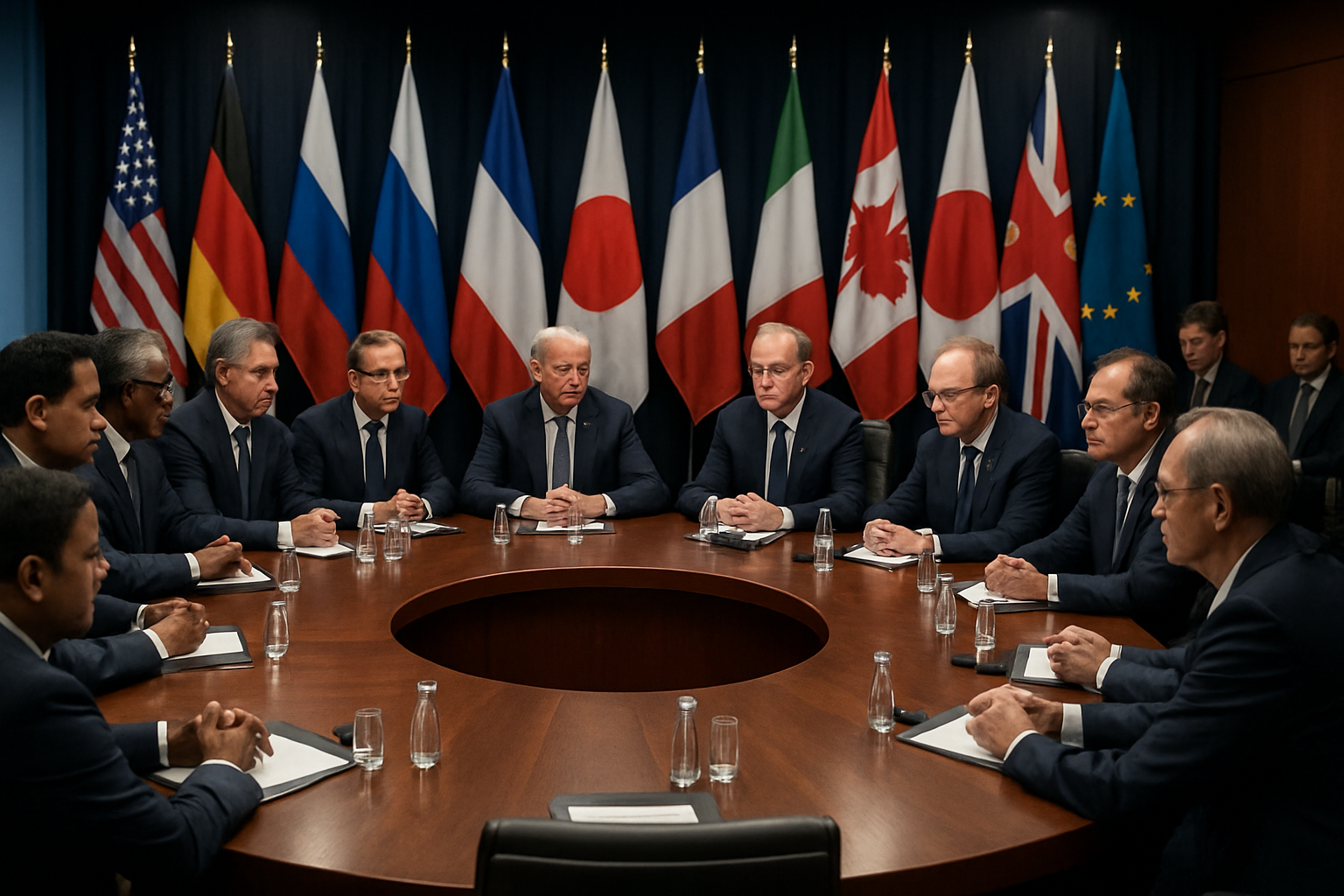
Political landscapes across Argentina, Austria, Greece, and Turkey witnessed dramatic developments in February 2026, as governments grappled with coalition pressures, strategic reshuffles, and mounting public tensions that signal broader shifts in global democratic governance.
Argentina: Milei's Electoral Mathematics and Labor Confrontation
Argentine politics entered a new phase of strategic calculation as journalist Marcelo Longobardi declared President Javier Milei has "reelection almost assured" for 2027, citing a weakened opposition unable to compete with La Libertad Avanza's growing influence. Speaking to María O'Donnell on Cenital streaming platform, Longobardi identified key factors supporting this assessment: a fractured opposition, favorable global political climate marked by popular anger, and sustained domestic approval despite economic challenges.
Longobardi's analysis highlighted what he termed "a process of radicalization" in Milei's approach, noting that while intensity may fluctuate, "radicalization always tends to intensify, what changes is its speed." This observation comes as Argentina faces significant labor unrest in Santa Fe province, where police protests have created growing political tensions between provincial and national authorities.
The confrontation in Santa Fe represents more than localized labor disputes – it reflects broader challenges to Milei's economic restructuring agenda. Canal E's analysis of the crisis revealed underlying political dynamics involving the federal government's relationship with provincial administrations, suggesting that local conflicts may serve as proxies for larger ideological battles about Argentina's economic direction.
Austria: Coalition Fragility and Political Uncertainty
Austrian politics faced unprecedented tensions as political expert Kathrin Stainer-Hämmerle warned of growing "discord" within the ruling coalition during a ZiB2 interview. The crisis centers on whether party leader Wöginger might "blow up the coalition," reflecting deeper structural problems within the current government arrangement.
Stainer-Hämmerle characterized the situation as "anything but pleasant" for the ÖVP (Austrian People's Party), regardless of ultimate outcomes. Her assessment points to rising tensions between coalition partners that could fundamentally reshape Austrian political dynamics ahead of future electoral cycles.
The political uncertainty in Austria parallels broader European challenges, where traditional coalition arrangements face pressure from changing voter preferences and external economic pressures. The potential for governmental instability in one of Europe's most stable democracies signals broader questions about coalition governance effectiveness in contemporary political environments.
Turkey: Strategic Cabinet Reshuffle Amid Regional Diplomacy
Turkish President Recep Tayyip Erdoğan executed a dramatic midnight cabinet reshuffle hours before his scheduled meeting with Greek Prime Minister Kyriakos Mitsotakis, replacing both Interior and Justice Ministers in a move that caught political observers by surprise. The timing suggests strategic calculation designed to strengthen Erdoğan's negotiating position or address specific policy challenges before crucial bilateral discussions.
Greek media sources reported the reshuffle as a "mini-reorganization" affecting key domestic security and legal portfolios. The decision to announce personnel changes through late-night presidential decrees demonstrated Erdoğan's continued preference for dramatic political gestures that maintain domestic and international attention on his leadership.
This governmental reshuffling occurred within the context of Turkey's broader regional diplomatic strategy, including recent high-level engagements with Saudi Arabia on renewable energy cooperation and efforts to position Turkey as a mediator in regional conflicts. The ministerial changes may reflect preparation for enhanced domestic policy coordination supporting Turkey's ambitious international agenda.
Cross-Regional Political Patterns
These developments reveal several important patterns in contemporary democratic governance. First, the increasing importance of individual political leadership over institutional arrangements – whether Milei's personal brand in Argentina, Erdoğan's strategic timing in Turkey, or concerns about individual coalition figures in Austria.
Second, the growing intersection of domestic political calculations with international positioning becomes evident across all three cases. Argentina's labor tensions affect international investor confidence; Austria's coalition stability impacts European Union dynamics; Turkey's ministerial changes serve broader diplomatic strategies.
Third, traditional political formations face mounting pressure from both populist alternatives and changing citizen expectations. The weakness of Argentina's traditional opposition, Austria's coalition challenges, and Turkey's continued governmental centralization all reflect broader questions about established political structures' adaptability.
Regional Security and Economic Implications
The political developments carry significant economic and security implications beyond national borders. Argentina's projected political stability under Milei could influence broader Latin American approaches to economic liberalization and international cooperation, particularly given recent trade agreements with the United States.
Austrian coalition instability potentially affects European Union decision-making at a critical moment when the bloc faces challenges from migration, energy security, and defense coordination. Political uncertainty in Vienna could complicate EU responses to various regional and global challenges requiring coordinated action.
Turkey's ministerial changes, particularly in interior and justice portfolios, may signal policy adjustments affecting regional security cooperation, migration management, and judicial reform processes that impact both domestic governance and international relationships.
Democratic Resilience and Institutional Adaptation
These political developments test democratic institutions' capacity to manage competing pressures while maintaining governmental effectiveness. Argentina's experience demonstrates how electoral systems can provide stability even amid significant policy changes and social tensions.
Austria's situation illustrates challenges facing proportional representation systems where coalition negotiations must balance multiple party interests with effective governance. The current tensions suggest potential evolution toward new political arrangements or constitutional mechanisms for managing multi-party governance.
Turkey's approach reflects a different model where presidential systems enable rapid policy adjustments but raise questions about institutional checks and balances. The midnight reshuffle demonstrates both the advantages and concerns associated with concentrated executive authority.
Looking Forward: Implications for Global Political Trends
These regional political developments provide important insights for understanding broader global trends in democratic governance. The success or failure of various approaches to managing political transitions, coalition tensions, and policy implementation will influence how other democracies adapt to contemporary challenges.
Argentina's experience with radical economic restructuring under democratic auspices may serve as a template for other countries facing similar economic pressures. Austria's coalition management challenges reflect broader European questions about multi-party governance in an era of political fragmentation. Turkey's centralized approach illustrates alternative models of democratic leadership that prioritize executive efficiency over institutional distribution of power.
The intersection of domestic political dynamics with international cooperation requirements suggests that future democratic success will depend on balancing effective governance with institutional accountability – a challenge that extends far beyond the specific cases examined here to encompass fundamental questions about democracy's evolution in the 21st century.