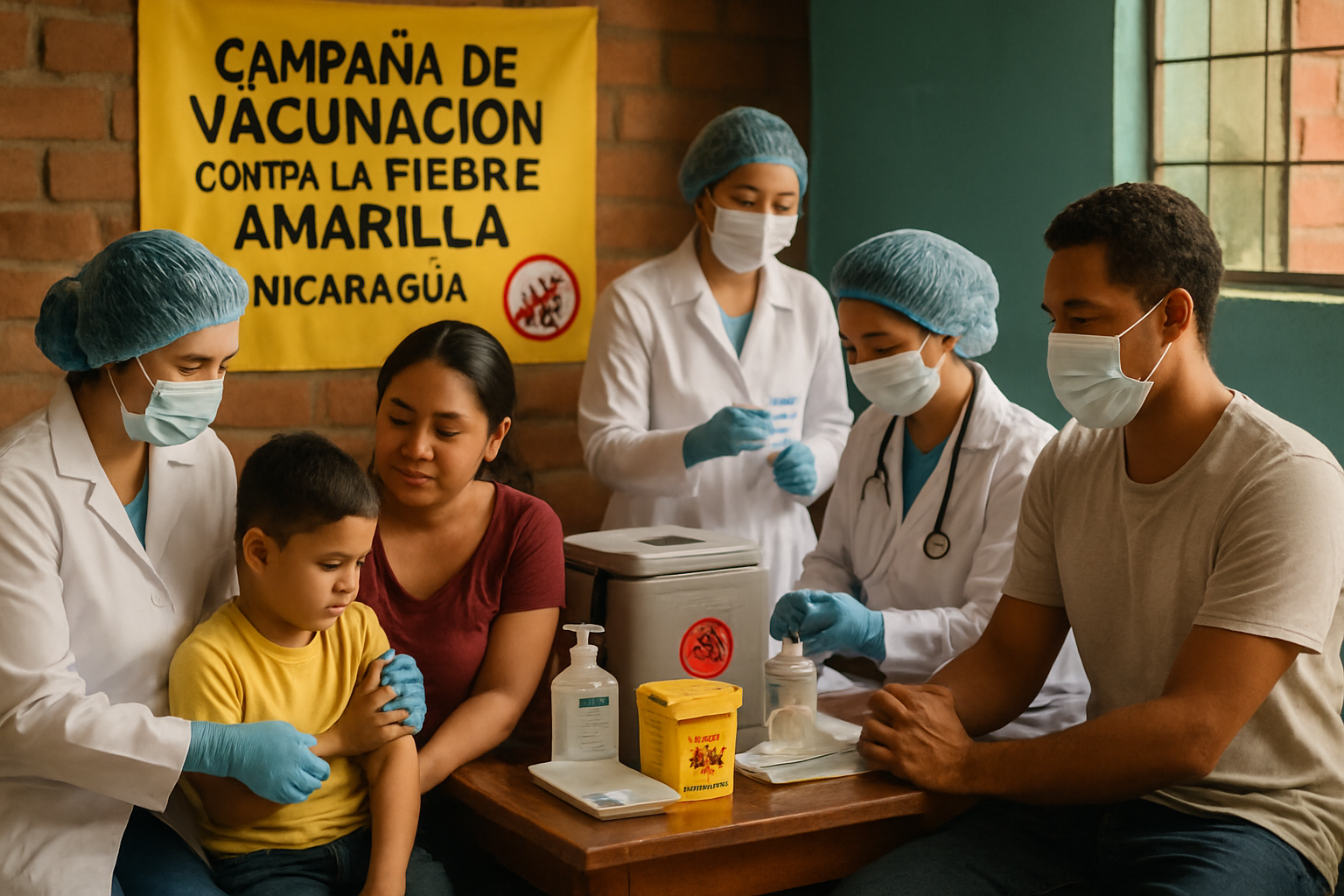
Public health authorities across multiple nations are intensifying disease prevention campaigns as Nicaragua advances yellow fever vaccination initiatives in Managua neighborhoods while Papua New Guinea confronts a significant tuberculosis outbreak affecting hundreds of residents in Gulf Province.
The coordinated international response reflects the global "Therapeutic Revolution of 2026," characterized by prevention-first healthcare strategies that demonstrate superior cost-effectiveness through decreased crisis interventions while achieving improved population health outcomes across diverse geographic and economic contexts.
Nicaragua Expands Yellow Fever Protection
Health teams in Managua have launched comprehensive yellow fever vaccination campaigns targeting vulnerable communities, with intensive outreach efforts focusing on the San Sebastián neighborhood. The initiative represents a critical component of Nicaragua's broader public health strategy, as children and residents receive immunizations designed to protect families from this serious mosquito-borne disease.
The vaccination drive occurs amid heightened awareness of yellow fever transmission risks in Central America, where Aedes aegypti mosquito populations have expanded due to changing climate patterns. Public health officials emphasize that vaccination remains the most effective prevention method against a disease that can cause severe illness and death in unprotected populations.
"These vaccination campaigns represent essential infrastructure for community health," explained a regional health coordinator familiar with Central American disease prevention efforts. "By targeting high-risk neighborhoods and ensuring comprehensive coverage, we can create protective barriers that benefit entire populations."
Papua New Guinea Confronts TB Challenge
Meanwhile, Papua New Guinea health authorities are addressing a substantial tuberculosis outbreak in Gulf Province, where 681 confirmed cases have been documented according to recent epidemiological surveillance. The outbreak highlights ongoing challenges in TB prevention and treatment across Pacific Island nations, where geographic isolation and resource constraints can complicate disease management efforts.
Tuberculosis remains a significant global health threat, with the World Health Organization identifying it as one of the top infectious disease killers worldwide. The PNG outbreak underscores the critical importance of sustained surveillance systems, early detection protocols, and comprehensive treatment programs that can interrupt transmission chains before community spread accelerates.
Health experts note that TB cases often surge in regions experiencing infrastructure challenges, overcrowding, or limited healthcare access. The Gulf Province situation demonstrates how effective disease surveillance can identify outbreaks early, enabling rapid response interventions that prevent larger community health crises.
Coordinated Summer Safety Measures
Nicaragua's Ministry of Interior has simultaneously activated comprehensive summer season safety protocols for 2026, coordinating migration services, border security, and emergency response capabilities. The initiative ensures that Nicaragua's Bomberos Unidos (firefighter services) maintain enhanced coverage during the peak summer travel period, when increased tourism and recreational activities require expanded public safety infrastructure.
The coordinated approach reflects evolving public health philosophy that recognizes disease prevention and community safety as interconnected components of comprehensive wellness strategies. By addressing multiple health and safety challenges simultaneously, authorities can maximize resource efficiency while providing holistic community protection.
Global Context of Prevention-First Healthcare
These developments occur within the broader context of international healthcare transformation, where countries increasingly prioritize proactive prevention over reactive treatment models. Economic analyses consistently show that prevention-focused strategies achieve substantial cost reductions through decreased crisis interventions while delivering superior population health outcomes.
The approach has demonstrated particular success in developing nations, where comprehensive prevention programs report enhanced community resilience, reduced emergency healthcare demands, and improved overall public health metrics. Countries implementing prevention-first strategies also show better preparedness for addressing climate-related health challenges and emerging disease threats.
International cooperation continues evolving through bilateral partnerships and regional collaboration networks, with peer-to-peer knowledge sharing increasingly supplementing traditional multilateral health organizations. This distributed cooperation model allows flexible, culturally responsive approaches while maintaining evidence-based medical standards.
Technology Integration and Human-Centered Care
Successful public health initiatives increasingly demonstrate the importance of balancing technological advancement with human-centered care approaches. Digital surveillance systems, real-time epidemiological monitoring, and AI-assisted outbreak prediction enhance traditional community engagement and culturally appropriate health delivery methods.
The goal involves technology enhancing rather than replacing clinical judgment and personal medical relationships, avoiding the "wellness paradox" where technological solutions create healthcare inequality instead of improving access for diverse populations. Effective programs combine scientific precision with authentic community engagement strategies that respect local cultures and traditions.
Climate Health Intersection
Current public health initiatives unfold during unprecedented environmental challenges, with January 2026 marking the 18th consecutive month of global temperatures exceeding 1.5°C above pre-industrial levels. Climate change fundamentally alters disease transmission patterns, extends vector-borne illness seasons, and creates new public health vulnerabilities requiring adaptive prevention strategies.
Vector-borne diseases like yellow fever and dengue are expanding their geographic ranges as warming temperatures create favorable breeding conditions for Aedes mosquitoes across broader regions. Public health systems must simultaneously address immediate disease threats while building long-term environmental resilience through prevention-first approaches.
Economic and Social Benefits
Prevention-focused healthcare strategies demonstrate measurable economic benefits extending beyond immediate medical cost savings. Countries investing in comprehensive prevention programs report improved workforce productivity, enhanced community stability, and increased international competitiveness through better population health outcomes.
The economic multiplier effects include reduced emergency care demands, decreased hospitalization rates, lower pharmaceutical costs, and enhanced quality of life that strengthens entire societies. These benefits justify substantial upfront investments in prevention infrastructure while delivering superior long-term returns compared to traditional treatment-focused healthcare spending.
Implementation Success Factors
Critical success factors for effective public health initiatives include sustained political commitment to healthcare investment, comprehensive professional training programs, authentic community engagement strategies, and continued international cooperation for knowledge sharing and resource optimization.
Healthcare systems must balance scientific excellence with equitable access, ensuring that medical advances translate into accessible, effective treatments for all populations regardless of geographic or economic constraints. Success requires integration of technological innovation with fundamental healthcare principles including compassionate care, community engagement, and recognition of healthcare as a universal human right.
The convergence of precision medicine advances, international cooperation models, and prevention-focused strategies provides a roadmap for building resilient healthcare systems capable of addressing 21st-century challenges through coordinated action that prioritizes both technological innovation and human-centered care delivery.