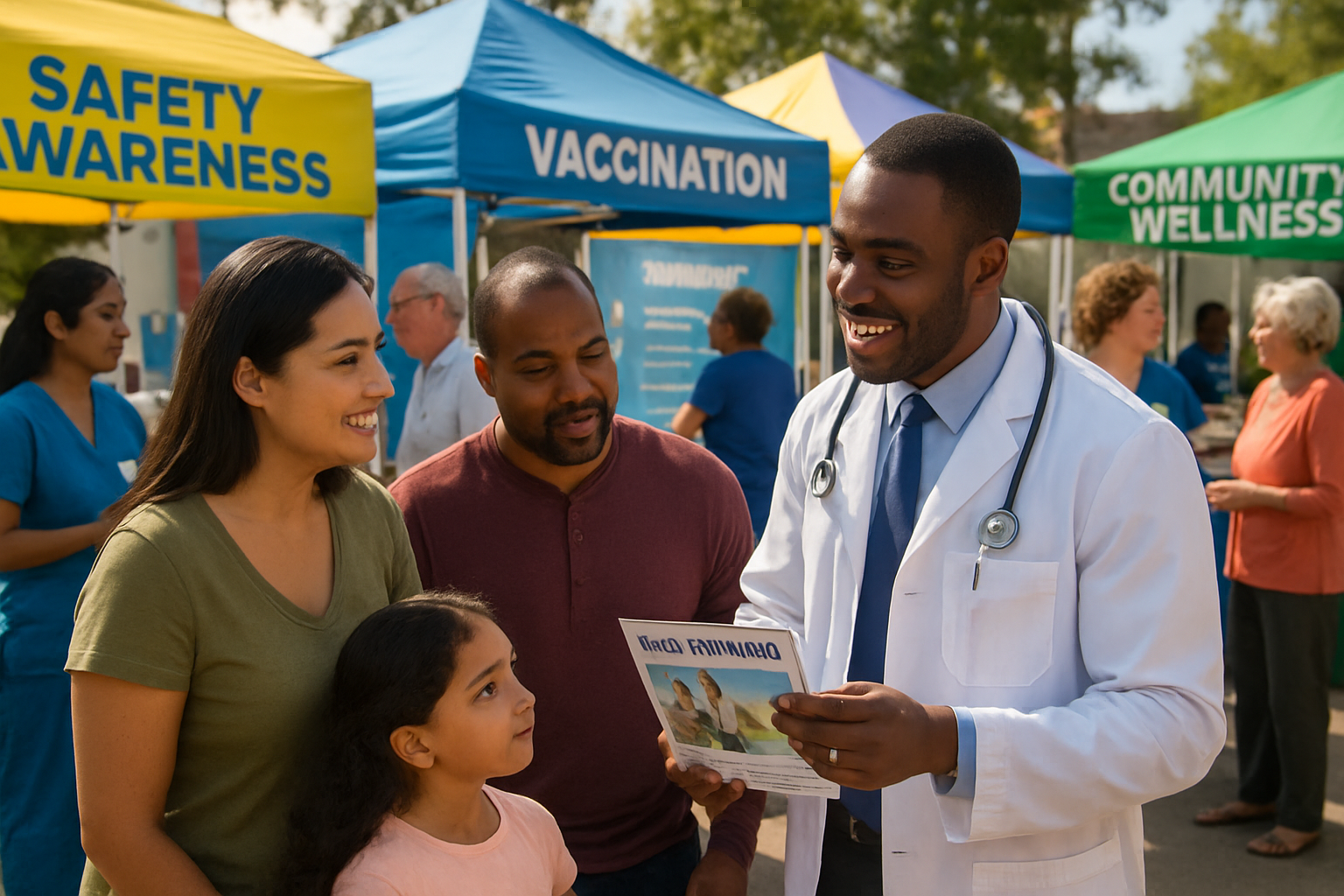
A groundbreaking wave of public health campaigns is sweeping across continents, marking a pivotal transformation in how communities address safety awareness and wellness promotion. From sexual harassment prevention in the Caribbean to digital literacy programs and environmental cleanup initiatives, international efforts demonstrate unprecedented coordination in addressing 21st-century health challenges.
Caribbean Innovation in Social Safety
Barbados has emerged as a regional leader in addressing social health challenges with the launch of the "That Ain't My Name" campaign, a comprehensive initiative targeting sexual harassment awareness across the Caribbean nation. Campaign lead Janae Greene emphasizes that sexual harassment has become so normalized in Barbadian culture that it fundamentally shapes how women perceive themselves, often leading to dangerous objectification patterns.
Launched on February 18th, the campaign represents a paradigm shift from individual-focused interventions to community-wide cultural transformation. Greene's approach recognizes that effective public health campaigns must address underlying social determinants rather than merely responding to symptoms of broader societal issues.
"Sexual harassment has become so normalized that it can shape how females see themselves, often leading to objectification. We need everyone to get on board to create lasting change."
— Janae Greene, Campaign Lead
Digital Safety Revolution for Youth
The Barbados Public Workers' Co-operative Credit Union has pioneered an innovative approach to digital safety with their "Think Before They Click" initiative, targeting young people aged 13 to 16. Community Relations Officer Stacy Mottley highlights the critical importance of this program given that nearly every young person now has access to digital devices.
The workshop, running from April 13th to 17th at the Credit Union's Belmont Road headquarters, focuses on helping young users understand responsible operation in online environments. This initiative aligns with global concerns about youth digital safety, particularly as research reveals that 96% of children aged 10-15 use social media platforms, with 70% experiencing harmful content exposure and over 50% facing cyberbullying.
The program represents a prevention-first approach that experts identify as characteristic of the "Therapeutic Revolution of 2026" - a global shift from crisis-response to proactive intervention strategies that demonstrate superior cost-effectiveness and community outcomes.
Community-Driven Environmental Health
Ireland's County Donegal has launched an ambitious environmental health initiative through the "Big Donegal Clean Up 2026," demonstrating how environmental protection directly impacts community wellness. The county-wide campaign brings together community groups, schools, businesses, and voluntary organizations to tackle litter and protect local environments.
Cathaoirleach Paul Canning emphasizes the vital role communities play in maintaining clean, safe, and welcoming environments for both residents and visitors. The initiative, organized throughout April 2026, reflects growing recognition that environmental health and public safety are interconnected challenges requiring coordinated community responses.
The campaign builds on successful Tidy Towns groups and community organizations, demonstrating collective impact through local action. Research indicates that clean, well-maintained environments contribute significantly to mental health outcomes, community pride, and overall quality of life indicators.
Preventive Healthcare Excellence
Ireland's healthcare sector has embraced World Health Day 2026 with innovative approaches to routine health maintenance. Specsavers locations in Letterkenny and Donegal Town are leading comprehensive eye and hearing examination campaigns that extend far beyond basic vision and hearing tests.
These accessible health checks serve as early warning systems for overall health and wellbeing, utilizing advanced technologies like Optical Coherence Tomography (OCT) scans and high-resolution digital retinal photography. The examinations can detect cardiovascular disease, diabetes complications, neurological conditions, and other systemic health issues through comprehensive eye and ear assessments.

The Therapeutic Revolution of 2026
These campaigns emerge during what health experts term the "Therapeutic Revolution of 2026" - a fundamental global shift from crisis-response to prevention-first healthcare approaches. Countries implementing comprehensive prevention programs report superior cost-effectiveness through decreased crisis interventions, improved community resilience, and enhanced population health outcomes.
Montana's mobile crisis teams provide a compelling example, achieving an 80% reduction in police involvement in mental health calls through proactive community intervention. Finland's educational reforms balance academic achievement with psychological wellbeing, preventing depression patterns that often develop from school-related stress.
The economic implications are substantial: prevention-focused strategies offer measurable cost reductions while delivering superior population health results. Initial prevention investments consistently justify themselves through long-term healthcare savings, enhanced community stability, and improved workforce productivity.
International Cooperation Models
Despite funding challenges facing traditional multilateral health organizations like the WHO, innovative bilateral partnerships and regional collaboration networks continue driving public health innovation. Countries are developing peer-to-peer knowledge sharing systems that enable flexible, culturally responsive approaches while maintaining evidence-based standards.
The success of campaigns across Barbados and Ireland demonstrates how smaller nations can become healthcare innovators, developing regional expertise that benefits neighboring countries. This distributed cooperation model represents a potential future for international health coordination, moving beyond centralized approaches toward collaborative, culturally adapted solutions.
Cultural Adaptation Success Factors
Evidence consistently shows that interventions integrating local wisdom and cultural values with modern public health science achieve superior outcomes compared to standardized Western frameworks. Successful campaigns emphasize authentic community connections over performance metrics, sustainable wellness approaches that accommodate human imperfection, and cultural wisdom integration with contemporary health insights.
Technology and Human-Centered Care
The most successful 2026 health initiatives demonstrate sophisticated balance between advanced technology and human-centered approaches. Digital safety education programs avoid what experts term the "wellness paradox" - where technological solutions create healthcare inequality rather than improving access and outcomes across diverse populations.
Specsavers' use of advanced diagnostic technology exemplifies this approach: sophisticated medical equipment enhances rather than replaces clinical judgment and personal healthcare relationships. The goal remains ensuring that medical advances benefit all populations regardless of geographic or economic constraints.
Climate and Environmental Health Intersection
Public health campaigns in 2026 occur during unprecedented environmental challenges, with January 2026 marking the 18th consecutive month of global temperatures exceeding 1.5°C above pre-industrial levels. Environmental cleanup initiatives like Donegal's campaign recognize the direct connection between environmental health and community wellbeing.
Prevention-first approaches prove particularly valuable for managing climate-related health challenges through proactive intervention versus reactive crisis management. Healthcare systems implementing these strategies position themselves better for addressing evolving disease patterns, heat-related illnesses, and environmental stressors that characterize our changing climate.
Economic and Social Transformation
Public health campaigns generate significant economic multiplier effects extending far beyond traditional healthcare considerations. Community environmental programs attract sustainable tourism, digital safety education enhances workforce productivity, and comprehensive health screening reduces long-term medical costs while improving quality of life.
Countries investing in comprehensive prevention programs report enhanced community resilience, reduced social service demands, and improved international competitiveness. The campaigns create self-reinforcing cycles where healthier communities attract investment, support innovation, and maintain social stability that enables further wellness initiatives.
"Kidney Health for All – Caring for People, Protecting the Planet emphasizes interconnected human health environmental sustainability."
— Caribbean Public Health Agency (CARPHA)
Implementation Success Strategies
The most effective public health campaigns share common characteristics: sustained political commitment to health investment, comprehensive professional training in prevention approaches, robust community engagement ensuring cultural appropriateness, and continued international cooperation for knowledge sharing and resource optimization.
Success requires balance between scientific rigor and cultural sensitivity, technological innovation and human connections, individual treatment and community-wide prevention strategies. Diversity of approaches across different countries provides complementary models that strengthen global public health ecosystems through shared learning and adaptation.
Future Implications and Global Scaling
April 2026 represents a critical juncture in global public health evolution. The convergence of evidence-based prevention strategies, cultural adaptation insights, technological innovation, and international cooperation provides unprecedented opportunities for comprehensive wellness promotion.
The success of current campaigns will determine whether the Therapeutic Revolution becomes a sustainable worldwide transformation or fragments under resource constraints and institutional challenges. The stakes extend beyond healthcare efficiency to fundamental questions about how societies organize around human flourishing versus merely treating illness.
Public health experts emphasize that mental and physical wellness must be treated as fundamental community infrastructure comparable to transportation, education, and economic development. The campaigns documented across Barbados, Ireland, and other pioneering nations provide practical templates for addressing 21st-century health challenges through coordinated international action that prioritizes human dignity and community wellbeing.
Conclusion: A New Era of Prevention
The global public health campaigns of 2026 mark a watershed moment in how communities approach safety, wellness, and prevention. From addressing social harassment to promoting digital literacy, environmental protection, and comprehensive health screening, these initiatives demonstrate that effective public health requires community engagement, international cooperation, and integration of technological innovation with human-centered care approaches.
As we move forward, the success of these prevention-first strategies offers hope that coordinated international action can achieve transformative improvements in population health while building resilient communities capable of addressing complex 21st-century challenges. The revolution in public health awareness represents not just better healthcare, but a fundamental reimagining of how societies can organize around human flourishing and community wellbeing.