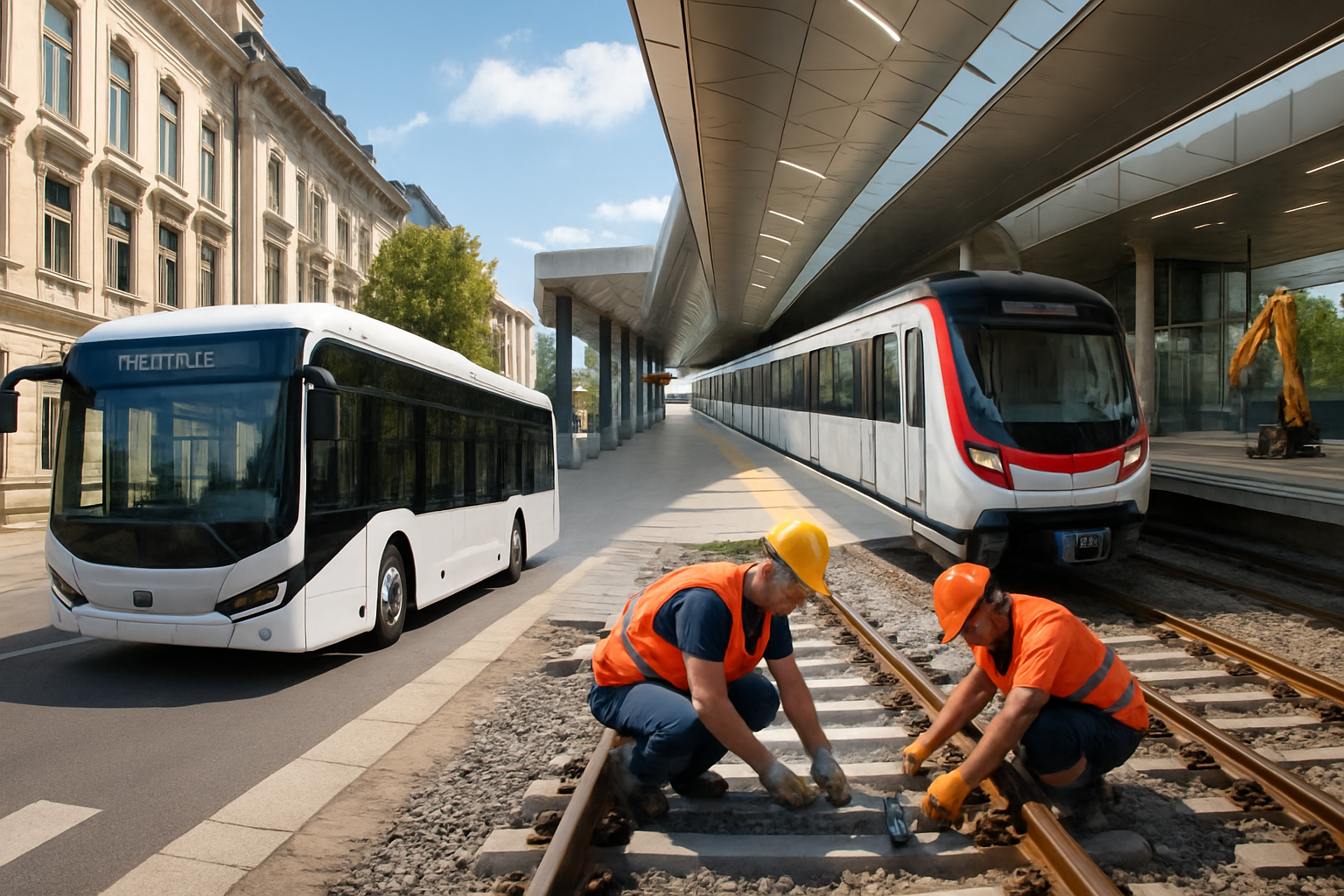
A new wave of public transportation improvements is sweeping across the globe, with major developments spanning from Algeria's highway infrastructure to Denmark's innovative fare experiments and Vietnam's ambitious metro expansion plans, representing part of an unprecedented $570+ billion global infrastructure surge.
Algeria Connects Regions with New Transportation Infrastructure
Algeria marked a significant milestone in its national infrastructure development with the inauguration of a new segment of the dual carriageway connecting Bejaia to the East-West Highway. The project, overseen by Minister of Public Works and Infrastructure Abdelkader Jelloui, alongside State Minister of Energy and Mines Mohamed Arkab, represents a crucial link in the country's expanding transportation network.
The ceremony, attended by State Secretary for Mining Karima Bakir Tafar, the Wali of Bejaia province, and numerous local elected officials, demonstrates Algeria's commitment to improving regional connectivity. This infrastructure development aligns with the nation's broader strategy to modernize its transportation systems and support economic growth through enhanced mobility.
"This new segment represents more than just a road – it's a bridge connecting communities and opening new economic opportunities."
— Abdelkader Jelloui, Algeria's Minister of Public Works and Infrastructure
Denmark Tests Innovative Approach to Public Transit Accessibility
In Denmark's second-largest city, Aarhus is pioneering a groundbreaking experiment in public transportation accessibility by testing whether cheaper bus tickets can attract more passengers. This initiative reflects growing recognition that fare structures play a crucial role in public transit adoption and urban mobility patterns.
The Danish approach represents a sophisticated understanding of the relationship between transportation pricing and usage patterns. By making public transportation more affordable, cities can potentially reduce car dependency while improving air quality and urban livability. This experiment could provide valuable data for transit authorities worldwide grappling with similar challenges of encouraging public transport adoption.
Vietnam's Revolutionary Airport Metro Connection
Vietnam is making headlines with Ho Chi Minh City's ambitious plan for a 30-minute nonstop metro connection between Tan Son Nhat and Long Thanh airports. This revolutionary project would cover approximately 60 kilometers at high speed, dramatically transforming airport connectivity in one of Southeast Asia's most dynamic cities.
The express metro service represents a sophisticated solution to urban mobility challenges, particularly addressing the critical need for efficient airport connections in major metropolitan areas. Such high-speed rail links have proven successful in cities like Tokyo, Hong Kong, and London, where airport express services have become essential components of urban transportation networks.
City leadership emphasized that the project study reflects Ho Chi Minh City's commitment to becoming a regional transportation hub, supporting both tourism and business travel. The 30-minute journey time would represent a dramatic improvement over current transportation options, potentially revolutionizing how travelers access Vietnam's economic center.

Global Infrastructure Renaissance Continues
These developments occur within the context of an unprecedented global infrastructure investment wave exceeding $570 billion, representing coordinated international recognition that transportation networks serve as strategic foundations for economic competitiveness, climate adaptation, and international cooperation in the 21st century.
From memory of previous infrastructure developments, this surge includes major projects like Estonia's Rail Baltica initiative, Brussels' new electric bus fleet, and comprehensive modernization efforts across European and Asian transportation networks. The pattern demonstrates a fundamental shift from viewing infrastructure as basic physical assets to understanding them as sophisticated systems supporting sustainable development, regional integration, and climate resilience.
Technology Integration and Climate Adaptation
Modern transportation infrastructure projects increasingly incorporate advanced technology from the design phase, including real-time monitoring systems, predictive maintenance capabilities, digital payment platforms, and environmental optimization features. These systems enable more efficient operations while providing enhanced passenger experiences and reducing environmental impact.
Climate adaptation has evolved from an optional consideration to a fundamental requirement for contemporary infrastructure projects. Enhanced drainage systems, weather-resistant materials, and backup power infrastructure address future rather than historical climate conditions, reflecting lessons learned from extreme weather events that have disrupted transportation networks across Europe and other regions.
"We're not just building for today's needs, but designing systems that can adapt and thrive in a changing climate while serving growing populations."
— International Infrastructure Development Expert
Economic and Social Impact
The economic implications of these transportation improvements extend far beyond construction employment. Reduced logistics costs, enhanced market access, and improved business productivity create substantial multiplier effects throughout regional economies. These projects support broader regional integration initiatives, including the African Continental Free Trade Area (AfCFTA) objectives and European Union connectivity goals.
Social equity considerations increasingly influence transportation planning, with projects like Denmark's fare experiments directly addressing accessibility concerns. Affordable public transportation serves as a crucial component of social mobility, enabling broader population segments to access employment, education, and essential services.
Implementation Challenges and Solutions
Contemporary infrastructure development faces significant challenges, including material cost inflation, skilled labor shortages, environmental compliance requirements, and the complexity of coordinating multiple stakeholders. The global semiconductor shortage has particularly affected smart infrastructure components, leading to innovative alternative approaches including more efficient algorithms and distributed processing systems.
Success factors consistently include comprehensive strategic planning, transparent governance, extensive community consultation, and adaptive management approaches that can respond to changing conditions while maintaining core project objectives. International cooperation provides essential technical assistance, knowledge sharing, and coordinated procurement strategies addressing global supply chain challenges.
Regional Integration and Connectivity
These transportation improvements serve broader regional integration objectives. Algeria's highway developments support North African economic integration and trade facilitation. Denmark's public transport innovations contribute to European sustainable mobility goals. Vietnam's airport metro connection enhances Southeast Asian connectivity and tourism infrastructure.
The emphasis on regional connectivity reflects recognition that modern economies require seamless transportation networks that transcend national boundaries. Projects increasingly incorporate cross-border coordination and standardized technical systems enabling interoperability and efficiency gains across wider geographic areas.
Future Implications and Global Trends
The March 2026 developments establish important precedents for global transportation policy in the decades ahead. The convergence of technological advancement, environmental awareness, and international cooperation is creating new development models that prioritize sustainability alongside economic growth.
Emerging trends include greater emphasis on multimodal integration, where different transportation modes connect seamlessly to provide comprehensive mobility solutions. Electric vehicle adoption, smart traffic management systems, and renewable energy integration are becoming standard features rather than premium additions.
These infrastructure decisions represent a choice between transformative adaptation and reactive crisis management. Success in building climate-resilient, technologically sophisticated transportation networks will determine whether societies develop the adaptive capacity needed to thrive in an interconnected, climate-challenged world.
Looking Ahead
The global infrastructure renaissance of 2026 may be remembered as the moment when humanity began systematically building the physical foundations for sustainable prosperity in an uncertain but interconnected future. Projects across Algeria, Denmark, Vietnam, and dozens of other nations demonstrate that with sophisticated project management, international cooperation, and local expertise, transformative infrastructure development remains achievable even amid complex global challenges.
As these projects progress from planning to implementation, they will provide valuable lessons for transportation authorities worldwide, influencing infrastructure strategies for generations to come. The success of current initiatives will largely determine whether the 2020s become known as the decade when global society successfully adapted its transportation systems for the challenges and opportunities of the 21st century.