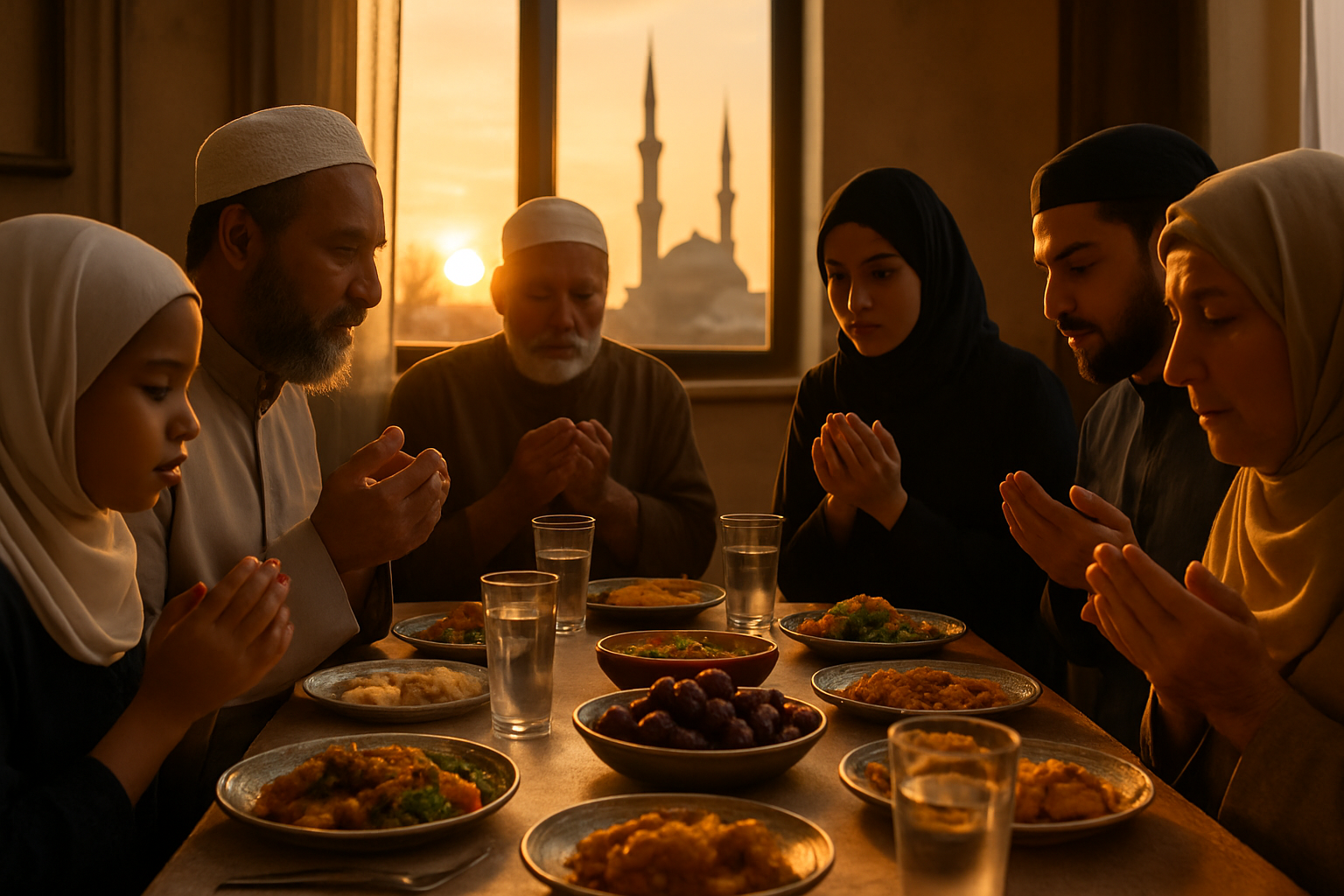
Nearly 2 billion Muslims worldwide began observing Ramadan 1447 AH on February 19, 2026, following crescent moon sighting confirmations in a remarkable display of global religious coordination spanning six continents and demonstrating the most sophisticated international religious cooperation in Islamic history.
The holy month commenced with varying start dates across different regions - with most Islamic nations beginning Wednesday, February 18, while Egypt, Jordan, and some other countries began Thursday, February 19, reflecting traditional differences in lunar calendar determination and geographical moon visibility patterns. This natural variation maintains the spiritual unity of the global Muslim ummah while respecting traditional astronomical practices.
Unprecedented Global Coordination and Support
Saudi Arabia led an extraordinary international diplomatic initiative, distributing 2.2 million Quran copies and translations to 120 countries, 1,000 tons of dates (a 300-ton increase from previous years), and deploying 91 imams to 49 countries. This represents the largest religious diplomacy program in modern Islamic history, supporting Muslim communities across six continents.
The Kingdom's Supreme Court confirmed crescent moon sightings at the Hawtat Sudair and Tumair observatories in Al-Majma'ah Governorate, utilizing AI-enhanced detection technology while maintaining traditional visual confirmation methods. This synthesis of modern technology with time-honored religious practices exemplifies the evolution of Islamic observance in the 21st century.
"This represents the most comprehensive international religious coordination in Islamic history, serving nearly 2 billion Muslims through sophisticated government accommodations, religious institutional leadership, and community organization."
— Islamic Community Leaders, Multi-National Statement
Educational and Workplace Accommodations
Educational institutions across Muslim-majority countries implemented modified schedules to accommodate fasting demands, with classes typically starting at 9-10 AM instead of earlier hours. Finland continued its fourth annual "fasting parks" initiative, providing dedicated quiet spaces for up to 100 Muslim students per school during lunch periods, representing a sophisticated model of secular-religious accommodation.
Pakistan modified federal working hours to 9 AM-3 PM Monday-Thursday and 9 AM-12:30 PM on Fridays. Egypt extended business hours until 2:00 AM to recognize evening social activity patterns post-iftar. Kuwait implemented dual shifts for government services, with identity centers operating both morning and evening schedules.
Health Guidance and Safety Measures
Health authorities across multiple countries issued comprehensive guidance for safe fasting practices. Saudi Arabia's Ministry of Health emphasized the importance of receiving meningococcal vaccines at least 10 days before performing Umrah during Ramadan, given increased crowding at the Grand Mosque. The ministry conducted over 17,000 health and commercial inspections in Madinah to ensure food safety standards.
Religious scholars provided detailed guidance on practices that maintain or invalidate the fast, emphasizing that Ramadan observance extends beyond physical abstention to include spiritual discipline, charitable giving, and community solidarity. Burkina Faso's religious leaders adapted their guidance to account for Sahel heat conditions exceeding 40°C, emphasizing hydration priorities and appropriate nutrition during iftar meals.
Cultural Traditions and Community Preparations
Traditional Ramadan preparations took on special significance across different cultures. In Sarajevo, Bosnia and Herzegovina, the traditional cannon firing from Žuta Tabija marked the beginning of the month, while the distinctive aroma of fresh somun bread filled the streets as bakeries prepared for increased demand during iftar meals.
Malaysia's National Mosque, with its 15,000 capacity, filled to capacity for the first Tarawih prayers despite rainfall, demonstrating the commitment of believers to communal worship. Penang hotels reported 60% occupancy as the region prepared for the unique convergence of Chinese New Year (February 17) with Ramadan, creating an unprecedented multicultural celebration period.
Humanitarian and Social Initiatives
The holy month sparked extensive humanitarian initiatives worldwide. Bosnia and Herzegovina's Islamic Community began distributing 6,000 food packages to socially vulnerable populations and students, supported by Turkey's General Directorate of Foundations. Pakistan's Social Club in Muscat launched a campaign supporting 100 low-income families with essential food items throughout the month.
Algeria mobilized 25,000 mosques nationwide in a comprehensive program addressing both material and spiritual aspects of Ramadan observance. Malaysia organized 1,898 Madani Rahmah Sales Programme sessions offering essential iftar and Hari Raya goods at below-market prices, benefiting over 12 million families.
Technology Integration and Modern Observance
The integration of technology with traditional spiritual practices enabled unprecedented global diaspora participation. Mobile applications for prayer times, Quranic recitation, and charitable giving platforms facilitated observance across different time zones and cultural contexts. This technology-tradition synthesis maintains the essential spiritual character of Ramadan while adapting to contemporary global circumstances.
Economic adaptations demonstrated the sophisticated understanding of Ramadan's impact on daily life in Muslim-majority societies. Kuwait experienced a "Ramadan rush" in livestock markets, with prices for Naeemi sheep expected to reach 170 dinars. Enhanced security measures were implemented across multiple countries, with three-layer protection for Friday and Tarawih congregations.
Interfaith Recognition and Global Solidarity
The month received widespread international recognition. Israeli Defense Forces published social media posts wishing Muslims a peaceful Ramadan, while UN Secretary-General António Guterres marked the beginning with an appeal for overcoming divisions and strengthening humanitarian aid efforts globally.
In Burkina Faso, the rare convergence of Ramadan with the Christian Lenten season affecting over 4.5 billion believers worldwide inspired calls for unity, forgiveness, and social cohesion during a period of national challenges, with both Muslims and Christians advocating for peace and national reconstruction.
Regional Variations and Unity
Despite the Wednesday-Thursday variations in start dates, the unified beginning across most Islamic nations reinforced global Muslim unity while respecting traditional practices and geographical differences in moon visibility. This demonstrates the sophisticated balance between maintaining religious authenticity and accommodating natural astronomical variations.
The Philippines' Bangsamoro region and other southern areas began their observance alongside other Southeast Asian nations, while Trinidad and Tobago and some Caribbean communities followed Thursday confirmations, reflecting the global reach of Islamic communities and their local astronomical conditions.
Challenges and Resilience
Some regions faced particular challenges during the holy month. Gaza Palestinians observed their first Ramadan since the October 2025 ceasefire amid ongoing restrictions, with Al-Aqsa Mosque limited to 10,000 worshippers and iftar distribution banned in mosque courtyards. Despite these challenges, the community demonstrated remarkable resilience in maintaining their spiritual observance.
In Iran, reports indicated some citizens engaged in fasting boycotts as political protest, representing a new form of religious civil disobedience where traditional observance becomes a vehicle for political expression, highlighting the complex intersection of religious practice and political resistance.
Economic and Social Impact
The holy month triggers significant economic and social adjustments worldwide. Altered consumption patterns, increased evening commercial activity, enhanced charitable giving, and modified transportation schedules affect communities globally. The Kuala Lumpur Ramadan bazaar in Stutong maintained affordable food prices through low rental rates, demonstrating thoughtful economic policy supporting community observance.
Ecuador reported that elite football players were adjusting their training routines to maintain performance while observing the fast, illustrating how professional athletes integrate religious obligations with demanding schedules in international sports.
Looking Forward
As Ramadan 2026 continues through March 19, concluding with Eid al-Fitr celebrations, the month serves as a powerful demonstration of how ancient spiritual traditions can maintain their essential character while adapting to contemporary global circumstances through international cooperation and technological integration.
The success of this year's coordinated preparations provides a template for future religious observances in an increasingly interconnected world, showing how governmental institutions, religious organizations, educational systems, and community groups can work together to facilitate meaningful spiritual practice while maintaining social and economic stability.
This remarkable global coordination demonstrates that nearly 2 billion Muslims can maintain unity in their spiritual objectives while celebrating the diversity of their cultural expressions, creating a model for international religious cooperation that serves both individual spiritual growth and collective solidarity across national and cultural boundaries.