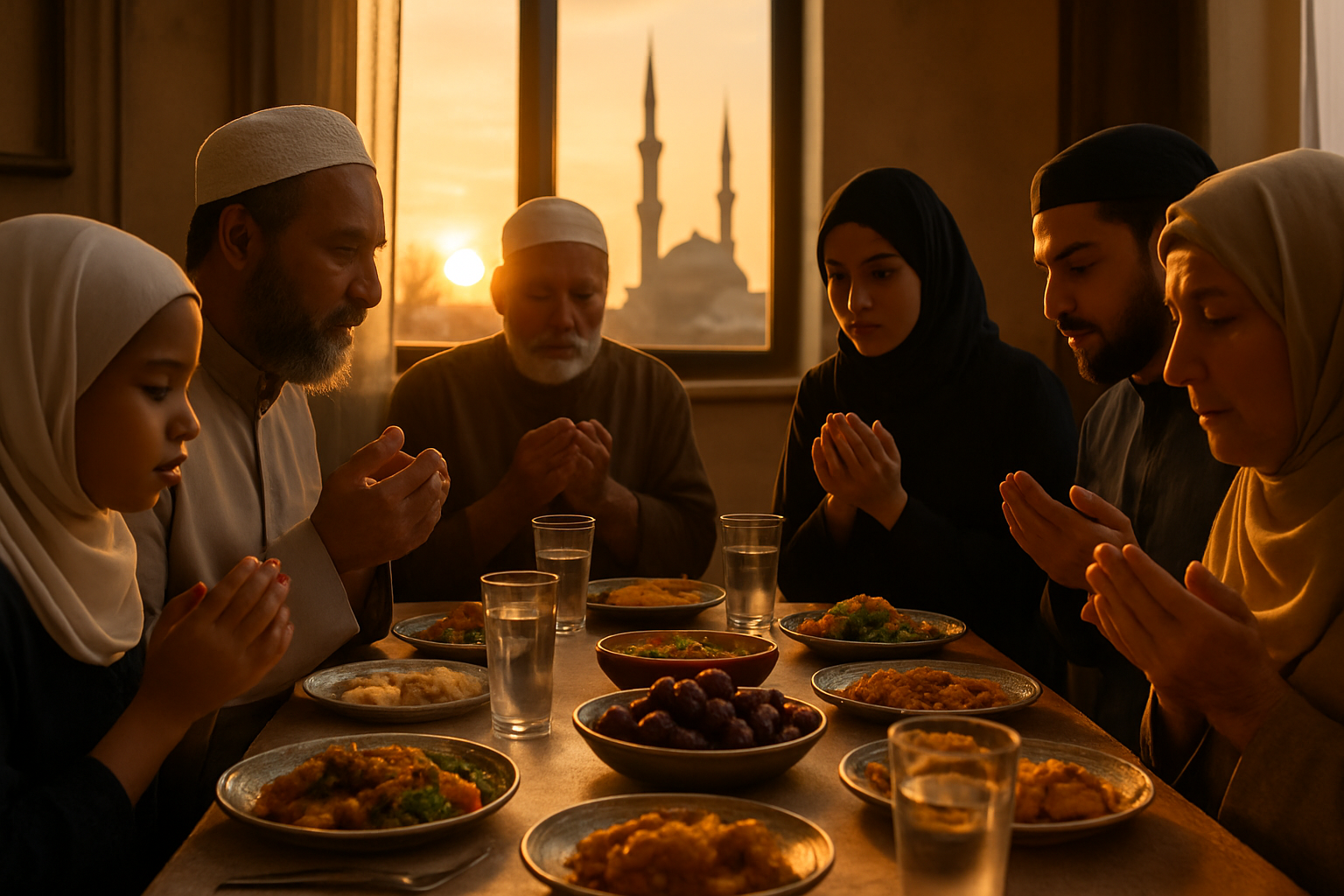
Muslims across the globe began observing Ramadan 1447 AH on February 19, 2026, marking the start of Islam's holiest month with unprecedented international coordination, while a notable minority in Iran sparked controversy by refusing to fast as an act of political protest against the Islamic Republic.
The sacred month commenced after successful crescent moon sightings were confirmed across multiple nations on Tuesday evening, February 18, with the vast majority of Islamic countries beginning their observance on Wednesday, February 19. The global coordination involved nearly 2 billion Muslims in what has become one of the most sophisticated international religious observances in modern history.
Global Coordination Reaches Historic Scale
Malaysia's Keeper of Rulers' Seal Tan Sri Syed Danial Syed Ahmad announced the start by order of King Sultan Ibrahim, while Kazakhstan's Spiritual Administration confirmed February 19 with first tarawih prayers beginning Tuesday evening. Jordan's Astronomical Society confirmed that 90% of the Islamic world would begin Thursday, despite some regions experiencing unsuccessful Tuesday crescent sightings.
The international coordination builds upon Saudi Arabia's unprecedented religious diplomacy program, which distributed 2.2 million Quran copies and translations to 120 countries, along with 1,000 tons of dates and deployed 91 imams to 49 countries. This massive undertaking represents the largest coordinated religious outreach in Islamic history.
"This is a moment of unity for the global Muslim ummah," observed Prime Minister Anwar Ibrahim of Malaysia, emphasizing the need for deeper spiritual understanding beyond the mechanics of fasting.
First Tarawih Prayers Draw Massive Crowds
In Malaysia, thousands of Muslims filled mosques and surau nationwide to perform the first tarawih prayers, marking the beginning of the holy month with extraordinary attendance. The National Mosque in Kuala Lumpur, which can accommodate up to 15,000 worshippers, was filled with both local Muslims and foreigners as early as the Isyak prayer.
Across Selangor, rain did not dampen the public's spirit to perform their religious obligations. Similar scenes played out from Burkina Faso to Bulgaria, where Muslim communities decorated mosques, homes, and public spaces with traditional ornaments and modern lighting displays.
In London's famous Covent Garden district, festivities and traditional drum rhythms welcomed the sacred month, reflecting the global nature of Ramadan observance in diaspora communities.
Iran's Controversial Fasting Boycotts
However, the unified global observance faced a notable challenge in Iran, where some citizens openly declared their intention not to fast during Ramadan as a form of political protest against the Islamic Republic's governance. This unprecedented act of religious civil disobedience comes after the Iranian government's violent crackdown on protesters has resulted in over 42,000 arrests since 2022, with thousands killed during demonstrations.
The protest fasting boycott represents a new form of resistance in Iran, where religious observance has become intertwined with political dissent. Some Iranians view refusing to participate in state-mandated religious practices as a way to express opposition to a government they perceive as having lost legitimacy.
German media reports indicate that this form of protest, while limited, reflects broader tensions between Iran's population and its religious leadership. The boycott highlights how religious practices can become vehicles for political expression in authoritarian contexts.
Traditional Moon Sighting Preserved
Despite technological advances, the traditional method of lunar observation remained central to determining Ramadan's start. New Zealand's Radio New Zealand explored the centuries-old practice of moon sighting, emphasizing its deep spiritual significance for Muslim communities worldwide.
The practice connects contemporary Muslims to their historical roots while incorporating modern astronomical support. Saudi Arabia's Supreme Court confirmed sightings at Hawtat Sudair and Tumair observatories in Al-Majma'ah Governorate, using AI-enhanced detection while maintaining traditional visual confirmation by authorized religious committees.
Educational and Workplace Adaptations
Educational institutions across Muslim-majority countries implemented modified schedules to accommodate fasting demands, with classes beginning at 9-10 AM rather than earlier hours. Egypt extended business hours for shops, restaurants, and cafes to stay open until 2:00 AM, recognizing altered consumption patterns and evening social activity increases following iftar meals.
Finland continued its fourth annual "fasting parks" initiative, providing dedicated quiet spaces for up to 100 Muslim students per school during lunch periods. This sophisticated secular-religious accommodation model demonstrates how diverse societies can support religious observance while maintaining educational standards.
Humanitarian Concerns in Conflict Zones
The beginning of Ramadan highlighted ongoing humanitarian challenges, particularly in Gaza where Palestinians observed their first Ramadan since the October 2025 ceasefire. Despite systematic violations of the ceasefire agreement resulting in 570+ Palestinian deaths during the supposed peace period, community leaders worked to maintain spiritual observance amid restrictions.
Al-Aqsa Mosque was limited to 10,000 worshippers, with Israeli forces banning iftar meal distribution in mosque courtyards. The Gaza Civil Defense completely shut down due to fuel shortages, hampering emergency response capabilities during religious gatherings.
Technology Meets Tradition
Modern technology played an unprecedented role in facilitating global Ramadan observance. Mobile applications provided prayer times, Quranic recitation, and charitable giving platforms, enabling diaspora communities worldwide to participate fully across different time zones.
This synthesis of traditional spiritual practices with contemporary technological capabilities represents an evolution in how ancient religious traditions adapt to modern global circumstances while maintaining their essential spiritual character.
Regional Variations and Unity
While most Islamic nations began Wednesday, some regions including Egypt and Jordan started Thursday due to unsuccessful local moon sightings. These variations reflect traditional differences in lunar calendar determination and geographical moon visibility, while maintaining underlying spiritual unity.
The month emphasizes spiritual purification, increased charitable giving (zakat), enhanced community bonds through tarawih prayers, and altered consumption patterns that create evening economic activity and strengthen social solidarity.
International Recognition and Support
Several non-Muslim countries and leaders extended Ramadan greetings, with Albanian Prime Minister Edi Rama congratulating Muslims and wishing "easy and accepted fasting." Israeli Defense Forces published social media posts wishing Muslims a peaceful Ramadan, demonstrating interfaith recognition during tense regional circumstances.
The UN Secretary-General António Guterres marked the beginning with an appeal for overcoming divisions and strengthening humanitarian aid, particularly highlighting conflicts in Afghanistan, Yemen, Gaza, and Sudan as opportunities for Ramadan solidarity and compassion.
Economic and Social Impact
The global observance of Ramadan triggers significant economic implications through altered consumption patterns, increased charitable giving, and enhanced evening commercial activity. Kuwait experienced livestock price increases during the "Ramadan rush," demonstrating the month's substantial economic impact across Muslim-majority nations.
Cultural traditions were highlighted in Saudi Arabia's Maysan Governorate, where elderly residents remembered 1930s naked-eye moon sighting methods, connecting contemporary observance to historical practices passed down through generations.
Looking Ahead
Ramadan 2026 represents a sophisticated demonstration of international religious coordination maintaining ancient traditions through contemporary global cooperation. The month's observance will continue through March 19, 2026, concluding with Eid al-Fitr celebrations.
Despite challenges including political protests in Iran and humanitarian restrictions in conflict zones, the global Muslim community's unity in observing this sacred month demonstrates the enduring power of shared spiritual practices to transcend political and geographical boundaries.
As Prime Minister Anwar Ibrahim noted, the emphasis should be on achieving deeper spiritual understanding and community solidarity, making Ramadan 2026 a testament to both religious devotion and human resilience in an interconnected world.