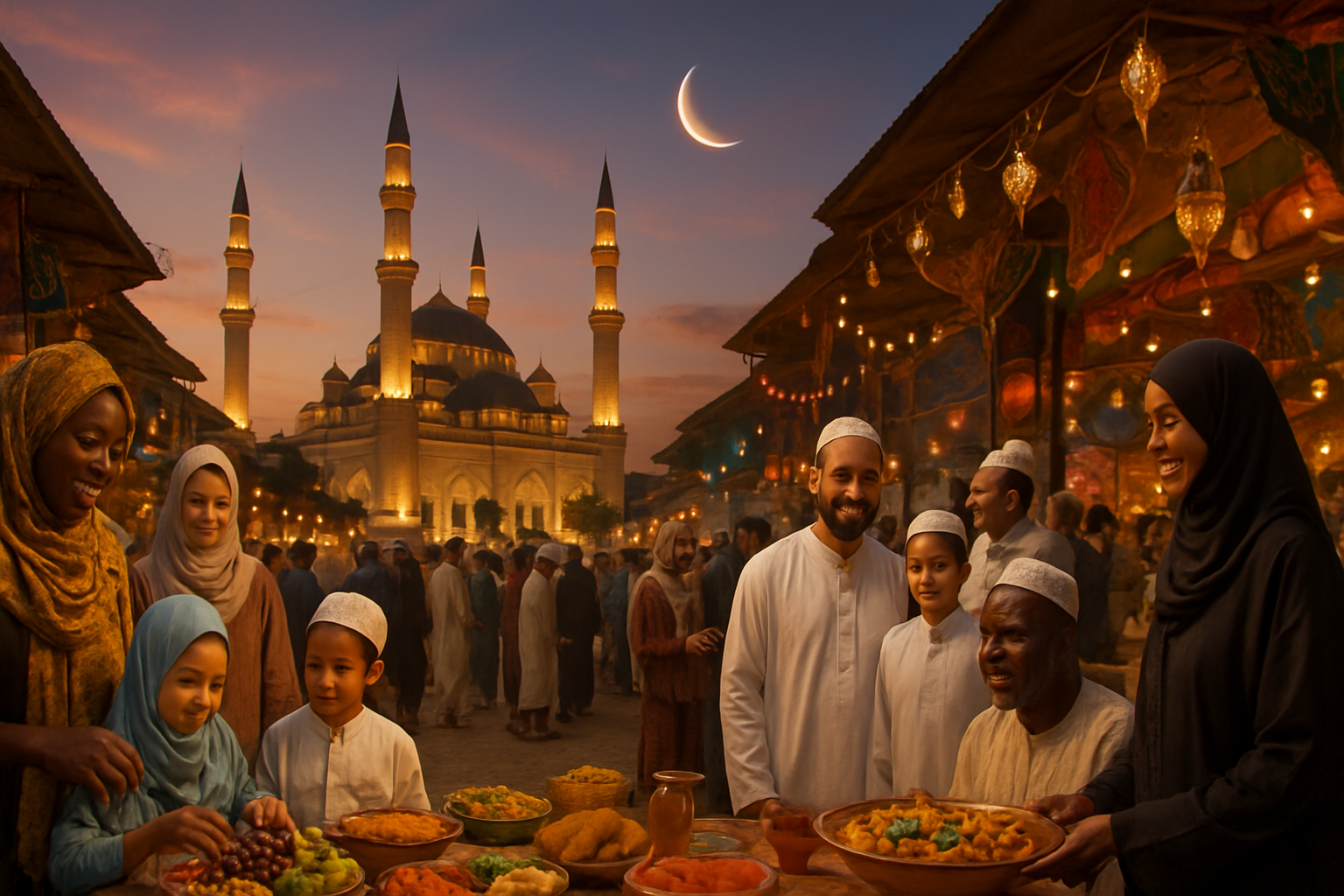
Muslim communities across Egypt, Ghana, Jordan, Nigeria, Palestine, and Sierra Leone have begun observing the holy month of Ramadan 2026, marking a period of spiritual renewal that transcends borders despite facing unique regional challenges and opportunities.
From the bustling markets of Cairo to the resilient communities of Gaza, from Nigeria's security preparations to Sierra Leone's corporate Ramadan initiatives, the global observance of Ramadan 1447 AH demonstrates both the universal nature of Islamic practice and the diverse ways communities adapt their faith to local circumstances.
International Coordination and Diplomatic Recognition
The 2026 Ramadan observance represents the most sophisticated international coordination in modern Islamic history. Building on Saudi Arabia's unprecedented religious diplomacy program, 2.2 million Quran copies and translations have been distributed to 120 countries, accompanied by 1,000 tons of dates and 91 imams deployed to 49 nations to support global Muslim communities.
Ghana's President John Dramani Mahama exemplified the spirit of interfaith recognition, extending warm greetings to Muslims and describing Ramadan as "a special time; a month of reflection, renewal, and coming together as one community." Such diplomatic gestures underscore how Ramadan's values of compassion and community solidarity resonate far beyond Muslim-majority nations.
Adapting Sacred Traditions to Local Conditions
Each country's approach to Ramadan preparation reveals the faith's remarkable adaptability to diverse cultural and geographical contexts. Jordan's meteorological authorities provided detailed weather forecasts for the first Friday of Ramadan, helping communities plan their spiritual observances around local conditions.
In Nigeria, the intersection of religious seasons has created unique security considerations. Plateau State Police Command initiated comprehensive 24-hour surveillance across all 17 local government areas to ensure peaceful observance of both the Christian Lenten season and Muslim Ramadan, demonstrating how religious diversity requires thoughtful coordination.
"To prevent possible infiltration by criminals through unguarded borders, special deployments have been made at major exit points and border communities."
— CP Bassey Ewah, Commissioner of Police, Plateau State
Gaza's Resilient Faith Amid Ongoing Hardships
Perhaps nowhere is the intersection of faith and adversity more poignant than in Gaza, where Palestinians observe their first Ramadan following two years of devastating conflict. Despite widespread destruction and ongoing humanitarian challenges, the community's commitment to spiritual observance provides a powerful testament to faith's sustaining power during times of crisis.
Gaza's situation illustrates how Ramadan serves not merely as a month of individual spiritual practice, but as a collective expression of resilience and hope. The emphasis on community support, charitable giving, and mutual aid during Ramadan takes on profound significance in contexts where basic necessities remain scarce.
Corporate and Community Innovation in West Africa
Sierra Leone showcases how modern institutions can meaningfully engage with traditional religious observances. Minister of Transport and Aviation Alhaji Fanday Turay's annual Ramadan outreach to retired military officers demonstrates how public officials can honor religious traditions while serving vulnerable populations.
The telecommunications sector's engagement proves particularly innovative, with Africell Sierra Leone launching its "Gentri PaLamp" Ramadan promotion, offering over Le1 billion in prizes while creating programming that integrates Islamic values with contemporary entertainment. This multi-platform approach combining television, radio, digital interaction, and community outreach represents a sophisticated understanding of how religious observance can be supported through modern communication technologies.
Cultural Traditions Spanning Continents
Egypt's coverage of global Ramadan traditions reveals the faith's remarkable cultural diversity while maintaining spiritual unity. The country's media emphasizes how different Islamic communities worldwide have developed unique customs and practices that reflect their local cultures while adhering to core religious principles.
This cultural richness extends from North African traditions to West African practices, from Middle Eastern customs to diverse global diaspora communities, each contributing to the vast tapestry of Islamic observance while maintaining the essential elements of fasting, prayer, charity, and community solidarity.
Technology Enhancing Traditional Practice
Modern technology plays an increasingly important role in facilitating global Ramadan observance. Mobile applications for prayer times, Quranic recitation, and charitable giving enable Muslim diaspora communities to maintain meaningful connections with their faith traditions across different time zones and cultural contexts.
This technological integration represents a sophisticated synthesis of traditional spiritual practices with contemporary capabilities, ensuring that ancient Islamic traditions can find meaningful expression in our interconnected world.
Economic and Social Impact
The economic dimensions of Ramadan observance create significant ripple effects across affected communities. Altered consumption patterns, increased charitable giving, modified work schedules, and enhanced evening commercial activity demonstrate how religious observance intersects with broader social and economic systems.
Educational institutions across Muslim-majority countries have implemented modified schedules, typically starting classes at 9-10 AM rather than earlier hours, acknowledging the physical demands of fasting while maintaining educational standards.
Interfaith Understanding and Global Recognition
The 2026 Ramadan observance coincides with the Christian Lenten season, creating unique opportunities for interfaith dialogue and mutual understanding. Both traditions emphasize self-discipline, spiritual growth, community service, and preparation for major celebrations, offering shared ground for cross-cultural appreciation.
International recognition extends beyond Muslim-majority nations, with organizations like the Israeli Defense Forces posting social media messages wishing Muslims peaceful Ramadan observance, demonstrating how religious seasons can create opportunities for building bridges across traditional divisions.
Humanitarian Challenges and Opportunities
While Ramadan emphasizes charity and community support, the reality of global inequality means that many communities face significant challenges in maintaining traditional observances. From Gaza's restricted access to resources to economic pressures affecting families across different countries, the month highlights both the importance of mutual aid and the persistence of structural challenges.
Yet these challenges also create opportunities for international cooperation and support. The extensive Saudi Arabian distribution programs, community initiatives across Sierra Leone, and governmental accommodations in countries like Ghana demonstrate how institutions can meaningfully support religious observance while addressing practical needs.
Looking Forward: Ramadan as Global Model
The 2026 Ramadan observance provides a compelling model for how ancient spiritual traditions can maintain their essential character while adapting to contemporary global realities. The combination of international coordination, technological integration, cultural sensitivity, and practical accommodation demonstrates sophisticated approaches to supporting religious diversity in our interconnected world.
As nearly 2 billion Muslims worldwide continue their observance through March 19, 2026, concluding with Eid al-Fitr celebrations, the global community witnesses a remarkable demonstration of how shared spiritual values can transcend political boundaries, cultural differences, and geographical distances.
This year's Ramadan serves as more than a religious observance—it represents a testament to humanity's capacity for compassion, community solidarity, and spiritual growth across diverse circumstances. In a world often divided by conflict and difference, the universal themes of Ramadan offer hope for greater understanding, mutual respect, and shared commitment to human dignity.