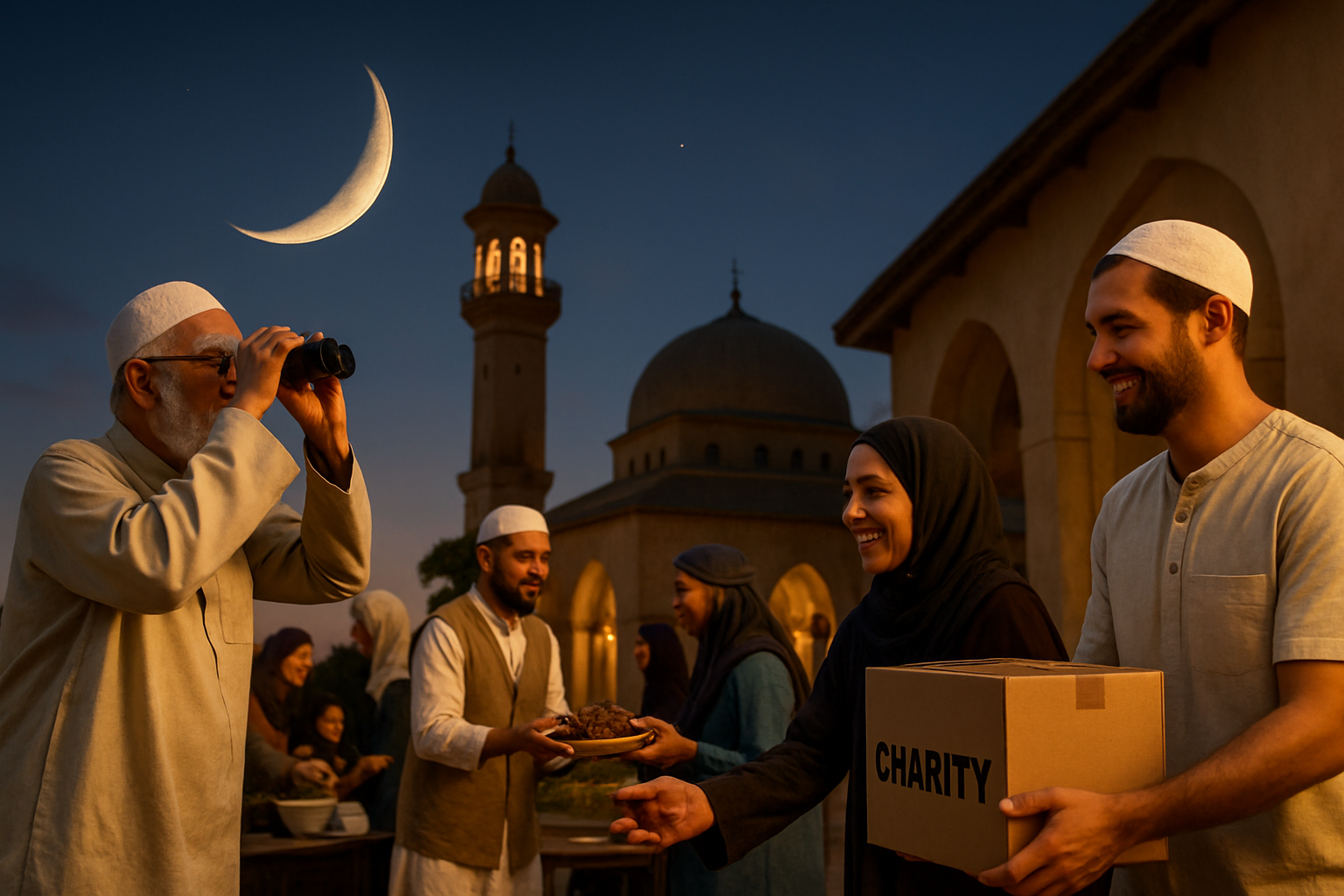
Religious communities worldwide are mobilizing for the holy month of Ramadan 1447 AH, with governments and organizations across the Middle East, North Africa, and Southeast Asia announcing comprehensive programs for spiritual observance, charitable initiatives, and community support.
From Algeria's National Committee for Crescents and Sharia Times announcing Tuesday, February 17, 2026, as the night for observing the Ramadan crescent moon, to Indonesia's mental health professionals preparing guidance for the spiritual journey ahead, the global Muslim community is entering a period of unprecedented coordination and preparation.
Crescent Moon Sightings Mark Sacred Beginning
Algeria's Ministry of Religious Affairs and Endowments officially announced that the night of observing the Ramadan crescent for 1447 AH will occur on Tuesday, 29 Sha'ban 1447 AH, corresponding to February 17, 2026. To commemorate this blessed tradition, a special symposium will be held after Maghrib prayer at the Imam Sidi Abdul Rahman al-Tha'alibi House in Al-Mohammedia, Algiers, with proceedings broadcast across various media outlets.
The announcement represents the culmination of months of astronomical calculations and religious preparations, setting the stage for what promises to be a globally coordinated observance of the holy month.
Saudi Arabia Launches Massive International Programs
The Kingdom of Saudi Arabia has unveiled its most ambitious Ramadan outreach program to date, with Minister of Islamic Affairs Sheikh Abdullatif Al-Sheikh launching the Custodian of the Two Holy Mosques' Ramadan programs for 1447 AH on Sunday in Riyadh.
The comprehensive initiative includes the distribution of 2.2 million copies of the Holy Qur'an and its translations across 120 countries worldwide—an increase that reflects the growing global reach of Saudi religious diplomacy. The Gift Program for Distributing Dates will provide 1,000 tons this year, representing a 300-ton increase compared to the previous year and reaching 18 new countries.
"These programs represent a global humanitarian message rooted in the values of the Kingdom. They reflect the leadership's commitment to extending goodness to Muslims around the world during this blessed month."
— Sheikh Abdullatif Al-Sheikh, Saudi Minister of Islamic Affairs
Additionally, the Kingdom will dispatch 91 imams to lead prayers in 49 countries during the holy month, demonstrating an unprecedented level of international religious cooperation and cultural exchange.
Educational Systems Adapt to Sacred Rhythms
Educational institutions across the Muslim world are implementing specialized schedules to accommodate the spiritual and physical demands of Ramadan observance. Saudi Arabia's education departments have approved revised school schedules, with classes beginning between 9:00 AM and 10:00 AM across various regions, compared to earlier start times during regular months.
The General Directorate of Education in the Qassim Region announced that public schools will begin at 10:00 AM, while adult education institutions will commence at 9:30 PM. The Makkah Region confirmed morning schools will start at 9:00 AM, with teaching and administrative staff required to arrive 15 minutes before the first class period.
These schedule adjustments reflect a sophisticated understanding of the physiological and spiritual demands of fasting, ensuring that educational objectives are met while respecting religious obligations.
Weather Preparations for Holy Cities
Saudi Arabia's National Center for Meteorology has issued preliminary climate outlooks for Ramadan 1447H, forecasting below-average rainfall and slightly higher temperatures in Makkah and Madinah during the holy month. Expected rainfall totals in both cities are projected to be lower than seasonal averages, with normal monthly rainfall standing at approximately 4.2 mm in Makkah and 4.3 mm in Madinah.
Temperatures are expected to trend above normal levels, with a maximum increase of around 1°C above average in Makkah and up to 1.2°C above average in Madinah. These forecasts enable enhanced preparedness planning for the millions of pilgrims and visitors expected to visit the Two Holy Mosques during the sacred month.
Mental Health and Spiritual Wellness Focus
Indonesian mental health professionals are emphasizing the psychological benefits of Ramadan observance, with psychiatric experts highlighting the month-long fast as an opportunity for emotional regulation and spiritual growth.
Dr. Revit Jayanti S, a psychiatrist and lecturer at the Faculty of Medicine, describes the holy month as providing a unique opportunity for individuals to develop better emotional control and spiritual awareness through the disciplined practice of fasting and increased devotion.
The approach represents a growing recognition of the intersection between spiritual practice and mental wellness, particularly relevant as communities worldwide continue to address post-pandemic mental health challenges.
Community Charity and Support Initiatives
Charitable organizations across the Muslim world are mobilizing comprehensive support systems for the holy month. In Muscat, Oman, the Pakistan Social Club has launched a Ramadan campaign aimed at supporting 100 low-income families, with organizers stating that nearly 500 individuals are expected to benefit from the initiative.
Led by Shaandar Bukhari, Welfare Director of Pakistan Social Club Oman, the campaign will distribute food boxes containing 16 essential items designed to meet the needs of a family of five throughout the holy month. The initiative, first launched in 2019, continues the humanitarian legacy established by the late Syedzada Sakhawat Ali Shah Bukhari.
The campaign launch was marked by a prayer gathering attended by H.E. Sayed Naveed Safdar Bokhari, Pakistan's Ambassador to Oman, demonstrating the diplomatic and cultural significance of such community initiatives.
Global Cultural Understanding
International media outlets are contributing to greater global awareness of Ramadan's significance and practices. Mexican publication El Financiero provided comprehensive coverage of the holy month, explaining that practicing Muslims worldwide will unite in the ritual of daily fasting from dawn to sunset.
The coverage emphasizes Ramadan as "a time of greater devotion, religious reflection, and charity," highlighting how the observance often brings families and friends together for festive gatherings around meals to break the fast. The month concludes with the celebration of Eid al-Fitr, one of Islam's most joyous festivals.
Technological Integration and Modern Observance
While maintaining traditional spiritual practices, modern technology is playing an increasingly important role in Ramadan observance. Mobile applications for prayer times, Qur'an recitation, and charitable giving are facilitating observance for Muslims living in diverse time zones and cultural contexts.
The integration of technology with traditional practice reflects the adaptability of religious observance to contemporary circumstances while maintaining the core spiritual objectives of the holy month.
Economic and Social Impact
The global preparation for Ramadan represents significant economic activity, from the distribution of religious texts and dates by Saudi Arabia to the coordination of charity campaigns by diaspora communities. These activities generate employment, strengthen international relationships, and demonstrate the economic dimension of religious observance.
The coordination required for these programs—spanning 120 countries in the case of Saudi initiatives alone—represents a remarkable example of international cooperation and cultural diplomacy.
Looking Ahead
As the crescent moon observation approaches on February 17, 2026, the global Muslim community stands ready for a month of spiritual renewal, charitable giving, and community solidarity. The comprehensive preparations across multiple continents demonstrate both the enduring significance of traditional religious observance and its successful adaptation to contemporary global circumstances.
The coordination between governments, religious institutions, educational systems, and community organizations reflects a sophisticated approach to facilitating religious practice while maintaining social and economic stability. This year's Ramadan preparations may serve as a model for future religious observances in an increasingly interconnected world.
From the scientific weather forecasting for holy cities to the mental health support for fasting individuals, from the massive international charity initiatives to the careful adjustment of school schedules, the 2026 Ramadan preparations exemplify how ancient spiritual traditions continue to find meaningful expression in the modern world.